Starting a sign business can be as simple as producing personalized wooden plaques from a home workshop or as complex as operating a commercial shop that designs, manufactures, and installs large exterior signs. The opportunity lies in the variety: businesses need logos and door signs, homeowners buy personalized décor, and weddings and events create steady demand for custom signage.
Signs can be made with vinyl cutters, printers, CNC routers, hand tools, and laser engraving machines. For beginners working with wood and acrylic, a laser can be especially useful because it can cut detailed shapes, engrave text and logos, and reproduce a design consistently in small batches.
This guide explains how to start a sign business step by step—from choosing a niche and estimating startup costs to selecting equipment, pricing orders, finding customers, and expanding production.
1. Choose Your Sign Business Niche
“Custom signs” is too broad to be a useful starting offer. A focused niche makes it easier to choose equipment, buy materials, create samples, write product listings, and explain why a customer should hire you.

Custom Business and Office Signs
Small companies regularly need reception logos, office door signs, room labels, nameplates, opening-hours signs, QR-code displays, and branded wall décor. Acrylic is popular for polished, modern interiors, while engraved wood can suit cafés, boutiques, salons, and hospitality businesses.
Business signage can lead to higher-value orders because one client may need a coordinated set rather than a single product. A reception logo can turn into door plates, desk signs, directional signs, and repeat orders for new employees. The tradeoff is that commercial buyers may expect proofs, exact brand colors, reliable deadlines, invoices, and installation guidance.
Beginners should distinguish decorative indoor signs from regulated exterior, illuminated, structural, or accessibility signage. Those projects may involve permits, building codes, electrical work, engineering, licensed installation, or accessibility standards that vary by location.
Personalized Wooden Signs
Wooden signs are approachable for a home-based sign business. Popular products include family-name signs, nursery plaques, address markers, porch signs, recipe boards, welcome signs, and seasonal home décor.
They also allow several production methods. A laser can engrave lettering directly, cut layered elements, or create stencils and decorative shapes. Paint, stain, raised lettering, frames, and hanging hardware make it possible to create distinct price tiers from the same basic design.
Wood is not perfectly uniform, so grain, glue pockets, moisture, coatings, and plywood construction can affect engraving and cutting. A reliable sign maker tests each material batch and shows customers that natural variation is part of the finished product.
Wedding and Event Signs
Wedding welcome signs, table numbers, seating charts, bar menus, place names, cake toppers, and directional signs can be sold individually or as coordinated packages. Acrylic and painted wood are both widely used, and personalization gives customers a clear reason to pay more than they would for mass-produced décor.
Event work can be profitable, but deadlines are firm. A delayed birthday sign is inconvenient; a delayed wedding seating chart can damage the client relationship. Before accepting large packages, confirm proof-approval dates, material availability, revision limits, production time, delivery, and what happens if the guest list changes.
Which Sign Business Niche Should Beginners Choose?
Start with one customer group and one repeatable product family. Indoor wooden name signs, small acrylic business signs, or wedding table décor are easier to standardize than a catalog that includes everything from metal plaques to illuminated storefront signs.
Compare each niche using four questions:
- Is there visible demand? Search local businesses, online marketplaces, wedding vendors, and community groups.
- Can you produce it consistently? Consider artwork complexity, finishing, assembly, packaging, and installation—not only laser time.
- Does it fit your equipment? Measure the largest normal sign and confirm material compatibility before buying a machine.
- Can you reach the customer? A strong local network favors office signs; good product photography and shipping skills favor online personalized signs.
For most beginners, the best niche is not the one with the highest advertised selling price. It is the one that can be produced repeatedly with manageable materials, equipment, and customer service.
2. Research Your Market and Target Customers
Market research keeps you from building a catalog around products people admire but do not buy.

Identify Your Ideal Customers
Choose a primary customer before designing the first collection:
- Local businesses may need logos, office signs, menu boards, door signs, and recurring nameplates.
- Homeowners often buy family signs, address plaques, nursery décor, and seasonal pieces.
- Wedding planners and event professionals value coordinated packages, dependable deadlines, and trade-friendly ordering.
- Online personalized-gift buyers search by recipient, occasion, material, style, and delivery date.
Talk to potential buyers rather than relying only on search volume. Ask local shop owners what they currently order, what frustrates them, how often signs change, and whether installation matters. For online products, review customer questions and complaints. Repeated concerns about difficult mounting, poor packaging, inaccurate colors, or slow proofs can reveal a better offer.
Analyze Your Local Competitors
Create a simple spreadsheet for ten nearby and online competitors. Record their product range, sizes, materials, prices, turnaround times, review themes, customization options, and visual style.
The goal is not to undercut every price. Look for gaps such as:
- Faster local pickup for small business signs
- Better proofing and brand-file support
- Coordinated wedding sign packages
- More size or mounting options
- Clearer material and installation information
- Small minimum quantities for office nameplates
A narrow, well-explained service often competes better than a large catalog with unclear quality.
3. How Much Does It Cost to Start a Sign Business?
The cost to start a sign business depends on what you make and what production you keep in-house. A home-based laser sign business can begin with a few thousand dollars, while a commercial shop with printing, routing, fabrication, vehicles, and installation equipment may require tens of thousands.

Essential Startup Expenses
Plan for more than the main machine. A realistic budget may include:
- Sign-making equipment and accessories
- Wood, acrylic, blanks, adhesives, paint, and mounting hardware
- Design and machine-control software
- Ventilation, cooling, electrical work, and safety equipment
- Worktables, storage, measuring, and finishing tools
- Business registration, insurance, bookkeeping, and applicable permits
- Website, photography, samples, packaging, and initial marketing
- Cash for rework, replacement materials, and slow early months
Starting Small vs. Opening a Full Sign Shop
| Business model | Illustrative startup range | Typical approach | Main limitation |
|---|---|---|---|
| Lean home-based test setup | 2, 000–5,000 | Narrow wood or acrylic range; online or local sales | Limited size and production capacity |
| Versatile home or small workshop | 5, 000–12,000 | Better laser, extraction, materials, finishing, and inventory | Space, utilities, and staffing |
| Small commercial sign shop | 15, 000–50,000+ | Multiple processes, walk-in clients, larger jobs | Higher rent, insurance, equipment, and compliance costs |
These are planning ranges, not quotations. A basic vinyl business may start for less, while a shop producing large outdoor or illuminated signs can cost much more.
How to Start a Sign Business on a Budget
Begin with a limited product range that uses the same materials and workflow. Five strong products are more useful than fifty untested listings. Use standard sizes, offer a controlled set of fonts and colors, and charge separately for extensive custom design.
Outsource work that requires expensive equipment or certification. A beginner might design and sell a large printed banner but use a trade printer for production. The same approach can work for powder coating, metal fabrication, electrical components, or oversized cutting.
Add capacity only after orders reveal a bottleneck. If customers keep asking for larger acrylic logos, a bigger laser may be justified. If most time is spent answering messages and preparing proofs, another machine will not solve the actual problem.
4. Choose the Right Equipment for Your Sign Business
Equipment should follow the product plan. Buying a machine first and searching for something to sell afterward often leads to unused features or products that do not fit the working area.

Essential Sign-Making Tools
- Vinyl cutter: Useful for window lettering, vehicle graphics, decals, stencils, and applying text to sign blanks.
- Laser engraving machine: Cuts and engraves detailed wood and acrylic components and supports repeatable personalization.
- CNC router: Suited to larger or thicker wood, plastics, composites, and dimensional sign work, depending on the machine and tooling.
- Design software: Used for vector artwork, typography, layouts, cut paths, and production files.
- Finishing tools: Sanding equipment, clamps, squares, calipers, paint supplies, adhesives, drills, cleaning tools, and mounting templates.
You do not need every process in-house at launch. Choose the tool that produces the core offer, then build supplier relationships for the rest.
Why Use a Laser Engraving Machine for Sign Making?
A laser is valuable for custom sign making because one digital file can control both detailed engraving and precise cutting. It can reproduce a logo, name, border, or set of table numbers with less manual variation than hand cutting.
That makes lasers particularly useful for:
- Engraved wooden signs and plaques
- Layered wood or acrylic lettering
- Acrylic business logos and room signs
- Wedding table numbers and place names
- Small-batch office nameplates
- Templates, jigs, and alignment aids used in assembly
The business advantage is repeatability. Once a design, material, settings, and fixture are tested, a shop can produce later orders with less setup and a more predictable result.
Which Laser Engraving Machine Is Best for Sign Making?
| Laser type | Best-matched sign materials | Good applications | Important limitation |
|---|---|---|---|
| CO2 laser | Wood, acrylic, paper, leather, glass, and selected coated materials | Wooden signs, clear or colored acrylic signs, layered lettering, event décor | Not designed for direct deep engraving of bare metal |
| Diode laser | Wood, leather, coated surfaces, and some opaque acrylics | Small wooden signs, light engraving, entry-level product testing | Common blue diodes struggle with clear and many light-colored acrylics; cutting is generally slower |
| Fiber laser | Stainless steel, aluminum, brass, and other compatible metals | Metal nameplates, asset tags, durable metal marking | Generally unsuitable for wood signs or clear acrylic cutting |
For a beginner focused on wood and acrylic signs, a CO2 laser is usually the most versatile choice. The required power and bed size depend on material thickness, the largest sign component, and daily order volume.
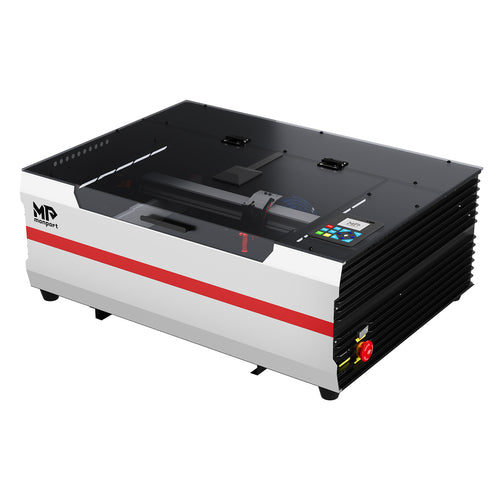
A compact 40W machine can be enough for small plaques and proof-of-concept products. A desktop model such as the Monport Reno65 Pro 65W CO2 laser, with a 24 × 16-inch work area, is better suited to larger components and a broader small-business catalog. For shops that value camera placement, autofocus, and batch workflow, the Monport MEGAS 70W CO2 laser offers a 700 × 350 mm work area and production-oriented automation.
Do not choose by wattage alone. Compare usable working area, pass-through or conveyor capability, cooling, exhaust, focus method, camera accuracy, controller and software compatibility, delivery requirements, support, and replacement parts. The laser cutter for signage buying guide provides a deeper equipment checklist.
Other Equipment and Safety Essentials
Laser work produces heat, smoke, particles, and fumes. Use effective ventilation or fume extraction, follow the manufacturer’s cooling and electrical requirements, keep the machine supervised, and maintain suitable fire-safety equipment. Air assist can improve cut quality and reduce charring or flare-ups on many materials.
Only process materials confirmed as laser-compatible. Never laser-cut PVC or vinyl, and do not assume an unfamiliar plastic is safe because it resembles acrylic. Check the supplier’s documentation and safety data before testing.
Plan for finishing as carefully as cutting. Clean edges, accurate assembly, polished surfaces, secure mounting hardware, and protective packaging are part of the product customers judge.
5. Set Up Your Sign Business
Register Your Business and Check Local Requirements
Choose a business structure, register the business and any trade name as required, obtain the appropriate tax identification, and check local licenses, permits, insurance, sales-tax, and zoning obligations. Requirements depend on your location, business activities, and whether customers visit the property.
The U.S. Small Business Administration’s launch guidance notes that zoning rules can still apply to home-based businesses and that many businesses need tax IDs, licenses, or permits. Confirm requirements with state, county, and city authorities rather than copying another seller’s setup.
Projects involving exterior installation, illuminated signs, structural mounting, road visibility, or accessibility may bring additional rules. Know where your responsibility ends if a client or licensed installer handles installation.
Set Up a Safe and Efficient Workspace
A home workshop can reduce overhead, but it still needs adequate space, ventilation, electrical capacity, material storage, fire safety, and separation from children or pets. Check rental, homeowners association, insurance, and zoning restrictions before installation.
Organize the shop around the order flow:
- Material receiving and storage
- Design and proofing
- Cutting or engraving
- Cleaning, painting, and assembly
- Quality control
- Photography and packaging
Keeping raw materials away from finished products reduces scratches, dust, and packing mistakes.
Find Reliable Material Suppliers
Do not choose materials only by the lowest sheet price. Compare flatness, consistency, protective masking, color accuracy, thickness tolerance, and availability. Cast acrylic is popular for engraved signs because it can produce a frosted engraving effect, while laser-compatible plywoods are made with construction and adhesives more suitable for laser processing.
Order samples before committing to volume. Record the supplier, product code, batch, thickness, tested settings, finish, and waste rate. Also source adhesives, standoffs, hanging hardware, spacers, LED bases, paints, and packaging that match the final product—not just the laser step.
6. Create Your First Custom Signs with a Laser Engraving Machine

Step 1 – Design Your Sign
Create the text and artwork as clean vector paths. Confirm spelling, dates, logo proportions, dimensions, hole positions, kerning, minimum feature size, and mounting method. Convert fonts to paths only after saving an editable master file.
Send a proof that shows size, material, color, and personalization. Require written approval before production, and state how many revisions are included. A good proofing process prevents more waste than a faster machine can recover.
Step 2 – Choose the Right Material
Choose material according to appearance, location, cleaning needs, mounting, and laser compatibility.
- Wood creates a warm, handmade look but varies naturally and may require sanding, masking, sealing, staining, or painting.
- Acrylic gives a clean, modern finish and supports layered construction, color combinations, stand-offs, and edge-lit designs.
- Coated or anodized metal can be marked by compatible machines, while direct engraving of bare metal generally requires a fiber laser rather than a standard CO2 system.
Ask whether the sign is for indoor or outdoor use. Weather exposure, UV light, moisture, temperature, and mounting conditions affect material and adhesive selection.
Step 3 – Prepare Your Laser Engraving Settings
Start with manufacturer guidance, then test the actual material. Create a labeled test grid for speed, power, frequency or interval where applicable, focus, and air assist. Check the front, edge, and back—not only the most attractive surface.
Save approved settings by exact material and thickness, but test a new batch before a customer order. A file labeled simply “3 mm plywood” is not enough if two suppliers use different veneers or adhesives.
Step 4 – Engrave, Cut, and Finish the Sign
Secure the material, confirm focus and origin, check exhaust and cooling, and run the job under supervision. Afterward, inspect for incomplete cuts, excessive charring, haze, scratches, dimensional errors, or missing details.
Remove masking, clean the surface, sand or polish where appropriate, apply paint or fill, assemble layers, and install the hardware. Compare the finished sign with the approved proof and photograph it before packaging. Process photographs—design, material test, cutting, assembly, and final inspection—also provide strong evidence of craftsmanship for product pages and social media.
7. How to Price Your Signs and Make a Profit
Calculate Your Production Costs
Price the complete order, not just the blank material.
Total job cost = materials and waste + design and proofing + production labor + machine time + finishing and assembly + packaging and selling costs + overhead allocation
Labor includes customer messages, file cleanup, testing, loading, cleaning, painting, assembly, packing, and problem solving. Machine time should help fund maintenance and eventual replacement, even if the machine is fully paid for.
Set Profitable Selling Prices
Suppose an 18-inch personalized wooden sign has the following estimated cost:
| Cost item | Example amount |
|---|---|
| Wood blank and expected waste | $12.00 |
| Paint, masking, and hanging hardware | $6.00 |
| 45 minutes of labor at $24/hour | $18.00 |
| 20 minutes of machine time at $12/hour | $4.00 |
| Packaging, payment fees, and overhead allocation | $10.00 |
| Estimated total cost | $50.00 |
At an $85 selling price, the order contributes $35 before income taxes and any costs not included in the estimate. That is not automatically take-home profit.
Charge for value that adds work: original logo cleanup, complex layouts, rush production, extra proofs, premium material, installation templates, and individual personalization. For bulk orders, apply discounts only after setup is spread across multiple units and the lower price still protects margin.
Estimate Your Break-Even Point
Use this formula:
Break-even orders = monthly fixed costs ÷ average contribution per order
If fixed monthly costs are $600 and the average contribution after variable order costs is $35, the business needs about 18 comparable orders to cover those fixed costs. Owner wages, taxes, debt payments, and savings for future equipment should be planned separately if they are not already included.
Track estimates against real orders. If every “20-minute sign” actually takes 55 minutes after proofing and finishing, update the price rather than hoping volume will repair a weak margin. For more detail, see this guide to pricing products in a home laser engraving business.
8. How to Find Customers for Your Sign Business

Sell Custom Signs Online
Etsy can provide marketplace demand, while Shopify or another owned website gives more control over branding, content, customer data, and product bundles. Listings should explain material, size, personalization, proofing, mounting, production time, shipping, and what natural variation may occur.
Use specific titles and descriptions built around buyer intent: “custom acrylic office door sign,” “personalized wooden family name sign,” or “wedding table number set” is more useful than “beautiful handmade sign.” Show scale, close-up finish, mounting, color choices, and at least one real installed example.
Use Social Media to Showcase Your Signs
Instagram, Pinterest, and TikTok suit visual products, but finished glamour shots are only one content type. Show design decisions, material tests, engraving, paint filling, peeling masking, layer assembly, packaging, and before-and-after installations.
Short laser videos attract attention; clear product information earns the order. Include dimensions, material, use case, personalization process, and a direct path to buy or request a quote.
Reach Local Businesses
Create a small sample kit for cafés, restaurants, salons, offices, retailers, real-estate professionals, and event planners. Tailor the examples: a café may care about counter signs and QR displays, while an office manager may need door plates that can be reordered when staff changes.
Avoid sending a generic catalog. Offer a specific solution, such as a reception logo plus matching room signs, or a wedding planner package with welcome sign, table numbers, and place names. Local photographers, interior designers, print shops, and event vendors can also become referral partners.
Build Repeat Customers and Referrals
Make reordering easy. Save approved artwork, material, color, dimensions, mounting details, and customer preferences. Ask for reviews after successful delivery, photograph projects with permission, and provide a simple reorder code for business clients.
Repeat-order discounts work best when the new order reuses approved files and setup. Business branding packages can raise order value without requiring a completely different production process.
9. Grow and Scale Your Sign Business

Expand Your Product Range
Expand around proven demand. A wooden sign seller might add layered lettering, matching door plaques, or seasonal inserts. An acrylic business-sign shop might add desk signs, nameplates, QR displays, and branded wall sets.
Engraved metal nameplates can become a new category, but they may require a fiber laser or an outsourced partner. Treat each new material as a separate production system with its own tests, suppliers, finishing, and pricing.
Upgrade Your Laser Engraving Equipment
Upgrade when the current machine prevents profitable work or creates a measurable bottleneck. A larger working area can reduce tiling and allow bigger sign components. Camera alignment may help with irregular blanks. Autofocus and reusable settings can reduce setup, while higher power can improve cutting capacity in suitable materials.
For wood and acrylic production, compare the current Monport CO2 laser engraver collection by work area, power, cooling, workflow, and support. If bare-metal marking becomes a regular revenue source, compare a fiber laser rather than forcing a CO2 machine into the wrong application.
Improve Efficiency and Order Management
Growth usually comes from fewer decisions per order. Build reusable templates, parameter libraries, proof forms, quotation sheets, packaging standards, and quality-control checklists. Use fixtures for repeat placement and group compatible jobs into batches.
Track inquiry source, quote value, conversion rate, material cost, labor time, rework, delivery time, and contribution per order. Revenue can rise while profit falls if customization, rush jobs, or errors consume the extra capacity.
Frequently Asked Questions
How much money do you need to start a sign business?
A lean home-based custom sign business may require roughly 2, 000–5,000, while a more versatile laser workshop may require 5, 000–12,000. A commercial sign shop can cost 15, 000–50,000 or considerably more. The right budget depends on materials, sign size, production methods, workspace, and which services are outsourced.
Can I start a sign business from home?
Yes, many beginners start with online or local orders from a home workshop. Check zoning, lease or homeowners association rules, insurance, ventilation, electrical capacity, business licensing, and whether customer visits or commercial deliveries are allowed.
Is a sign-making business profitable?
It can be profitable when prices cover materials, waste, labor, machine time, overhead, selling costs, and rework. Profit depends on the niche, order volume, average selling price, efficiency, marketing cost, and demand. Buying equipment does not guarantee sales.
What equipment do I need to start a sign business?
The answer depends on the product. A wood and acrylic sign business may need a CO2 laser, ventilation, cooling, design software, measuring tools, finishing equipment, materials, and packaging. Vinyl signs need a cutter and application tools; large dimensional signs may require a CNC router or outsourced fabrication.
Can you make signs with a laser engraving machine?
Yes. A suitable laser can engrave lettering and logos, cut sign shapes and layered elements, create table numbers, and produce repeatable batches. Always match the laser type to the material and confirm that the material is safe to process.
What type of laser engraver is best for wood and acrylic signs?
A CO2 laser is generally the most versatile choice for businesses that want to cut and engrave both wood and acrylic, including clear acrylic. Choose power and working area according to material thickness, the largest component, and production volume—not wattage alone.
Conclusion
Learning how to start a sign business begins with a focused decision: choose a customer, a material range, and a small group of products you can make consistently. Research real demand, calculate the full startup cost, build a safe workspace, test materials, and price every step from proofing to packaging.
A laser engraving machine can support detailed wooden and acrylic signs, personalized short runs, and repeat orders, but the equipment must fit the products rather than define them. Start with manageable sizes and a repeatable workflow. Outsource jobs beyond your current capability, then upgrade when sales data—not enthusiasm alone—shows what capacity the business needs next.
Beginners who want to compare work areas, power levels, cooling, and production features can explore Monport CO2 laser engravers or review the 2026 beginner’s guide to laser engraving before choosing a machine.