A personalized-gift shop may already make excellent wooden signs and coated metal tags, yet struggle when a client requests fine lettering on a glass award or identification on a delicate plastic housing. Those jobs demand different material behavior and finish standards—and sometimes different equipment.
The best UV laser engraver for a small business is the one whose documented capabilities match the products that business intends to sell. For a studio focused on fine, small-format marks, Monport's 6W UV configuration is worth evaluating. A workshop with more demanding, recurring marking work can compare the 10W configuration. A business offering dimensional artwork inside crystal needs to examine a dedicated 3D-capable configuration, such as the Monport UV Pro, rather than assume any UV marker will do the job.
These are application-based starting points, not results of independent head-to-head testing. This guide explains the differences, the questions behind a viable business purchase, and the costs that rarely appear on a machine's headline price.

Is a UV Laser Engraver Right for Your Small Business?
Industrial UV marking commonly uses 355 nm light. On selected materials, its shorter wavelength can produce fine marks with less unwanted heat spread than some infrared processes. It does not make every material compatible or every marking job damage-free. The substrate, coating, equipment variant, and professionally validated process still determine the outcome.
What Types of Businesses Benefit from UV Laser Marking?
A studio decorating approved glass gift blanks, a parts supplier adding identification to specialty plastic housings, and a premium-awards company producing crystal keepsakes have different needs. What connects them is the value of controlled, detailed marking, rather than removing large volumes of material.
Before allocating a budget, identify a product you cannot consistently offer through your existing supplier or equipment. That product—not a general claim about “engraving everything”—should drive your decision. See Monport's explanation of fiber laser versus UV laser applications for background on the distinction.
| Business need | Technology direction | Key limitation to assess |
|---|---|---|
| Fine decoration on selected glass blanks | Professionally validated UV surface marking | Glass composition, stress, and desired finish |
| Flat image inside an approved crystal blank | Specifically documented 2D internal-marking configuration | Blank compatibility and actual option supplied |
| Volumetric artwork inside crystal | Dedicated 3D subsurface system | Verified 3D capability, supported blank dimensions |
| Small codes on specialty plastic | Suitable UV marking system | Resin, additives, readability, and durability |
| Large wood or acrylic sheet cutting | Purpose-built CO2 cutting equipment | Material type, bed size, and cut requirements |
| Deep relief on metal | Suitable fiber or MOPA metal-engraving process | Required depth, metal grade, and finish |
When Is a UV Laser Not the Right Choice?
If most orders involve large wooden signs or thick acrylic components, buying a compact-field UV marker will not replace a dedicated cutter. The same applies if your primary business is deep metal relief: a UV marker and a metal-engraving system solve different problems.
There is a third option between buying UV equipment and turning down specialized jobs: outsourcing. If only a few customers request crystal awards each month, using a qualified production partner may allow a shop to validate demand and finished quality before committing to a dedicated professional laser facility.
Best UV Laser Engravers for Small Businesses Compared
The purchase decision starts with the kind of result you need: exterior marking, a flat image inside transparent material, or a dimensional internal design. Then compare the exact offered package. The Monport catalog provides three relevant product paths; they are not a scientifically ranked list of competing brands.

Monport 6W UV: A Smaller-Output Professional Marking Option
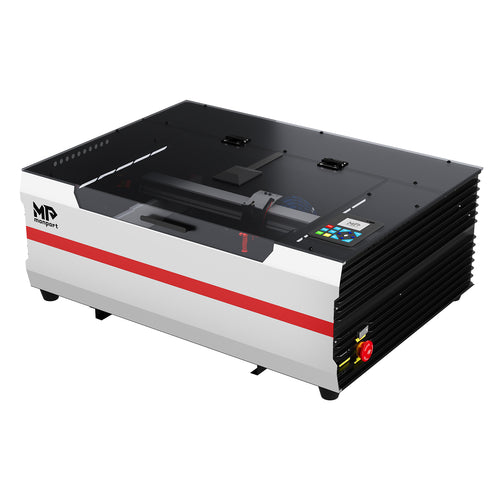
The Monport 6W UV Galvo Laser Engraver is an option to evaluate for small-format, fine-detail marking on compatible materials. Its current product description also discusses 2D internal engraving of approved transparent blanks. That function should be tied to the specific configuration being purchased, not generalized to all UV sources.
This configuration may be relevant to a specialist studio working with personalized designs, identification text, or occasional approved crystal pieces. It is not automatically the least expensive installed system: its Class 4 status and facility needs still matter.
Monport 10W UV: More Rated Output for Demanding Workflows
The Monport 10W UV Galvo Laser Engraver has higher nominal laser output and a higher manufacturer-stated maximum scan speed than the 6W variant. Those specifications can justify a closer look for businesses with more recurring marking requests or broader process requirements, but do not establish faster completed orders or superior finish on a given blank without comparable testing.
For customers requiring identification marks, the acceptance standard matters more than the highest scan-speed number. Contrast, placement, and durability must be documented against the actual component.
Monport UV Pro: When the Product Requires 3D Crystal Engraving
A dimensional portrait suspended inside a crystal block is not the same product as a frosted name on its outside. Monport markets its UV Pro configuration for 3D inner engraving in glass. This is the option to investigate when a business plans to sell verified 3D crystal artwork. The product page offers different model and accessory choices; the buyer needs confirmation that the quoted package includes the required 3D function.
Monport UV Configuration Comparison
| Published specification or function | Monport 6W UV | Monport 10W UV | Monport UV Pro |
|---|---|---|---|
| UV wavelength | 355 nm | 355 nm | 355 nm |
| Output options | 6W | 10W | 6W or 10W, depending on selection |
| Manufacturer-stated maximum scan speed | 10,000 mm/s | 15,000 mm/s | 10,000 or 15,000 mm/s by variant |
| Commonly advertised nominal marking field | 150 × 150 mm | 150 × 150 mm | Depends on supplied lens and selected internal-marking configuration |
| Internal artwork positioning | 2D features mentioned on the product page | 2D configurations described | Dedicated 3D capability advertised; confirm chosen option |
| Best reason to investigate | Suitable small-format marking and specific 2D needs | Higher rated output for suitable recurring work | Intended product is truly three-dimensional internal crystal artwork |
| Important caveat | Not a universal material guarantee | Scan-speed claim is not an order time | Confirm actual model, lens, included options, and approved blanks |
Source: Monport's published US product pages. This is a configuration comparison, not independently tested relative performance. Prices and included accessories change, so check the exact quote.
Which Specifications Matter Most for Commercial Work?
An advertised 150 × 150 mm marking field describes the optical region, not how many packaged products leave the workshop in an hour. Production also involves artwork approval, workpiece handling, inspection, and rejects. Likewise, an impressive maximum galvo speed says little about finished orders without a common material, design, and quality threshold.
Compare offers using the same fields: complete configuration, intended mark type, lens and marking field, software entitlement, cooling requirements, safety provisions, warranty, and support. Ask vendors to document results on the specific blank your business intends to sell.
What Can a UV Laser Engraver Mark for a Small Business?
Two acrylic components can respond differently because of their formulations and finishes. Glassware can differ in stress and composition. Material names are useful for shortlisting technologies, but production acceptance is a question about a particular product and required result.

Glass and Crystal Products
For presentation pieces, the desired result may be readable exterior lettering or an intentional frosted-looking image. The acceptance criteria should include clean boundaries, consistent contrast, and a surface that meets the customer's appearance requirements. Internal crystal designs require separately verified equipment capabilities and suitable blanks. No shop should promise crack-free results on every glass object.
Plastics and Acrylic Accessories
A branded plastic housing might need a small code that stays readable after normal handling. A decorative acrylic accessory might instead be judged by color and visual finish. Additives, colorants, coatings, and exact resin chemistry can change outcomes; a sample on one product does not certify an entire material category. Monport's UV engraving materials guide provides application ideas, but not blanket approval for every formulation.
Ceramics and Specialized Product Marking
Decorative ceramic surfaces can vary in glaze and coating. For industrial identification, an attractive sample alone may be inadequate if labels must meet a customer's durability, readability, or traceability requirements. Such jobs call for documented professional quality assurance rather than appearance-based assumptions.
| Material | Example commercial product | Desired mark | Acceptance question | Main limitation |
|---|---|---|---|---|
| Glass | Personalized presentation glass | Readable decorative exterior mark | Is the finish uniform and structurally acceptable? | Composition, condition, and internal stress |
| Crystal | Commemorative award | Surface, 2D internal, or 3D internal effect | Does the supplied system create the requested type of artwork? | Optical and configuration-specific requirements |
| Acrylic | Small branded accessory | Fine logo or lettering | Are contrast and edge appearance acceptable? | Acrylic formulation and coating |
| Engineering plastic | Product housing | Small identification text or code | Is it readable and suitably durable? | Resin chemistry, fillers, and additives |
| Ceramic | Specialty gift or identification part | Surface decoration or label | Does the result meet the substrate's finish standard? | Glaze and product-specific construction |
Original before-and-after photographs, identified by machine variant and actual blank, would be valuable evidence here. This article does not claim to report original Monport material tests.
What Is the Difference Between 6W and 10W UV Lasers?

UV wattage is an output specification, not a quality grade. The 6W and 10W Monport versions share a published 355 nm wavelength and a commonly listed 150 × 150 mm field, while the 10W version has higher rated output and a higher maximum stated scan speed. The official specification table describes manual focus and water cooling for these configurations.
| Question | 6W UV | 10W UV | Business interpretation |
|---|---|---|---|
| Rated laser output | 6W | 10W | Output alone does not decide finish quality |
| Claimed maximum scan speed | 10,000 mm/s | 15,000 mm/s | Not comparable to time per fulfilled order |
| Published marking field | 150 × 150 mm | 150 × 150 mm | Check actual part dimensions and geometry |
| Focus / cooling, per standard comparison | Manual / water-cooled | Manual / water-cooled | Confirm installation and selected package |
| Included software, per product specifications | BslAppSimple | BslAppSimple | LightBurn requires a separate entitlement where compatible |
For a low-volume premium-gift studio, finish approval and sample consistency may matter more than maximum scanning speed. A professional identification supplier may value production repeatability, documented code readability, and service continuity. Neither business can choose confidently from wattage alone.
What Is the Difference Between Surface Engraving and 3D Crystal Engraving?
A UV system can be marketed for several visually distinct applications. The language can be confusing because the same manufacturer may offer surface marking, 2D internal artwork, and 3D internal engraving as separate functions or configurations.

| Result type | Where the visible design appears | Product example | What to verify |
|---|---|---|---|
| Surface UV marking | On the outside of a compatible blank | Logo on a glass keepsake | Specific glass suitability and desired surface appearance |
| 2D internal engraving | Flat image located beneath the surface | Flat internal image in approved crystal | Explicit 2D internal support and compatible blanks |
| 3D subsurface engraving | Three-dimensional internal arrangement | Volumetric figure inside crystal | Dedicated 3D function, supported dimensions and materials |
Monport's standard 6W UV product listing includes 2D inner-engraving descriptions, while its UV Pro listing promotes 3D capability. Therefore, it would be inaccurate to describe every standard UV variant as surface-only—or to assume every package can produce volumetric images. For a crystal-awards business, the intended artwork should be specified before the equipment is selected.
Which UV Laser Features Matter in a Professional Workshop?
A commercial purchase must account for the complete environment, not only the marking head. The specifications that matter are those that allow a qualified professional operation to achieve the promised product quality and maintain service commitments.
Work Area, Software, and Compatibility
Published Monport specifications list BslAppSimple as included, while LightBurn is not included as standard in the cited comparison. The precise software entitlement and controller compatibility need confirmation for the actual version. LightBurn's laser-types documentation explains that Galvo support typically depends on a compatible controller and an appropriate license. A seller's generic statement that software is supported should not be mistaken for a guarantee about every firmware or model.
Cooling, Maintenance, and Technical Support
Request written information identifying what equipment is included in the quoted configuration, what periodic professional servicing is required, and how replacement parts and technical support are supplied. If the vendor lists a component service-life figure, it is not a promise of uninterrupted production. Warranty length, excluded parts, and responsibility for service also belong in the cost review.
Professional Safety and Facility Requirements
The Monport UV specifications classify the discussed systems as Class 4. The FDA's laser classification guidance and OSHA's workplace laser hazard information describe serious risks from direct and reflected exposure and potential fire hazards; OSHA also identifies the need to assess non-beam hazards in professional workplaces. Appropriate safeguarding, facility assessment, training, and qualified supervision are essential. A small desktop footprint does not remove those requirements, and “cold” marking does not mean the laser itself is harmless.
What Products Can Small Businesses Create With UV Laser Technology?
Material compatibility only matters commercially when it enables an order a workshop can reliably deliver. The three scenarios below are illustrative business models, not verified Monport customer case studies.
Personalized Awards and Corporate Gifts
A supplier of glass presentation pieces might offer a client's logo, recipient name, and event date across a small order. The challenge is consistent legibility and appearance from piece to piece. A shop expanding into volumetric crystal portraits is selling a different product and needs corresponding internal-engraving capability, not simply a more powerful conventional surface marker.
Branded Consumer Accessories
A creative studio may explore personalized phone-case components, small acrylic inserts, or other approved accessories. Here the hardest question is often material consistency between suppliers: an attractive initial proof cannot guarantee the same finish on every resin or coating. Project ideas can be developed with reference to Monport's custom phone-case guide, while exact compatibility and profit assumptions must be checked separately.
Small-Format Professional Identification
A supplier adding part numbers or codes to approved plastic enclosures needs to define readability and durability, not only appearance. Monport's UV marking guide for electronics and plastic components describes examples of this type of work; it is not a certification for every PCB or engineered plastic. In commercial production, acceptable quality is set by the customer's actual specification.
How Much Does a UV Laser Engraving Business Really Cost?
The machine's advertised price is only part of the investment. A serious comparison includes the professional facility, protective systems, extraction where applicable, cooling, software, qualified service, blank materials, inspection, potential rework, packaging, and the cost of unavailable production time.
Initial Investment vs. Total Ownership Cost
| Cost category | What a small business should budget or confirm |
|---|---|
| Equipment and approved facility | Complete professional installation rather than just machine price |
| Software and licensing | Included utilities, controller compatibility, separate licenses |
| Cooling, ventilation, and protective systems | Exact professional facility requirements and included accessories |
| Maintenance and technical support | Replacement components, service obligations, warranty exclusions |
| Product preparation and inspection | Blank stock, artwork review, reject allowance, quality checks |
| Sales and fulfillment | Packaging, transaction fees, delivery, returns |
Contribution per Order and Break-Even Thinking
Contribution is the money remaining from a sale after variable costs, not net profit. Consider this simplified hypothetical gift order:
| Illustrative item | Amount |
|---|---|
| Selling price | $40 |
| Blank and packaging | $13 |
| Direct labor | $9 |
| Selling and payment fees | $4 |
| Contribution before fixed costs | $14 |
This example is for arithmetic only; it is not Monport customer data or a measured production cost. If hypothetical monthly fixed expenses attributable to the service were $560, the business would need 40 orders at $14 contribution each merely to cover those fixed expenses. That still would not recover its initial capital expenditure. Real demand, quality failures, taxes, financing, and other costs must be considered.
When Does Outsourcing Make More Sense?
A shop with occasional specialized requests may be better served by a qualified subcontractor. Outsourcing helps evaluate real selling prices, customer feedback, and rejection rates without first building a dedicated Class 4 laser workplace. In-house equipment becomes easier to justify when recurring demand and its economic contribution can be documented against the full cost of professional ownership.
This distinction between capability and a sustainable offer also appears in Monport's guide to laser-engraving business economics. A product's technical feasibility does not establish that enough paying customers exist to support the investment.
Final UV Laser Purchasing Checklist
Before approving an industrial system for a qualified workplace, a buyer should be able to answer these questions:
- Is the exact material and intended mark type documented for the proposed equipment configuration?
- Are surface marking, 2D internal artwork, and 3D subsurface functions clearly distinguished?
- Does the quoted system cover the real part dimensions, with the intended lens and accessories?
- What software is included, and which controller and license are required for the proposed workflow?
- Have professional laser safety, facility safeguards, service, and maintenance been evaluated?
- Do recurring orders justify ownership more convincingly than outsourcing?
Unanswered questions are procurement tasks, not reasons to assume the advertised result will be achievable.
Frequently Asked Questions About UV Laser Engravers for Small Businesses
Is a UV Laser Engraver Worth It for a Small Business?
It can be, when there is recurring demand for products that require its specialized capabilities and the business has access to an appropriately assessed professional facility. The case should be based on actual product quality, cost and demand rather than advertised wattage or theoretical speed.
Can a UV Laser Engraver Mark Glass and Crystal?
Specific professional UV systems can process compatible glass and crystal blanks, but outcomes vary with construction and the intended finish. A surface decoration, flat internal image, and volumetric internal design are separate applications.
Are 6W and 10W UV Lasers Equally Precise?
Rated output alone does not establish precision. Monport lists different maximum scanning speeds, but a fair finish-quality comparison would require documented results on the same material, artwork, and acceptance criteria.
Can Every UV Laser Make 3D Crystal Art?
No. A product description that mentions UV light or 2D internal images does not by itself establish volumetric 3D capability. Verify the exact machine variant and quoted options for the crystal product you intend to supply.
Is UV Better Than Fiber for Metal Marking?
Not categorically. Conventional fiber and MOPA fiber systems commonly serve metal engraving and identification needs, while UV is often evaluated for certain fine-feature or material-sensitive tasks. The correct choice depends on substrate, required result, and documented compatibility.
Should a Small Business Outsource UV Marking First?
If demand is infrequent or product requirements are still uncertain, outsourcing to an appropriately qualified supplier can clarify margins and quality expectations before a workshop undertakes the expense and responsibilities of specialized equipment.
Final Thoughts: Choosing the Right UV Laser Engraver for Your Business
For small-format, fine-detail work, the Monport 6W UV is a relevant configuration to assess. A business considering higher rated output can compare the 10W UV against its own validated jobs; it should not assume a fixed improvement in finished-product throughput. For actual dimensional crystal artwork, investigate a configuration explicitly documented for 3D internal engraving, such as the Monport UV Pro.
Start with the product your customers expect, then confirm material evidence, exact equipment options, professional safety requirements, support, and total ownership cost. Businesses ready to compare published configurations can consult the Monport UV laser collection and request documentation appropriate to their intended professional application.