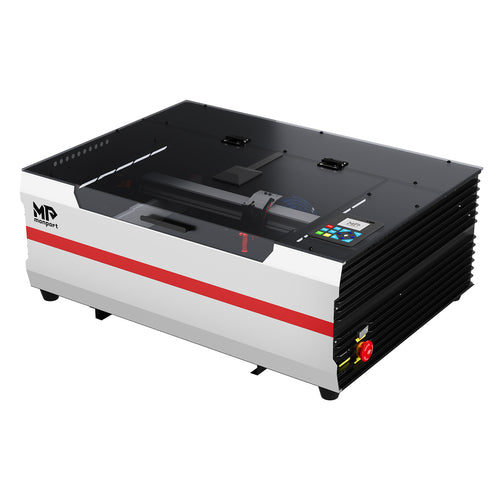
Yes, it is possible to make money with a home laser engraving business. However, buying a laser engraver is only the production decision. It is not the business model.
A workable home laser business usually combines five elements: a specific customer, a product people have a reason to buy, pricing that covers the full job, a safe and repeatable production process, and a reliable way to reach qualified buyers. The machine supports those elements; it does not replace them.
This guide explains how to test a laser engraving business before making a large equipment purchase, choose products that fit your workflow, select a laser for the materials you expect to use, price custom work, find first customers, and decide whether the business is ready to scale.
Short answer: a home laser engraving business is most likely to work when you begin with one customer group and a small product family, prove that people will pay, and track your real production time and costs. There is no guaranteed income level, and a machine alone does not create demand.
Can You Make Money With a Home Laser Engraving Business?

You can, but profitability depends on the relationship between your offer, your costs, and your sales process. Revenue comes from orders. Profit is what remains after materials, waste, labor, design time, machine and workspace costs, packaging, payment fees, shipping, marketing, maintenance, taxes, and rework are considered.
The most promising opportunities usually have at least one of these characteristics:
- The buyer wants personalization, a small quantity, or a faster response than a large supplier can provide.
- The product solves a clear business, event, organizational, or gifting need.
- The item can be produced repeatedly without redesigning the entire process for every order.
- The customer values local communication, proofing, pickup, or short lead times.
- A first order can lead to matching products, referrals, seasonal orders, or repeat B2B work.
Generic products can still sell, but they are often difficult to differentiate. If many sellers offer similar ornaments, signs, coasters, or keychains, competing only on price can leave too little room for labor and overhead.
Three common home laser business models
| Business model | Best fit | Main opportunity | Main challenge |
|---|---|---|---|
| Local custom orders | Makers who enjoy direct customer communication and local delivery or pickup | Fast feedback and less shipping complexity | Orders can be irregular and highly customized |
| Repeat B2B work | Businesses serving events, hospitality, real estate, clubs, or local brands | Potential for repeat or batch orders | Longer sales cycles and higher consistency requirements |
| Online niche products | Sellers with strong photography, listings, fulfillment, and customer service | Wider reach and a catalog that can grow | More competition, shipping work, and platform dependence |
Many small businesses combine these models. Local custom work can provide early feedback, B2B relationships can create repeat demand, and online listings can expand the reach of products that have already been tested. The important sequence is to validate a narrow offer before building a large catalog.
What actually creates profit?
Profit usually comes from improving one or more of four variables:
- Customer value: the buyer sees the product as relevant, convenient, personalized, or difficult to source elsewhere.
- Production efficiency: the same materials, settings, files, and steps can be used repeatedly.
- Order economics: the selling price covers the full job and leaves a contribution after variable costs.
- Customer acquisition: the cost and time required to win an order are reasonable for the expected profit.
Increasing machine power does not automatically improve any of these variables. A larger or faster machine can be useful when it solves a real capacity problem, but it cannot compensate for an unclear customer or an unprofitable product.
Validate Demand Before Buying More Equipment
The common beginner question is, “What can my machine make?” A stronger business question is, “Which customer has a reason to buy this product, and can I make it reliably at a price that works?”

Before purchasing a specialized accessory, a larger machine, or a large inventory of blanks, use basic market research to identify customers, competitors, and gaps in the offer. The U.S. Small Business Administration’s business-planning guidance is a useful starting point for thinking about market research and competitive analysis. The specific legal and financial requirements for your business will depend on your location.
Choose a customer before choosing a product
A niche is not simply a material. “Wood products” is broad. “Personalized closing gifts for local real estate agents” is more actionable because it identifies a buyer, an occasion, and a possible repeat-order relationship.
Potential customer groups include:
- Wedding planners and couples who need event items on a deadline.
- Real estate professionals who want branded closing gifts.
- Restaurants, breweries, cafés, and venues that need signs, menus, displays, or branded items.
- Sports teams, clubs, and community organizations that need awards, plaques, or small batches.
- Pet owners, hobby groups, collectors, and other communities with specific personalization needs.
The goal is not to prove that everyone wants the product. The goal is to find a group that is easy to identify, has a recognizable use case, and can be reached without spending more to acquire the customer than the order can support.
Use a product-validation checklist
Before spending more money, answer these questions:
- Who is the buyer?
- What event, problem, or desire makes the purchase relevant?
- Can you show the product clearly with a small sample?
- Can you produce it with equipment and materials you understand?
- Can you price it after including labor, setup, testing, packaging, and fees?
- Is it easy enough to pack, ship, deliver, or install?
- Do you have permission to use the artwork, logo, character, or name involved?
Then run a small test. Make a few samples, show them to qualified buyers, ask what they would change, and quote a realistic pilot order. Compliments are useful feedback, but they are not proof of demand until someone is willing to pay.
Use a simple product scorecard
| Question | Why it matters | Warning sign |
|---|---|---|
| Is the buyer easy to identify? | Clear audiences make outreach and content more focused. | You need to advertise to everyone. |
| Can you produce the item repeatedly? | Repeatable work makes labor and quality easier to control. | Every order requires a new process. |
| Does the price support the work? | Margin must cover labor, waste, overhead, and profit. | The customer only accepts a price near material cost. |
| Can you reach the customer directly? | Lower-friction customer acquisition improves early testing. | The only plan is broad paid advertising. |
| Is there a reason to buy again? | Repeat and referral potential can reduce future selling effort. | The product is a one-time purchase with no related offer. |
What Can You Make and Sell With a Laser Engraver?
The most profitable product is not necessarily the most complicated one. A simple item with a clear buyer and a repeatable workflow can be more useful than an impressive project that takes too long to design, test, finish, and explain.
| Product lane | Possible customers | Why it can work | What to control |
|---|---|---|---|
| Personalized gifts | Consumers, families, pet owners, hobby communities | Personalization adds relevance beyond a generic item | Design time, revisions, spelling, and seasonal demand |
| Wedding and event products | Couples, planners, venues, event vendors | Deadlines and matching sets can support larger orders | Proof approval, quantity accuracy, and delivery timing |
| Local business products | Restaurants, cafés, real estate offices, clubs, and retailers | Businesses may need branded items in small batches | Artwork rights, specifications, consistency, and reorders |
| Signs and display pieces | Retailers, venues, offices, markets, and organizations | Size, material, and local delivery can create a service advantage | Material choice, mounting, finishing, and transport |
| Metal tags and small parts | Trades, makers, manufacturers, workshops, and product brands | Identification and personalization can be valuable in small quantities | Laser type, marking depth, repeatability, and material testing |
Personalized gifts and event products
Possible products include wedding place cards, table numbers, welcome signs, keepsakes, cutting boards, boxes, plaques, ornaments, name tags, and gift accessories.
The value comes from relevance and personalization. A customer may not need another generic decoration, but may pay for an item that matches a specific name, date, event, relationship, or theme.
These products can be attractive for a home business because they may be produced in small quantities. They can also become difficult if every order includes a new design, multiple revisions, or a deadline that leaves no time for testing. Set proofing rules before accepting the order.
B2B branding and small-batch products
Local businesses may need:
- Branded signs and display pieces.
- Nameplates, awards, plaques, and recognition items.
- Menu boards, table signs, QR-code displays, and promotional pieces.
- Branded gifts for employees, clients, or events.
- Custom packaging components, inserts, tags, or product identifiers.
Small businesses may value flexible quantities and direct communication. That does not mean every B2B order is profitable. A B2B quote still needs a written specification, approved artwork, a realistic deadline, and a price that covers setup and quality-control time.
Niche products for specific communities
Consider a niche only after checking whether the audience is reachable and already spends money on related products. A good niche connects four things:
- A recognizable group or occasion.
- A product that can be shown in a useful context.
- A material and machine workflow you can repeat.
- A sales channel where that audience already looks for solutions.
Use original artwork or properly licensed designs. A niche built around a popular entertainment property, sports emblem, or brand logo can carry additional intellectual-property risk.
Use bundles and add-ons carefully
Once a core product works, relevant additions may include a box, stand, holder, matching item, premium packaging, or rush-production option. Add-ons should simplify the customer’s purchase or increase the value of an existing order. They should not turn a focused business into a catalog of unrelated products.
Protect customer and creator rights
Do not assume that an image, logo, sports emblem, cartoon character, or design found online is free to use commercially. The U.S. Copyright Office provides general copyright information, while the USPTO’s trademark basics explain how names, symbols, and designs can identify goods or services. These resources are not a substitute for legal advice, and rules vary by country.
For a sales sample, use your own design, a fictional brand, or artwork supplied with permission. Add a rights-confirmation step to your quote or order form.
Choose the Right Laser for Your Materials and Workflow
The right machine depends on the materials you expect to sell, the largest item you need to process, your order volume, required detail, available workspace, software, cooling, exhaust, and budget. Advertised power is only one part of the decision.

| Laser type | Common business applications | Questions to answer before buying |
|---|---|---|
| Diode | Selected wood, leather, coated, and craft-material workflows | What materials are approved? Is the enclosure adequate? Can it meet your cutting limits and production speed? |
| CO2 | Many wood, acrylic, slate, glass, leather, and other non-metal workflows | What exhaust, cooling, air assist, bed size, and maintenance does the machine require? |
| Fiber or MOPA fiber | Many metal tags, tools, jewelry, parts, and industrial marking applications | Do you need surface marking, color marking, or deeper engraving? Are the materials and work area suitable? |
| UV | Selected delicate, coated, heat-sensitive, or specialized marking workflows | Is the application sufficiently valuable and frequent to justify a specialized system? |
Use the machine type as a starting point, not as a guarantee of material compatibility. For example, a CO2 laser can be a practical fit for many non-metal products, while a fiber or MOPA system may be more suitable for direct metal marking. The exact result depends on the machine, material, finish, settings, and required depth.
If you are comparing systems for a business, start with Monport’s full laser machine range as a product-category reference, then compare each candidate against your actual materials and workflow. Do not select a machine only because it has the highest wattage.
Match the machine to the work, not the other way around
Write down the following before comparing models:
- The materials you expect to sell in the first six months.
- The largest workpiece and batch size you need to process.
- Whether your products require cutting, surface marking, deep engraving, or only personalization.
- How much time you can spend on setup, finishing, cleaning, and customer service.
- Where the machine, exhaust, cooling, raw material, and finished goods will be stored.
- Which control and design software is compatible with the machine.
Software can affect the learning curve and workflow. A useful starting point is this CO2 laser software comparison. For fiber systems, a basic explanation of how a fiber laser works can help clarify why fiber machines are generally considered for metal marking rather than treated as universal replacements for CO2 systems.
Test the material before selling it
Do not assume that two materials with the same name will behave the same way. Finish, coating, adhesive, density, moisture, and manufacturing source can change the result.
Start with a small test grid. Record the material source, speed, power, passes, focus, air assist, masking, and result. The laser engraving materials collection and the acrylic material collection can help you organize material research, but the manufacturer’s documentation and your own testing should control the final production decision.
Build a Safe Home Laser Workshop
Safety is part of the business model because an unsafe workspace can interrupt production, damage materials, expose people to hazards, and create legal or insurance problems.
A practical setup may include:
- A suitable enclosure and a way to prevent unauthorized access during operation.
- Exhaust or filtration appropriate for the machine and materials.
- Air assist, cooling, or rotary equipment when required by the workflow.
- Fire prevention equipment and a clear plan for responding to a fire.
- A stable workbench, suitable electrical supply, and organized cable routing.
- Separate storage for raw materials, test pieces, finished goods, and flammable supplies.
- A method for saving designs, settings, customer proofs, and order notes.
For general workplace ventilation principles, review OSHA’s ventilation overview. It does not replace the equipment manufacturer’s instructions or local requirements. Before operating from home, check applicable building, fire, zoning, insurance, and business rules in your area.
Do not process PVC, vinyl, or unknown plastics unless the material and equipment documentation explicitly confirms that the process is appropriate. If the composition is unclear, stop and verify the material instead of relying on its appearance or a seller’s casual description. Never leave an active laser job unattended.
Plan for maintenance as well as production. Depending on the machine, this may include cleaning optics, checking alignment, maintaining cooling, inspecting exhaust, and replacing consumable parts. Monport’s laser accessories and parts, CO2 laser tubes, and troubleshooting resources can help you identify the types of equipment and maintenance items that may become part of the operating budget.
Calculate Startup Costs Before You Buy
A laser engraving business can require more than the advertised machine price. Separate your costs into three groups so you do not confuse a one-time purchase with the ongoing cost of fulfilling orders.
| Cost group | Examples | How to use it in planning |
|---|---|---|
| One-time or infrequent setup | Machine, enclosure, computer, workbench, initial tools, initial material, software license, and electrical work | Use it to estimate the amount you must recover before the equipment has paid for itself. |
| Recurring fixed costs | Workspace allocation, insurance, subscriptions, internet, maintenance allowance, and business administration | These costs continue even when no orders are shipped. |
| Variable order costs | Blanks, waste, test pieces, labor, packaging, payment fees, platform fees, and shipping | These costs increase with each order and must be included in the quote. |
Do not use a product price as proof that the business is viable. Use a simple worksheet that shows how many profitable orders you need to cover fixed costs and recover the initial setup.

Break-even formula for a laser engraving business
The basic unit formula is:
Break-even units = fixed costs ÷ (selling price per unit − variable cost per unit)
This is the same basic relationship explained in the SBA break-even guidance. It is a planning tool, not a promise of future sales.
For an illustration only, assume:
- Selling price per item: $39
- Variable cost per item: $17
- Monthly fixed costs: $600
The contribution per item would be $22, so the monthly break-even point would be approximately 28 orders after rounding up. If the average customer order contains two items, that could mean approximately 14 orders per month. These numbers are hypothetical planning assumptions, not a market benchmark. Replace them with your own measured costs, labor time, fees, and selling price.
If the calculation requires more orders than you can realistically produce or sell, change the offer before buying more equipment. You might need to raise the price, reduce setup time, improve batch production, target a higher-value customer, or choose a different product.
How to Price Laser-Engraved Products for Profit
Price the complete job, not just the blank material.
Price = materials + waste and testing + labor + machine and workspace overhead + design and setup + packaging + payment, platform, and shipping costs + profit
Labor includes customer messages, artwork preparation, file cleanup, proofing, machine setup, loading, unloading, cleaning, assembly, packing, delivery, and customer service. It does not include only the minutes when the laser is running.
Illustrative order calculation
Suppose one custom item is planned at:
- Material and expected waste: $4.50
- Production and finishing labor: $10.00
- Machine and workspace allocation: $4.00
- Design and setup: $5.00
- Packaging and payment-related costs: $3.50
- Total cost before profit: $27.00
At a $39 selling price, the remaining $12 is not automatically take-home profit. It may still need to cover taxes, marketing, unexpected rework, refunds, equipment replacement, and other costs that were not included in the illustration.
For custom and bulk orders, define revision limits, proof-approval rules, deposits, minimum quantities, turnaround times, and rush fees before production begins. Volume pricing should reflect real efficiency gains. It should not remove your labor from the calculation.
Common pricing mistakes
- Charging only two or three times the material cost.
- Treating design work and customer communication as free.
- Ignoring test pieces, failed attempts, and material waste.
- Forgetting payment, marketplace, packaging, or shipping fees.
- Offering unlimited revisions without a price or approval rule.
- Accepting deadlines that require unpaid overtime.
- Copying a competitor’s price without knowing your own cost structure.
How to Get Your First Laser Engraving Customers
You do not need a large catalog to begin. A focused portfolio of several well-finished products is easier to explain and sell than dozens of unrelated samples.

Build a customer-specific portfolio
Photograph each product from useful angles. Show scale, personalization, close-up detail, packaging, and the finished item in context. If your target customer is a restaurant, wedding planner, real estate agent, or local club, make the portfolio reflect that customer’s needs.
Show the information a buyer needs to request a quote:
- Available materials and sizes.
- Typical minimum quantity.
- What artwork the customer must provide.
- Proof and revision process.
- Typical lead-time conditions.
- Pickup, delivery, or shipping options.
Use local B2B outreach
Build a small list of businesses that could realistically use your offer. Examples include event planners, real estate offices, restaurants, cafés, breweries, clubs, sports organizations, gift shops, pet businesses, and small corporate teams.
Contact them with a specific idea rather than a general statement that you can “make anything.” Explain the product, quantity, material, lead time, and problem it solves. A short message might ask whether they currently purchase a similar item and offer a sample or pilot order.
Use original or authorized artwork. Do not copy a company’s logo from its website for a sales sample without permission.
Choose sales channels based on the product
A simple website or landing page should explain what you make, who you serve, how custom orders work, how to request a quote, and how to contact you. A full e-commerce store can come later if your catalog and fulfillment process are ready.
Marketplaces can help test a narrow product range. Local search, community groups, social content, referrals, and in-person events can support local orders. Each channel has different fees and customer-service expectations, so track qualified inquiries, quote-to-order rate, average order value, and production time rather than traffic alone.
Monport’s small-business content section can provide additional ideas for product positioning and business workflows, but any example should be tested against your own market and cost structure.
Use a Repeatable Order Workflow
A repeatable workflow protects your time, reduces avoidable mistakes, and gives customers a clearer experience.
- Qualify the request. Confirm the product, material, size, quantity, personalization, deadline, delivery method, and artwork source.
- Calculate the quote. Include material, labor, design, testing, packaging, fees, shipping, and profit.
- Send a proof. Confirm spelling, dates, layout, dimensions, and finish where relevant.
- Record approval. Keep the approved proof and written specifications with the order.
- Test the material. Use a test area or spare blank when the material, finish, or artwork is new.
- Produce consistently. Batch similar work when it improves setup efficiency without reducing quality.
- Inspect every order. Check alignment, spelling, surface damage, quantity, and packaging.
- Deliver and follow up. Confirm receipt, ask for useful feedback, and request a review when appropriate.
Keep a record of settings, material suppliers, failed tests, and rework causes. Over time, this becomes a production library that reduces future setup time. If a machine problem occurs, troubleshooting documentation such as Monport’s laser troubleshooting resource can help you identify what needs to be checked before accepting another deadline.
Common Home Laser Business Mistakes

Buying equipment before validating demand
More power, a larger bed, or extra accessories do not solve the problem of having no clear customer. Validate the offer first and buy for the workflow you can explain.
Offering everything to everyone
A broad catalog creates more materials, settings, photos, packaging types, and customer questions. Begin with a small product family that shares equipment and materials.
Accepting work that is not repeatable
A job may look attractive but become unprofitable if it requires a new rotary setup, unfamiliar material, extensive design work, or multiple rounds of rework. It is acceptable to decline a job or refer it to another specialist.
Ignoring rights and permissions
Customer-provided artwork is not automatically cleared for commercial use. Include a rights-confirmation step in your quote or order form.
Relying on one sales channel
An online marketplace, social platform, craft fair, or single B2B customer can change unexpectedly. Build more than one dependable source of qualified inquiries over time.
Scaling before quality is stable
Do not accept large orders until you know your true production time, material yield, rework rate, packaging process, and delivery capacity. A smaller profitable order is more useful than a large order that damages customer trust.
A 30-Day Plan to Test the Business
| Week | Actions | Decision gate |
|---|---|---|
| Week 1: Choose the direction | Select one customer group, choose three related products, list materials and machine requirements, and check local operating requirements. | Can you explain who buys the product and why? |
| Week 2: Build the offer | Make samples, record production time and waste, create a pricing worksheet, write proofing and revision policies, and take product photos. | Can you quote the product without guessing? |
| Week 3: Reach potential buyers | Publish a focused portfolio, contact a manageable group of prospects, test relevant listings, and track questions and objections. | Are qualified buyers asking about price, quantity, lead time, or next steps? |
| Week 4: Run pilot orders | Accept only orders that fit the tested workflow. Track quote-to-order rate, average order value, production minutes, waste, rework, delivery time, and repeat inquiries. | Does the offer produce a workable contribution after real labor and waste? |
At the end of the test, choose one of three actions: improve the current offer, change the niche or product, or invest in equipment that solves a demonstrated capacity problem. Do not treat attention, likes, or compliments as revenue.
FAQ
Is a home laser engraving business profitable?
It can be, but profitability is not automatic. It depends on demand, pricing, labor efficiency, material costs, safety, fulfillment, customer acquisition, and your ability to create repeatable orders. Calculate your own contribution margin and break-even point before relying on income projections.
How much does it cost to start a home laser engraving business?
There is no single useful startup number because the total depends on the laser type, workspace, exhaust or filtration, cooling, software, tools, materials, insurance, and local requirements. Build a list of one-time setup costs, recurring fixed costs, and variable order costs before choosing a machine.
What is the best product to sell with a laser engraver?
There is no universal best product. Start with an item tied to a clear buyer or occasion, such as a local business need, event, hobby, team, or personalized gift. The best first product is one you can explain, test, price, and produce consistently.
What type of laser is best for a small business?
The best type depends on the materials and workflow. CO2 machines are commonly considered for many non-metal cutting and engraving applications, fiber or MOPA systems for many metal-marking applications, and diode or UV systems for more specific material and production needs. Confirm the exact machine specifications and test the material before selling it.
How do I calculate laser engraving machine payback?
First calculate the contribution from each order by subtracting variable costs from the selling price. Then divide the amount you want to recover by the contribution per order. Use measured labor, material waste, fees, and rework rather than an optimistic estimate.
How should I price custom laser engraving?
Include materials, expected waste, labor, machine and workspace overhead, design and setup, packaging, platform and payment fees, shipping, and profit. Set revision limits, deposits, proof approvals, minimum quantities, and rush fees before production begins.
Do I need a website to start?
You need a credible way for customers to understand your offer and contact you. This can begin as a simple website or portfolio page. A full e-commerce store can be added after your product range, pricing, and fulfillment process are proven.
How much space does a home laser engraving business need?
The answer depends on the machine, work area, exhaust, cooling, electrical requirements, raw materials, finishing space, and finished-order storage. Measure the complete workflow rather than only the machine footprint. Leave enough room for safe access, maintenance, loading, and quality control.
What software do beginners use for laser engraving?
Software depends on the controller and machine. Common workflows may involve design software plus machine-control software such as LightBurn, EZCAD, or a manufacturer-supported system. Confirm compatibility before buying the machine or a software license.
Can I engrave any plastic or vinyl material?
No. Do not process unknown plastics, PVC, or vinyl unless the material and equipment documentation explicitly confirms that the process is appropriate. When in doubt, stop and verify the material before testing.
Can I start a laser engraving business as a side hustle?
Many people begin part time so they can learn the machine, test products, and build a customer base before relying on the business for their main income. Keep production hours, safety requirements, deadlines, and local business obligations realistic.
Should I sell online or locally first?
Start where you can reach a specific customer and learn quickly. Local selling may reduce shipping complexity and make direct feedback easier. Online selling can expand reach but adds photography, listing, fulfillment, platform, and customer-service requirements. Test one focused channel before expanding to several.
How do I find B2B laser engraving customers?
Choose a specific offer and contact businesses that have a reason to use it. Event planners, real estate offices, restaurants, clubs, local brands, and small corporate teams may be relevant depending on your products. Show a sample, explain the quantity and lead time, and make the next step easy.
Conclusion
A home laser engraving business is built around a customer and a repeatable offer, not around the machine alone.
Choose one audience, develop a small product family, validate demand, price every part of the work, and build a safe order workflow before scaling. If you later need more capacity, accessories such as a suitable fume-extraction solution or a machine-specific upgrade should be evaluated as part of the complete workflow rather than purchased in isolation.
The most useful next step is simple: select one customer group and one product, make a realistic sample, calculate the full cost, and ask qualified buyers whether they would pay for it. That test will teach you more than purchasing equipment for an unvalidated idea.
This guide is general business and production information, not legal, tax, safety, or financial advice. Verify local requirements and the manufacturer’s documentation before operating a laser from home.