Finding reliable laserable materials suppliers is an important step for businesses producing engraved signs, personalized gifts, industrial labels, and custom products. Yet sourcing quality materials is only half the equation. The laser engraving machine also influences the precision, appearance, and repeatability of finished work.
Consider two companies ordering acrylic from the same supplier. One makes decorative awards with detailed logos; the other produces batches of precisely cut display components. Their material requirements overlap, but their equipment needs may be very different. The same principle applies to wood, metal, leather, and specialty engraving materials.
This guide covers how to evaluate material suppliers, which materials suit different laser technologies, and how businesses can choose an engraving system that fits their products and production goals. The goal is better material and equipment decisions—not treating every laserable material as interchangeable.
What Are Laserable Materials?

What Makes a Material Suitable for Laser Engraving?
Laserable materials are materials that can be marked, engraved, or cut using a compatible laser system. Depending on the material and laser source, energy may change a surface's appearance, remove a layer, or separate the workpiece along a designed path.
Laser marking generally creates visible information or a surface change. Laser engraving changes or removes material to produce a design, sometimes with measurable depth. Laser cutting separates a suitable material into parts or shapes.
Suitability depends on wavelength, composition, thickness, surface finish, and coatings. A material described only as "plastic" or "leather" cannot automatically be considered safe or compatible. Some compositions release harmful emissions or damage equipment. For example, Epilog's material safety guidance explains the risks associated with PVC and other materials containing potentially problematic compounds.
Why Material Quality Matters in Laser Engraving
Even two sheets with the same advertised thickness can behave differently. Variations in density, adhesive, coating, or production batch may change the contrast of a mark, the appearance of an edge, or the consistency of an engraved product.
Commercial workshops therefore need materials with clear specifications, consistent supply, and traceable composition. Reliable material sourcing helps reduce rejected parts, rework, and delays, while correct machine compatibility helps translate that material quality into a consistent finished result.
Common Types of Materials Offered by Laserable Materials Suppliers
Suppliers typically serve signage, personalization, decorative manufacturing, and industrial identification. The following categories are common, but the exact grade and composition remain more important than a broad material label.

Acrylic Sheets and Laserable Plastics
Acrylic is widely used for retail displays, illuminated signage, awards, nameplates, and promotional products. Buyers often encounter cast acrylic and extruded acrylic.
Cast acrylic is frequently selected for decorative engraving because it can produce a distinct frosted effect. Extruded acrylic may offer tighter thickness consistency, which can be useful for fitted parts. However, results vary with grade and process. Trotec's acrylic guide explains practical differences between the two.
Suppliers may also offer transparent, opaque, colored, and multi-layer engraving sheets. The layers and coatings of specialty laminates must be identified before compatibility is assumed. For clear acrylic and many other compatible acrylic grades, a CO₂ laser engraving machine is commonly the most practical starting point.
Wood, Plywood, and MDF
Wood is popular for personalized signs, gifts, ornaments, packaging, decorative panels, and branded merchandise. Yet solid wood, plywood, bamboo, and MDF have different compositions and processing characteristics.
Solid wood varies by species, grain, density, and moisture. Plywood adds adhesives and internal layers. MDF can provide a relatively uniform surface, but its binder and coating information is essential for safety assessment. Consistency between batches matters, especially when a business produces repeat orders.
For material-focused applications, Monport's MEGAS 70W material guide provides additional examples of products made from compatible wood and other nonmetal materials.
Metals and Coated Metal Materials
Stainless steel, aluminum, brass, and other compatible metals are used for identification plates, serial numbers, QR codes, branded components, and industrial labels.
The key distinction is between bare metal and coated metal. Some systems produce a visible result by changing or removing a coating, whereas direct marking or engraving of bare metal generally calls for a fiber laser. A company producing metal tags at scale should compare fiber laser marking machines rather than assuming a wood-focused system will meet its requirements.
Glass, Leather, Rubber, and Specialty Materials
Other potential materials include decorative glass, genuine leather, verified laser-safe leather substitutes, laser-compatible stamp rubber, slate, stone, and selected ceramics. Glass may be suitable for decorative surface engraving; leather is commonly associated with personalized accessories.
Specialty rubber, synthetic leather, coatings, and composites require particular care because names alone do not reveal the material's chemical composition. Buyers should seek supplier documentation and equipment-manufacturer guidance before approving a production material.
How to Choose Reliable Laserable Materials Suppliers?
A material supplier should be evaluated for more than price. Consistency, documentation, compatibility information, and dependable replenishment are important for commercial purchasing.

Check Material Quality and Specifications
Ask for product data that matches the material category. For acrylic, review polymer type, manufacturing method, nominal thickness, tolerance, and surface finish. For wood, review the species or board construction, adhesives, and coatings. For metals, confirm the alloy, treatment, and finish.
Where applicable, request a technical data sheet and safety data sheet. A supplier that cannot identify the exact composition may not be appropriate for repeatable laser production.
Verify Laser Compatibility Before Purchasing
Do not assume "laserable" means compatible with every machine. Ask whether the particular grade has been assessed for CO₂, fiber, diode, or another laser type. Determine whether pigments, finishes, adhesives, or additives change its suitability.
Suppliers should be able to provide documentation, relevant precautions, and representative samples. If key safety information is missing, resolve that uncertainty before approving the material.
Evaluate Pricing, MOQ, and Delivery
Bulk pricing matters, but a lower unit price is not always a lower finished-product cost. Compare minimum order quantity (MOQ), lead times, available inventory, packaging, shipping terms, and the ability to supply the same grade for future orders.
For international buyers, reliable shipping documents and clear product identification are especially useful. A slightly higher-priced supplier may offer better value when fewer sheets are rejected or replaced.
Request Samples Before Bulk Orders
Representative samples help a business confirm appearance and consistency before placing a substantial order. When possible, request the same grade and finish that will be delivered in regular production.
A qualified workshop can then evaluate engraving contrast, legibility, edge appearance, consistency, and suitability for its established process. Comparisons should be documented using approved equipment and safety procedures.
Even excellent materials will not compensate for unsuitable equipment. Material procurement and laser-machine selection should therefore be considered together.
Matching Laserable Materials with the Right Engraving Machines
For equipment buyers, this is the central decision: match the machine to the products the business actually makes. A machine suited to decorative acrylic does not automatically meet the needs of a factory marking stainless steel components.
Laser Engraving Machine Compatibility by Material
| Material | Commonly Suitable Laser Technology | Typical Application |
|---|---|---|
| Wood and plywood | CO₂ / compatible diode | Signs, gifts, decorations |
| Cast and extruded acrylic | CO₂ | Signage, displays, awards |
| Clear acrylic | CO₂ | Transparent signs and components |
| Stainless steel | Fiber | Industrial codes and identification |
| Bare aluminum and brass | Fiber | Component marking and branding |
| Anodized aluminum | Fiber / CO₂ / selected diode | Labels, tags, coated products |
| Glass | CO₂ / suitable UV | Decorative surface engraving |
| Verified laser-safe leather | CO₂ / compatible diode | Personalized accessories |
| Verified laser-safe laminates | Depends on exact composition | Nameplates and signage |
Compatibility depends on specific materials, equipment, and applications. This table is not a substitute for supplier documentation, manufacturer approval, or professional assessment.
For a broader explanation of complementary technologies, see Monport's fiber laser and desktop CO₂ laser comparison.
Why the Wrong Machine Can Affect Engraving Quality
Laser wavelengths interact differently with different materials. Ordinary blue diode lasers, for example, are not generally suitable for clear acrylic, whereas CO₂ technology is widely used for that application. Bare metal marking is more naturally matched to a fiber laser.
An unsuitable pairing may lead to weak contrast, unsatisfactory appearance, inconsistent output, excessive rework, or a process that does not meet commercial requirements.
Matching Equipment to Real Business Applications
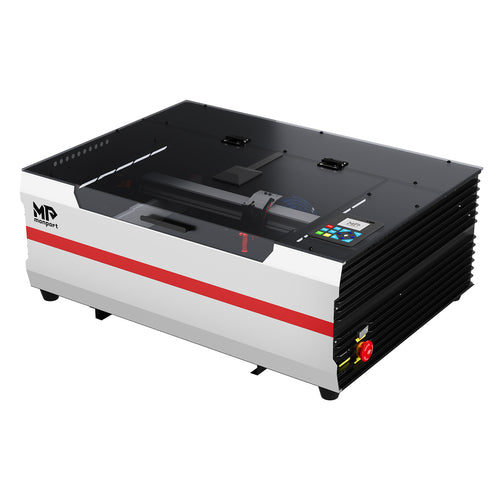
Consider a small signage company expanding into acrylic displays, wooden signage, and personalized products. The Monport MEGAS 70W CO₂ Laser Engraver is a relevant option to evaluate. Its published configuration includes a 700 × 350 mm work area, autofocus, an integrated camera, and batch-oriented features. Whether it is suitable depends on the buyer's materials, product size, safety setup, and workflow.
Now consider a manufacturer producing permanent markings on metal identification plates. The Monport GT Series Fiber Laser Machines are more relevant to that application. For demanding metal engraving jobs, the Monport GT 200W MOPA Fiber Laser is a higher-power option intended for professional metal marking and engraving. Actual depth, finish, and output vary with the material and job requirements.
These examples illustrate a purchasing principle: choose for the application first, then compare configuration, workflow, and budget.
Why Sample Evaluation Matters
Before committing to a machine, ask for representative work on the intended material or a sufficiently comparable grade. Evaluate detail reproduction, marking legibility, finish, repeatability, and expected throughput. Such evidence is more useful than selecting solely by advertised power.
Not sure which laser machine matches your materials? Tell Monport about your material types, required working area, and production goals so the team can discuss a suitable configuration.
Find the Right Laser Engraving Machine →
CO₂ vs. Fiber vs. Diode Laser Engraving Machines: Which One Should You Choose?

After material compatibility, compare the technology that best fits the business's primary products.
CO₂ Laser Engraving Machines
CO₂ systems are a common choice for compatible nonmetal materials such as wood, acrylic, paper, selected leather, and glass surface engraving. They serve sign-making, personalized goods, packaging, and decorative fabrication.
Look beyond output power to consider working area, material range, compatible accessories, operator protection, and the workshop's extraction and maintenance requirements. Monport offers both desktop CO₂ laser engravers and larger models for different shop needs.
Fiber Laser Marking Machines
Fiber lasers are widely used for direct marking and engraving on compatible metal surfaces. Applications include manufacturing traceability, metal branding, industrial tags, and permanent identification.
MOPA fiber technology offers additional pulse-control flexibility for selected marking effects. For example, the Monport GA 100W MOPA Fiber Laser is positioned for advanced metal engraving and selected color marking. Neither fiber marking nor deep engraving should be confused with general-purpose industrial sheet-metal cutting.
Diode Laser Engraving Machines
Diode lasers may be appropriate for compact engraving projects involving wood and selected compatible opaque or coated materials. Their limitations are important: ordinary blue diode systems are generally unsuitable for direct work on clear acrylic and many bare metals.
For suitable small-format work, buyers can review Monport's diode laser engraver range.
Quick Machine Comparison
| Feature | CO₂ Laser | Fiber Laser | Blue Diode Laser |
|---|---|---|---|
| Primary applications | Nonmetal engraving and cutting | Metal marking and engraving | Selected nonmetal engraving |
| Acrylic processing | Suitable for many grades | Not generally preferred | Limited, especially clear acrylic |
| Bare metal marking | May require marking compounds | Direct marking on compatible metals | Generally limited |
| Typical customers | Sign and fabrication shops | Industrial manufacturers | Small customization workshops |
No standard laser type is ideal for every material. Companies working across several material families may need multiple technologies or a suitable multi-source solution.
How to Choose the Right Laser Engraving Machine for Your Business
A useful equipment shortlist starts with the finished product rather than a headline power rating.

Identify Your Main Materials and Applications
List your primary material grades, thicknesses, finished-product dimensions, required markings, and whether cutting is necessary. A sign workshop working with large acrylic panels has different requirements from a manufacturer marking small metal parts.
Think about expected product mix as well. A machine should support realistic growth without forcing the business to pay for capacity that it will not use.
Consider Laser Power, Working Area, and Production Speed
Higher laser power is not always the best purchasing decision. Production capability also depends on material, design complexity, working field, quality requirements, and workflow.
For large signs, workspace size can be decisive. For repeated component marking, positioning consistency and batch handling may matter more. Ask how suppliers substantiate relevant capabilities with applications similar to your own.
Evaluate Software, Accessories, and Workflow
Confirm supported design formats, machine control software, training resources, and compatibility with the business's existing production workflow.
Cylindrical products may require a compatible rotary accessory; repeated work may depend on fixtures or appropriate job organization. Enclosures, extraction, cooling, and protective provisions belong in the buying decision, not as an afterthought. Verify what is included in each quoted configuration.
Compare Total Cost of Ownership
The purchase price is only part of equipment cost. Consider maintenance, consumables, replacement parts, training, operating expense, support availability, and the effect of downtime on orders.
For instance, an acrylic signage business may prioritize clean results on repeat sheet orders, while a metal-tag manufacturer may prioritize permanent marking, traceability, and production repeatability. Their total costs—and the machines that best meet their needs—will differ.
A related Monport guide on starting a laser engraving business covers how material choices and workflows affect a business model.
Why Choosing a Reliable Laser Engraving Machine Supplier Is Just as Important
Commercial buyers also need dependable equipment information and support. A reliable laser engraving machine supplier should help clarify whether a proposed system fits the intended materials, products, and operating conditions.

Equipment Quality and Application Testing
Look for clear specifications, available documentation, and representative application examples. Discuss working area, supported materials, production requirements, and the specific equipment configuration being quoted. Where possible, seek relevant samples or demonstrations rather than relying on generic product claims.
Technical Support and After-Sales Service
Review installation assistance, operator documentation, maintenance guidance, spare-parts arrangements, warranty terms, and communication channels. These factors affect business continuity as order volumes grow.
Monport provides product documentation and pre-sales and technical-support contact options through its official contact and support page. Coverage and included services should be confirmed for the specific purchase.
Customization and Business Scalability
A growing business may need different work areas, compatible rotary accessories, production fixtures, or workflow improvements. Monport's range includes CO₂ machines for compatible nonmetals and fiber systems for metal marking, allowing businesses to compare equipment by application.
What to Ask a Laser Engraving Machine Supplier
- Can this system handle our exact material grades and finishes?
- Can you provide representative engraving or marking samples?
- What are the actual working area and relevant production capabilities?
- Which software, accessories, and safety provisions are included?
- What technical assistance and documentation are available?
- What warranty and spare-parts policies apply?
Looking for a laser engraving machine supplier? Share the material types, part dimensions, and anticipated production workload with Monport to discuss equipment options.
Frequently Asked Questions About Laserable Materials and Engraving Machines
What materials can be laser engraved?
Common categories include wood, acrylic, certain plastics, compatible metals, glass, slate, and verified laser-safe leather. Exact material composition, coating, and laser source determine suitability. Unknown plastics and composites should not be assumed safe.
How do I find reliable laserable materials suppliers?
Compare product specifications, traceable composition, samples, repeat-order consistency, MOQ, availability, and delivery reliability. Suppliers should provide relevant technical and safety documentation, not just a broad "laserable" label.
Can one laser engraving machine process all materials?
No single standard laser type is ideal for every material. CO₂ systems commonly serve compatible nonmetals, fiber lasers serve direct marking of many metals, and diode or UV equipment fits selected other applications.
Which laser engraving machine is best for acrylic?
For many acrylic grades, especially clear acrylic, CO₂ technology is typically the preferred option. The right machine also depends on sheet thickness, product size, desired appearance, and workload. See Monport's laser engraver buying guide for more material-based comparisons.
Can a CO₂ laser engrave metal?
CO₂ systems can affect some coatings and anodized finishes. With appropriate marking compounds, they may also produce surface marks on certain bare metals. For direct marking and engraving of compatible bare metal, fiber lasers are generally more suitable.
What should I ask before purchasing a laser engraving machine?
Confirm material compatibility, realistic sample results, working area, required production volume, software, accessories, safety provisions, maintenance, technical support, and warranty terms. Ask for a quote for the actual required configuration rather than assuming all advertised features are included.
Choose Materials and Machines That Work Together
Choosing reliable laserable materials suppliers is fundamental to a consistent engraving business. But material quality alone cannot guarantee a satisfactory result when the machine is unsuitable for the application.
The strongest equipment decisions consider material specifications, laser technology, product dimensions, repeatability, workflow, and long-term operating costs together. Whether your business focuses on acrylic signage, personalized wooden goods, or industrial metal identification, a clear material-to-machine match helps reduce purchasing uncertainty.
Find the right laser engraving solution for your business. Explore Monport's laser engraving machines and accessories, or tell the team about your materials and production needs.