Why One Laser May Not Be Enough
Fiber laser engraver for metal technology and a desktop CO₂ laser engraver are designed for different types of laser processing. Choosing both can give makers and small businesses a wider product range, more customization options, and the ability to accept more types of orders.
A fiber laser is ideal for detailed metal marking, engraving, deep engraving, and color marking. A CO₂ laser works well with materials such as wood, acrylic, leather, glass, and slate. Together, they allow businesses to create complete products, such as a personalized metal nameplate with a custom wooden stand.
Instead of being limited to one material, businesses can serve wedding, gift, jewelry, and corporate customers while reducing the need to turn away orders because of material limitations.
Why Different Materials Need Different Lasers
Laser wavelength plays an important role in how a material reacts to the beam. Fiber lasers use a wavelength that is highly effective for many metals, while CO₂ lasers are well suited to many organic and non-metal materials.
| Material / Application | Fiber Laser | CO₂ Laser | Better Choice |
|---|---|---|---|
| Stainless steel | Excellent | Limited | Fiber |
| Aluminum | Excellent | Limited | Fiber |
| Brass | Excellent | Limited | Fiber |
| Wood | Limited | Excellent | CO₂ |
| Acrylic | Limited | Excellent | CO₂ |
| Leather | Possible | Excellent | CO₂ |
| Glass | Limited | Excellent | CO₂ |
| Slate/stone | Possible | Excellent | CO₂ |
| Thin metal cutting | Excellent | Limited | Fiber |
Understanding this difference helps prevent wasted material, poor engraving quality, and unnecessary testing.
Metal Engraving with a 60W Fiber Laser
For businesses producing metal signs, tools, jewelry, tags, plates, or personalized products, a fiber laser engraver for metal can provide the precision needed for professional results.
The Monport GT 60W Split MOPA Fiber Laser uses MOPA technology for precise metal engraving and color marking. It can reach engraving speeds of up to 10,000 mm/s, features autofocus, and offers a fine 0.03 mm spot size.
Its 60W power is also useful for deeper engraving and thin-metal cutting, depending on the material and settings. With an optional rotary axis, cylindrical products can also be marked more easily.

Non-Metal Projects with a CO₂ Laser
A desktop CO₂ laser engraver offers a different advantage: versatility across common craft and business materials.
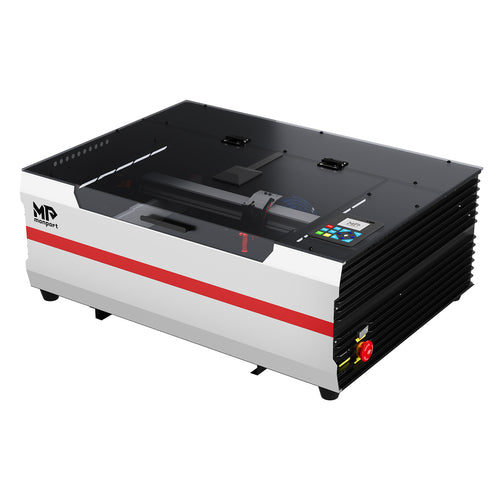
The Monport Reno65 Pro 65W CO₂ laser has a 24 × 16-inch work area, up to 800 mm/s engraving speed, assisted autofocus, and a 600 × 400 mm working area. It is designed for materials including wood, acrylic, leather, glass, slate, plastics, and more.
The machine can also cut acrylic up to 20 mm in a single pass under suitable conditions, making it useful for signs, displays, decorations, packaging, and custom products.

Fiber vs. CO₂: Which One Fits Your Work?
 |
 |
|
| Feature | GT 60W MOPA Fiber | Reno65 Pro CO₂ |
| Main strength | Metal marking | Non-metal cutting and engraving |
| Power | 60W | 65W |
| Speed | Up to 10,000 mm/s | Up to 800 mm/s |
| Best materials | Metals | Wood, acrylic, leather, glass, slate |
| Autofocus | Yes | Assisted autofocus |
| Typical users | Metal product businesses | Makers, sign shops, small businesses |
The best choice is not simply the machine with more power. It is the machine that matches your materials and production needs.
How Two Machines Create a More Flexible Workflow
Using both machines can help a small business accept a wider range of orders while keeping production organized. Instead of choosing between fiber and CO₂ technology, you can assign each machine to the materials and tasks it handles best.
For example, a business could use the fiber laser engraver for metal for detailed metal personalization and the desktop CO₂ laser engraver for cutting or engraving wood, acrylic, and other suitable materials.
1. Personalized Wedding Products
Wedding businesses can combine both machines to create complete personalized sets. For example, the Monport GT 60W fiber laser can engrave stainless-steel wedding tags, nameplates, or metal keychains, while the Monport Reno65 Pro CO₂ laser can cut matching wooden table numbers, acrylic signs, or invitation accessories.
A single wedding order could include:
- Personalized stainless-steel name tags made with the fiber laser
- Wooden table numbers cut with the CO₂ laser
- Acrylic wedding signs produced with the CO₂ laser
- Matching engraved metal keepsakes
This approach allows the business to offer coordinated products instead of selling only one type of personalized item.

2. Personalized Gifts and Jewelry
A gift or jewelry business may work with both metal and non-metal materials. The GT 60W fiber laser can be used to add names, dates, logos, or detailed designs to suitable metal jewelry, keychains, and other metal gifts.
The Reno65 Pro CO₂ laser, meanwhile, can cut and engrave wooden jewelry boxes, acrylic gift tags, display pieces, or packaging inserts.
For example, a customer could order a personalized metal necklace together with a custom wooden jewelry box. The fiber laser handles the metal personalization, while the CO₂ laser produces the box. The two machines turn separate components into one higher-value gift package.

3. Corporate and Promotional Products
Corporate orders can also benefit from a two-machine setup. A company may need branded metal products such as stainless-steel tags, metal awards, or promotional accessories. These can be processed with the GT 60W fiber laser.
At the same time, the Reno65 Pro CO₂ laser can cut or engrave wooden plaques, acrylic signs, desk accessories, or presentation pieces.
For example, a corporate gift package could include a personalized metal nameplate, an engraved wooden stand, and an acrylic company logo. Each material can be sent to the machine best suited for the job, creating a more professional and complete product.

A Simple Two-Machine Workflow
A flexible workflow can look like this:
- Prepare the design in your preferred design software.
- Identify the material and determine which machine is appropriate.
- Send stainless-steel or other suitable metal products to the fiber laser engraver for metal.
- Send wood, acrylic, or other suitable non-metal materials to the desktop CO₂ laser engraver.
- Test settings on scrap material before production.
- Complete the required engraving or cutting.
- Inspect, assemble, and package the finished products.
For instance, a customer could order a personalized metal nameplate and a matching wooden display stand. The Monport GT 60W can handle the metal engraving, while the Reno65 Pro can cut and engrave the wooden stand. The result is a complete product package made using two different laser technologies.
By combining fiber and CO₂ lasers, businesses can expand their product range, take on more varied orders, and create customized packages that would be difficult to produce efficiently with only one type of machine.
Important Details Before Choosing
Consider these points before purchasing:
- Material: Metal projects generally favor fiber technology, while wood and acrylic favor CO₂.
- Thickness: Cutting thicker materials may require more suitable power and tested settings.
- Work area: Larger products need enough bed space.
- Production volume: Faster machines can help when handling repeated orders.
- Product type: Think about what customers actually buy from you.
- Future expansion: A second laser can open new product categories.

Key Takeaways
- A fiber laser engraver for metal is a strong choice for detailed metal marking and engraving.
- A desktop CO₂ laser engraver is highly useful for wood, acrylic, leather, glass, and similar materials.
- The GT 60W MOPA combines speed, autofocus, precision, and metal-focused capabilities.
- The Reno65 Pro provides a larger 24 × 16-inch format and strong cutting and engraving capability for non-metal materials.
- Combining both machines can help businesses offer more customized products.

FAQs
Is it worth owning both a fiber and CO₂ laser?
Yes, if you want to offer more products. A fiber laser handles metal, while a CO₂ laser works with materials such as wood and acrylic. Together, they can help expand your product range.
Which laser is better for a small business?
It depends on your products. Choose a fiber laser if you mainly work with metal. Choose a CO₂ laser if you focus on wood, acrylic, leather, glass, or cutting projects.
Can one laser replace the other?
Not completely. Fiber and CO₂ lasers are designed for different materials and applications, so using both gives you greater flexibility.
Can I use both lasers for the same customer order?
Yes. For example, you can engrave a metal nameplate with a fiber laser and create a matching wooden or acrylic display with a CO₂ laser.
Does owning two lasers help increase product options?
Yes. Using both machines allows you to combine different materials and create products for weddings, personalized gifts, jewelry, and corporate orders.
Conclusion: Build a More Versatile Laser Workshop
A fiber laser engraver for metal and a desktop CO₂ laser engraver are not necessarily competing technologies. They can complement each other. The fiber laser handles detailed metal work, while the CO₂ laser expands your ability to cut and engrave non-metal materials.
If you want to move beyond a single material category, the Monport GT 60W and Reno65 Pro can form a practical two-machine workflow. Explore the machines, compare your current product needs, and choose the setup that gives your business room to create more.
Ready to expand what you can produce? Explore the Monport GT 60W MOPA Fiber Laser and Reno65 Pro CO₂ Laser to build a more flexible laser-processing setup for your next range of products.