Laser Cut Wedding Invitations can be more than a one-time craft project. They can become a product line for creative professionals and businesses that already work with weddings, stationery, printing, personalization, or custom products. A laser engraving and cutting machine can help these businesses handle detailed designs, personalization, small-batch orders, and repeat production with greater consistency.

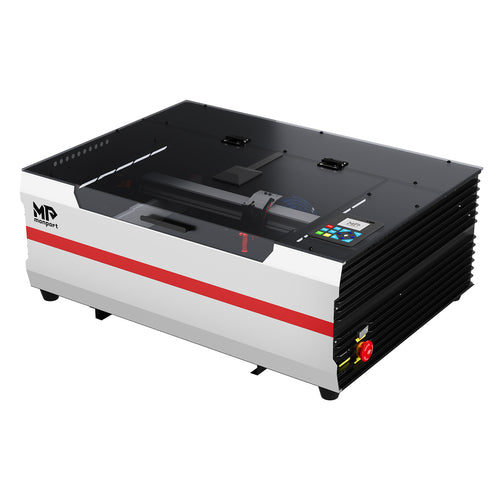
Monport Effi9S Upgraded 90W CO2 Laser Engraver & Cutter (36" × 24") with Autofocus and Built-in Water Chiller

Who Can Profit from Making Laser Cut Wedding Invitations?
Wedding Invitation Designers
Wedding invitation designers often create highly detailed layouts that can be difficult to reproduce with standard paper-cutting tools. Intricate borders, monograms, layered patterns, and decorative lettering may require significant manual cutting and assembly.
A laser cutter can address this problem by producing precise decorative cuts directly from a prepared digital design. Designers can create more complex invitation styles while keeping the design consistent across multiple pieces. This can also make it easier to offer different levels of customization without redesigning the entire product.
Wedding Stationery Businesses
Wedding stationery businesses often produce more than invitations. Customers may also request RSVP cards, menus, table numbers, place cards, thank-you cards, and other matching pieces.
One challenge is maintaining a consistent design across many different products while managing production time. A laser cutter can help stationery businesses reproduce matching patterns, shapes, and decorative elements across a collection. This makes it easier to build coordinated wedding stationery packages and take on larger custom orders.
Wedding Stationery Businesses
Wedding stationery businesses often produce more than invitations. Customers may also request RSVP cards, menus, table numbers, place cards, thank-you cards, and other matching pieces.
One challenge is maintaining a consistent design across many different products while managing production time. A laser cutter can help stationery businesses reproduce matching patterns, shapes, and decorative elements across a collection. This makes it easier to build coordinated wedding stationery packages and take on larger custom orders.
Custom Printing Shops
Custom printing shops may already have equipment for producing standard invitations, but customers sometimes request finishes that traditional printing alone cannot provide. Intricate cutouts, layered designs, decorative shapes, and personalized details can require additional tools or manual work.
Adding laser cutting to the production process can expand the range of services a printing shop offers. Instead of referring customers elsewhere for specialty cutting, the shop can produce certain custom elements in-house. This can create opportunities for premium invitation packages and other personalized wedding products.
Wedding Planners and Event Design Studios
Wedding planners and event design studios frequently work with couples who want a consistent visual theme across their wedding. However, coordinating invitations, signage, table decorations, and other details can involve multiple suppliers.
A laser cutter can help event-focused businesses create or prototype customized elements themselves. For example, the same monogram or decorative pattern used on an invitation can be adapted for table numbers, welcome signs, place cards, or other wedding details. This can make it easier to offer a more coordinated event concept while reducing dependence on multiple production surces for certain items.
Laser Engraving and Personalised Gift Businesses
Businesses that already create personalized gifts may find wedding invitations a natural extension of their product range. Their existing customers may also be interested in wedding-related products such as engraved keepsakes, signage, gift tags, and decorative pieces.
The challenge for these businesses is finding products that make use of their existing customization capabilities while reaching new customers. Laser-cut wedding invitations provide another application for detailed cutting and personalization. Names, initials, dates, monograms, decorative patterns, and layered elements can be incorporated into designs based on the customer's requirements.
Etsy and Online Wedding Sellers
Online wedding sellers often compete through customization, visual presentation, and the ability to offer products for specific wedding themes. However, manually producing every customized order can become time-consuming as order volume increases.
A laser cutter can help online sellers turn digital designs into repeatable physical products. Once a design has been tested and approved, the same production file can be used for multiple orders while changing personalized details such as names and dates. This can make custom products easier to manage as the shop grows.
For online sellers, laser cutting can also support product expansion. A successful invitation design can become a coordinated collection that includes RSVP cards, wedding signage, table numbers, gift tags, and other personalized wedding products.
1. Start With a Clear Invitation Design
Good Laser Cut Wedding Invitations begin with a design that is attractive but also suitable for laser cutting. Very thin lines, tiny text, or overly complex patterns may not cut cleanly.
When preparing your design, consider:
- Use readable fonts with enough spacing.
- Avoid extremely thin bridges between design elements.
- Create a clear border around the invitation.
- Leave enough space for names, dates, and venue details.
- Test decorative patterns before producing a large batch.
- Design separate layers when you want a more dimensional effect.
Software such as LightBurn can help prepare and control laser-cutting files. A well-organized file can also make batch production easier when producing invitations for weddings and events.

2. Choose Materials That Match the Wedding Style
Material choice strongly affects the final appearance and selling price of Laser Cut Wedding Invitations. Paper and cardstock are common choices for stationery, while thin wood and other compatible materials can be used for more distinctive designs.
| Material | Suitable Style | Main Advantage |
|---|---|---|
| Cardstock | Classic and modern weddings | Easy to customize |
| Specialty paper | Elegant invitations | Premium appearance |
| Thin plywood | Rustic or outdoor weddings | Adds texture |
| Acrylic | Modern weddings | Clean, contemporary look |
| Layered materials | Luxury designs | Creates depth |
Always test the specific material and thickness before production. Laser settings can vary depending on the material, coating, and design.

3. Prepare the Laser Cutter
Before making a full order of Laser Cut Wedding Invitations, prepare the machine carefully. Correct focus, material positioning, ventilation, and cutting settings all affect the final result.
The Monport Effi9S Upgraded 90W CO₂ Laser Engraver & Cutter is designed around larger-scale processing, with a 36" × 24" workspace, autofocus, and a built-in CW5200 cooling system. Its larger working area can be useful when producing multiple pieces in a batch.
Its listed features include:
- Up to 1400 mm/s speed
- 36" × 24" processing area
- 0.01 mm autofocus precision
- Built-in CW5200 cooling system
- 550W exhaust system
- Compatibility with common laser-design workflows
- On-machine controls
- Support for multiple material applications
For makers producing custom orders, these features can help reduce repetitive setup work and support larger production runs.

4. Test Before Cutting the Full Order
One of the most important steps in producing Laser Cut Wedding Invitations is making a sample first. Do not immediately cut 100 or 200 pieces using untested settings.
Create one or several test pieces to check:
- Cutting depth
- Edge quality
- Engraving clarity
- Small text
- Decorative details
- Material warping
- Assembly fit
- Overall appearance
A sample also gives your customer something concrete to approve before you begin a large order.

5. Add Layers and Personal Details
Personalization is one of the strongest selling points of laser cut invitations. Couples may want their names, wedding date, initials, monogram, venue, or a special decorative pattern included in the design.
You can create different product tiers:
| Package | Possible Features |
|---|---|
| Basic | Single-layer invitation |
| Classic | Decorative cut pattern + printed insert |
| Premium | Multiple layers + personalized names |
| Luxury | Complex design + envelope + matching details |
This gives customers different price points without requiring you to create an entirely different product category.

6. Make Production Efficient
When producing Laser Cut Wedding Invitations for an actual customer, efficiency matters as much as design quality. Arrange multiple invitation pieces efficiently within the working area to reduce material waste.
For larger orders, consider:
- Preparing one approved master design.
- Creating a production-ready cutting file.
- Testing the first piece.
- Cutting several pieces per batch.
- Inspecting pieces before assembly.
- Organizing finished pieces by order.
- Completing printing, folding, and packaging separately.
The Effi9S's large working area can be particularly useful for batch-oriented production because more material can be processed within a single workspace.

7. Price the Product for Profit
Beautiful laser cut invitations should not be priced based only on paper and material costs. Your price should also account for design time, machine time, electricity, labor, packaging, failed pieces, and customization.
A simple pricing structure is:
Material + Machine Cost + Labor + Packaging + Design Fee + Profit = Selling Price
For highly customized wedding orders, charge an additional design or personalization fee when appropriate. This prevents complex customer requests from reducing your profit.

8. Sell More Than the Invitation
Once you have established Laser Cut Wedding Invitations as a product, you can create matching wedding stationery. This can increase the value of each customer order.
Consider offering:
- RSVP cards
- Save-the-date cards
- Wedding menus
- Table numbers
- Place cards
- Thank-you cards
- Wedding signage
- Envelope decorations
- Matching gift tags
A coordinated collection can make your business more attractive to couples who want a consistent wedding theme.

FAQs
Are laser-cut wedding invitations expensive to make?
The cost depends on the material, design complexity, machine time, personalization, and quantity. Batch production can help reduce the cost per piece.
What materials can be used?
Compatible cardstock, specialty paper, thin plywood, acrylic, and other laser-suitable materials may be considered. Always test the specific material before production.
Is a powerful CO₂ laser useful for invitation businesses?
A CO₂ laser can be useful for businesses that want to work with different materials and produce customized items in batches. The right machine depends on the materials, order volume, workspace, and production requirements.
Can I sell personalized designs?
Yes. Names, dates, initials, monograms, and decorative patterns can be incorporated into custom laser cut invitations, provided the design and materials are suitable for the production process.
How can I make my invitations stand out?
Focus on clean cutting, thoughtful typography, quality materials, personalization, attractive packaging, and matching stationery. A complete wedding stationery collection can make the offer more valuable.
Important Details to Remember
Before accepting a large order, make sure you:
- Approve the customer's final design.
- Test the selected material.
- Confirm spelling of names and dates.
- Check cutting and engraving settings.
- Produce a physical sample.
- Calculate the complete production cost.
- Allow time for assembly and quality checking.
- Include packaging and possible replacement pieces in your pricing.

Takeaways
Making Laser Cut Wedding Invitations successfully requires more than simply cutting a decorative pattern. The strongest products combine good design, suitable materials, accurate production, personalization, and sensible pricing.
For makers planning to move from occasional projects into larger custom orders, a larger CO₂ laser such as the Monport Effi9S can provide a spacious 36" × 24" workspace, autofocus, built-in cooling, and production-focused features for handling larger projects.

Turn Your Wedding Designs Into a Custom Product
If you want to move beyond small craft projects and build a custom stationery business, the right laser cutter can help you work on invitations, signage, gifts, and other personalized products from one workspace.
The Monport Effi9S Upgraded 90W CO₂ Laser Engraver & Cutter combines a large 36" × 24" workspace with autofocus, high-speed processing, cooling, and strong exhaust performance. For creators interested in producing Laser Cut Wedding Invitations alongside other custom products, it offers a practical platform for testing designs and expanding batch production.