Yes, a crafter can make money with AI—but the income comes from a useful offer, not from AI output by itself. AI can shorten research, concept development, personalization, mockup, copywriting, and planning tasks. It does not create demand, verify rights, test a material, finish a product, or guarantee a sale.
Short answer: the most practical models are AI-assisted physical products, digital design files, custom design services, print-on-demand products, small-business packages, seasonal collections, and education or templates. The best starting point depends on whether you already have an audience, equipment, production skills, or a preference for digital work.
This guide treats AI as a productivity layer inside a real craft business. Start with one audience, one product family, and one sales channel. Validate a specific offer before buying equipment, producing a large inventory, or publishing a large catalog of unedited designs.
Quick answer: 7 ways to make money with AI as a crafter
| Business model | What you sell | Where AI helps | What still requires human work |
|---|---|---|---|
| AI-assisted physical products | Personalized gifts, signs, décor, accessories, or engraved products | Ideas, variations, mockups, personalization, and listing drafts | File editing, material testing, production, finishing, and fulfillment |
| Digital design files | SVG, DXF, templates, engraving artwork, patterns, or project files | Concept exploration, style directions, and first drafts | Path cleanup, scale checks, machine testing, licensing, and support |
| Custom design and personalization | Made-to-order artwork, portraits, names, logos, or event designs | Brief interpretation, layout options, and revision starting points | Client communication, proof approval, editing, and delivery |
| Print-on-demand products | Apparel, posters, mugs, stationery, or other made-to-order goods | Collection themes, artwork directions, mockups, and copy variations | Originality checks, sample orders, brand building, and platform management |
| Small-business packages | Menus, signs, social graphics, product mockups, or branded displays | Concepts, copy variations, and reusable workflows | Brand accuracy, production details, approval, and deadline control |
| Seasonal collections | Holiday, wedding, event, or local-theme products | Theme development, product variations, and content planning | Demand testing, production planning, photography, and timely fulfillment |
| Education and templates | Workshops, checklists, project guides, or workflow templates | Lesson structure, examples, and documentation drafts | Accurate instruction, real experience, support, and proof of usefulness |
For many beginners, the first useful test is one small service or product that matches an existing skill. A narrow offer is easier to make, price, photograph, explain, and improve than a store filled with unrelated AI designs.
Which AI business model should you test first?

Do not choose a model only because it sounds scalable. Choose the model that fits the resources and evidence you already have. The table below is a starting decision framework, not a promise that one route will work for every maker.
| Your current situation | First model to test | Why it may fit | First useful test |
|---|---|---|---|
| You have design skills but no equipment | Digital files or custom design services | You can test demand without adding a production machine | Prepare one focused file kit or offer one defined service package |
| You already own suitable equipment | AI-assisted physical products | You can connect design work to a real production workflow | Make a small set of related samples for one audience |
| You want to avoid holding inventory | Digital products or print-on-demand | Orders can be fulfilled digitally or by a production partner | Publish a limited collection and order or test a real sample |
| You enjoy local sales and communication | Custom services or small-business packages | Customer context can create more value than a generic design | Build one offer around a clear business or event need |
| You have a repeatable workflow worth teaching | Templates, workshops, or project guides | The process itself may be useful to other makers | Document one tested outcome, including limitations and mistakes |
A simple priority rule
- Use an existing skill before buying a new tool.
- Choose a product or service that solves one recognizable customer problem.
- Test the smallest version that can produce a paid signal.
- Invest in equipment or a larger catalog only after the workflow and buyer are clearer.
What actually creates profit in an AI-assisted craft business?

AI can reduce the time needed for some tasks, but it does not remove the costs around a sale. A workable offer still needs five parts:
- A specific buyer: such as pet owners, wedding planners, local cafés, new homeowners, or other makers.
- A clear reason to buy: the item should solve a problem, mark an occasion, save time, or feel meaningfully personal.
- A repeatable delivery process: you should be able to produce the result more than once without starting from zero.
- A complete price: materials, labor, fees, packaging, mistakes, overhead, and profit all need to be considered.
- A route to qualified buyers: a marketplace, local network, social audience, business outreach, or your own store.
The common mistake is to count revenue as profit. A design may take minutes to generate, while editing, customer messages, testing, photography, shipping, refunds, and support take much longer. Price the complete job, not just the moment when an AI tool produces an image.
1. Sell AI-assisted physical products

Physical products can be a strong fit for crafters because buyers can understand the value of a finished object, especially when it is personalized or connected to an occasion. The item might be laser engraved, laser cut, printed, assembled, or finished by hand.
Product directions to test
- Personalized signs and home décor
- Wedding and event accessories
- Pet tags and memorial products
- Desk accessories and business gifts
- Small-batch ornaments and seasonal décor
- Packaging inserts, display pieces, and branded accessories
Use AI to explore several concepts for one audience, translate a customer brief into visual directions, or draft product descriptions. Then edit the design yourself and test the real production method. Check proportions, spelling, small details, line connections, surface finish, and whether the design remains readable at the size you plan to sell.
Illustrative workflow: AI pet line art to a memorial plaque
The following is an illustrative workflow, not a claim about a real customer or guaranteed demand. It shows how the value is created across the process:
- Define the brief: identify the buyer, plaque shape, material, size, text, and the level of detail the production method can reproduce.
- Explore concepts: use AI to produce several simplified line-art directions from the customer’s reference and chosen style.
- Rebuild the file: trace or redraw the selected concept, remove fragile details, correct the lettering, and prepare a clean production file.
- Test the material: make a sample or small test area. Check contrast, burn or mark quality, edge detail, and readability from a normal viewing distance.
- Approve before production: send the customer a proof with the exact name, date, and layout. Record the approved version.
- Finish and document: produce the plaque, inspect it, photograph the real item, and explain care or mounting instructions in the listing.
In this example, AI supports concept development. The sellable value comes from interpretation, file preparation, production testing, customer approval, and a finished object that matches the promise.
Where a laser engraver fits
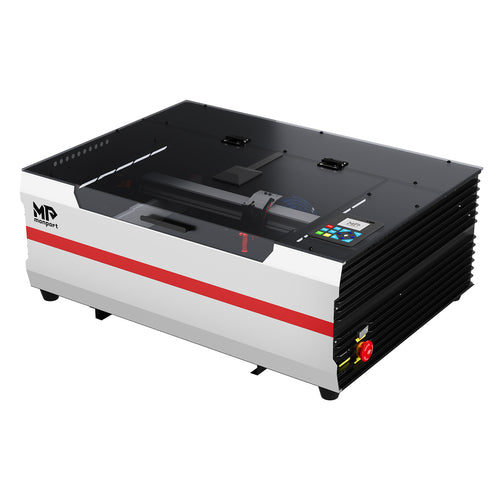
A laser can turn a digital concept into a physical product, but the machine should follow the material, product size, production volume, and safety requirements. Use the Monport laser engraver collection as a category starting point, then compare machine type, working area, focusing method, software, safety controls, and accessories.
Wood, acrylic, leather, paper, and similar nonmetal projects may follow a different workflow from direct marking on metal. Compare the Monport CO2 laser collection and the Monport MOPA fiber collection according to the material and finish you actually intend to sell. Do not choose a machine from a single product photograph or from a claimed speed alone.
Before you list a physical product
- Make at least one real sample using the material and finish in the listing.
- Write down the personalization limits, maximum text length, and proofing process.
- Measure the actual design and package, not only the digital mockup.
- Record production time, failed pieces, finishing time, and packing time.
- Photograph the real product and disclose meaningful variations.
For more product directions, review Monport’s guide to laser engraving projects you can sell online. Treat the list as a source of ideas, then narrow it to products your audience can actually buy and you can produce consistently.
2. Sell digital design files and project assets
Digital products avoid packaging and shipping, but they are not automatically easy to sell. Buyers expect files that open correctly, use clean paths, include sensible dimensions, and work with the software or equipment described in the listing.

Digital products makers may buy
- SVG or DXF cut files
- Engraving-ready line art
- Layered sign templates
- Ornament, card, and event templates
- Monogram and personalization layouts
- Project instructions and material lists
- Mockup scenes for product sellers
Illustrative product: a tested file kit for a marketplace buyer
Imagine a file kit for a maker who wants to create a small personalized sign. The useful product is not a folder of attractive AI images. It is a clearly organized package that helps the buyer reach a predictable result:
- Choose a narrow use case, such as a sign size, event type, or material.
- Create several concepts, then select and edit only the designs that fit the use case.
- Convert artwork into clean vector paths and remove unnecessary nodes.
- Check closed paths, line weights, scaling, text spacing, and layer names.
- Test at the intended size and on a representative material when the file is made for cutting or engraving.
- Package the files with a readme, dimensions, supported formats, license terms, and a clear preview.
Monport’s laser engraving materials collection can help you frame file products around real materials rather than abstract artwork. A material-specific description is more useful to a buyer than a claim that a file works for everything.
What customers are paying for
- Selection: the buyer does not have to sort through unusable concepts.
- Editing: the design is cleaner and more production-ready.
- Compatibility: formats, dimensions, and layers are clearly explained.
- Instructions: the buyer knows how to open, resize, or assemble the file.
- Confidence: the product has been reviewed against the promised use case.
Do not present unedited AI output as the whole product. Keep your source files, editing history, prompts, and license information for your own records, but do not assume that a tool’s commercial-use wording resolves every copyright or trademark question.
3. Offer custom design and personalization services
Some customers do not want a file library. They want a result based on their name, pet, wedding date, family story, logo, or business identity. A service can be easier to differentiate than a generic catalog because the customer is paying for interpretation and communication as well as the final file or object.

Service packages to consider
- Turn a customer photo into a simplified engraving design.
- Create a coordinated set of wedding or event graphics.
- Prepare a logo or nameplate layout for a local business.
- Offer defined personalization options for one physical product.
- Convert an existing idea into a file suited to a specific material and machine process.
Make the service specific before you sell it
A clear service description should state what the buyer sends, what you deliver, how many concepts or revisions are included, which file formats are supplied, whether production is included, and when the customer must approve the proof. A defined process protects both sides from an open-ended “make it look good” project.
Confirm spelling before production. Ask for approval of the final proof. Keep the approved version with the order record. If the request involves a logo, character, celebrity image, or other protected identity, ask the customer to confirm that they have the necessary rights instead of treating an AI prompt as permission.
When a service is more defensible than a product listing
Custom work can make sense when the buyer has a meaningful context that a generic listing cannot address. It can also expose a hidden cost: revisions and communication may take longer than the design itself. Track those hours from the first inquiry so that a popular service does not become an underpriced one.
4. Build a print-on-demand product line
Print-on-demand can reduce the need to hold finished inventory. You create the artwork, publish the listing, and a production partner makes and ships the item after an order. AI may help with themes, collection planning, mockups, and copy variations.

When print-on-demand may fit
- You want to test several designs without purchasing finished inventory.
- The product does not require extensive hand finishing.
- You can build a recognizable theme rather than upload unrelated graphics.
- You are willing to order samples and check the real print quality.
Risks to calculate before publishing
You have less control over production, packaging, shipping speed, and returns than you would with an in-house workflow. Calculate the margin after the supplier charge, marketplace fee, payment processing, tax, advertising, refunds, and customer support. A design that looks profitable before those costs may not be profitable after fulfillment.
Print-on-demand also rewards differentiation. A large volume of generic AI designs can make a store look interchangeable. A clear audience, consistent visual language, useful product photography, and original human editing are more valuable than simply publishing more listings.
5. Create AI-assisted packages for small businesses
AI can help a maker serve local businesses that need practical visual and physical assets. Instead of selling only a decorative product, you can offer a package with a clear business purpose and a defined approval process.

Illustrative workflow: a local café menu and table-number package
This example is a planning model, not a claim about a real café or a promised result:
- Collect the brief: confirm the business name, menu wording, table-number range, brand colors, dimensions, materials, and installation requirements.
- Explore directions: use AI to produce several layout and visual directions, not a final file containing unverified business information.
- Build the production files: replace placeholder text, check every price and spelling detail, and prepare the menu insert and table-number files for the selected material.
- Approve one proof: give the client a clearly labeled proof and record the approved copy and dimensions.
- Test one sample: check contrast, readability, surface finish, mounting, and whether the item works in the café’s lighting and space.
- Produce the batch: use the approved version, inspect each item, and provide a simple care or installation note.
Business buyers often value accuracy more than novelty. Names, prices, addresses, phone numbers, QR codes, and brand colors must be checked by a person. One incorrect detail can make an otherwise attractive package unusable.
If you plan to produce larger batches, compare workspace, repeatability, material handling, and the time required for setup and finishing—not only the appearance of a single sample. Monport’s desktop laser engraver collection and laser accessories collection are useful internal starting points for evaluating a small-shop setup.
6. Launch seasonal and occasion-based collections
Seasonal products can create urgency, but they also create deadlines. AI is useful for exploring collection themes, personalization options, product names, content calendars, and variations for different buyers.
Build around an audience, not only a holiday
“Halloween products” is broad. “Personalized classroom Halloween door signs for elementary teachers” gives you a buyer, an occasion, and a product direction. “Wedding décor” is broad. “Minimalist table numbers for small outdoor weddings” is easier to turn into a focused collection.
Choose products that share materials, packaging, photography, and production steps. Shared components make a collection easier to produce and make the store easier for customers to understand. Create only as many variations as you can photograph, describe, and fulfill accurately.
Test before the deadline arrives
Make a prototype early enough to find problems with material availability, engraving time, packaging, shipping, personalization, or supplier lead times. Do not promise a delivery date until the real workflow has been tested. For additional ideas, review Monport’s guide to laser engraving ideas to sell, then narrow the list to products you can produce consistently.
7. Teach a workflow or sell useful templates
Once you have a repeatable process, you may be able to sell the process through workshops, tutorials, checklists, templates, or a small membership. This model works best when the material comes from real practice rather than generic AI-written advice.
Useful education products
- A beginner workshop for creating and testing one personalized product
- A material-testing worksheet for a laser workflow
- A customer-proof and order-management template
- A seasonal product planning calendar
- A guide to preparing files for a specific machine process
AI can help organize a lesson or create a documentation draft, but learners need accurate steps, realistic limitations, and support when the result does not match the example. Show what you tested, what failed, and what the learner should check before repeating the process.
Common mistakes that make AI craft businesses less profitable
- Buying equipment before defining the offer: a machine can expand production, but it does not identify a buyer or prove demand.
- Listing raw AI output: unedited images can contain fragile details, incorrect text, inconsistent styles, or rights problems.
- Using mockups instead of real samples: a mockup cannot prove that the design works on the selected material or arrives as described.
- Allowing unlimited revisions: custom work needs a proofing process and a clear boundary for included changes.
- Ignoring platform and tool terms: commercial-use permissions, disclosure rules, and marketplace standards can change.
- Counting gross revenue as profit: labor, waste, fees, shipping, refunds, and support belong in the calculation.
How to validate an AI business idea before spending heavily?
Validation is not a popularity contest. A post with many likes may show interest in an image, not willingness to buy the finished product. A stronger test connects a specific buyer to a specific offer and a real delivery process.

- Choose one buyer and use case. Write down who buys, when they buy, and what outcome the product provides.
- Write one product brief. Define the item, customization, material, size, delivery time, and what the customer receives.
- Create a small prototype set. Make a few related variations that share the same production method instead of dozens of unrelated designs.
- Test the actual workflow. Include design cleanup, production, finishing, photography, packaging, and customer communication.
- Show the real result. Use finished products or accurate proofs, and explain what is customized or made to order.
- Ask for a buying signal. Look for a specific inquiry, quote request, deposit, preorder, paid sample, or order—not only compliments.
- Record the job. Track design time, production time, materials, failed pieces, packaging, shipping, and revisions.
- Keep, revise, or stop. Continue only when the offer attracts the right buyer and the workflow can meet the promised quality and price.
How to interpret the signal
| Signal | What it tells you | What it does not prove |
|---|---|---|
| Likes, saves, or compliments | The concept may attract attention | That buyers will pay the required price |
| Specific questions about size, material, or delivery | Someone is considering the practical offer | That the full workflow is profitable |
| A quote request, deposit, preorder, or paid sample | The offer has a stronger commercial signal | That every order will be easy to fulfill |
| A repeat order or referral | The result may have created ongoing value | That the business can scale without process changes |
When to keep, revise, or stop
- Keep testing when the right buyers understand the offer and the complete job can be delivered at a workable price.
- Revise the offer when people like the concept but ask for a different material, size, personalization option, or delivery format.
- Stop or pause when the product cannot be made consistently, the rights position is unclear, or the price required to cover the work is unacceptable to the intended buyer.
If your plan involves buying a laser, define the first product family before choosing the machine. A home laser engraving business needs a customer, an offer, a safe production process, pricing, and a route to market. The machine supports that model; it does not replace it. Monport’s guide to making money with a home laser engraving business can be used as a related planning resource.
How to price AI-assisted products?
A practical starting formula is:
Price = materials + consumables + packaging + platform and payment fees + labor + overhead allowance + error allowance + target profit.

Labor includes more than machine time. Count concept development, editing, file preparation, customer approvals, setup, cleaning, finishing, photography, listing updates, packing, and support. If a design requires several revisions, decide whether revisions are included or charged separately.
| Cost category | Questions to answer before publishing a price |
|---|---|
| Materials and consumables | What does one acceptable finished item use, including test pieces and ordinary waste? |
| Labor | How long do design, communication, production, finishing, packing, and support take? |
| Equipment and workspace | What share of maintenance, software, electricity, ventilation, and equipment use belongs to the job? |
| Sales channel | Which fees, advertising costs, payment charges, taxes, returns, and shipping costs apply? |
| Customer risk | What happens if text changes after approval, a delivery is rushed, or a remake is needed? |
A clear quote structure for custom work
For a personalized order, separate the quote into a base product, personalization or design work, optional rush handling, shipping, and any extra revisions. The structure helps the customer see what they are buying and helps you identify which part of the job is taking too much time.
Do not use “AI makes the design free” as a pricing argument. The customer is paying for a finished solution and the judgment required to make it accurate, usable, and deliverable.
Where can you sell AI-assisted products?
| Channel | Useful for | What to verify |
|---|---|---|
| Online marketplace | Testing demand where buyers already search | Listing rules, fees, disclosure requirements, competition, and service standards |
| Your own store | Building a brand and owning more of the customer relationship | Traffic generation, payment setup, shipping, returns, and trust signals |
| Craft fairs and local markets | Fast feedback and in-person product testing | Booth cost, inventory, payment method, weather, and local demand |
| Direct business outreach | Signs, gifts, displays, event items, and repeat orders | Proofing, contracts, lead times, purchase orders, and consistent production |
| Digital asset marketplace | Files, templates, and instructions | File quality, licensing, support load, refunds, and platform rules |
Choose the channel where your intended buyer already looks and where you can meet the expected service level. A marketplace may help discovery, while direct outreach may produce a more specific brief. Neither channel removes the need to prove the offer.
AI, copyright, trademarks, and marketplace rules
Before selling an AI-assisted product, check the current commercial-use terms of the AI tool, the rules of the sales channel, and the rights connected to the source material. Keep records of your original input, edits, source assets, and final human contribution.
Review the Etsy Creativity Standards before listing AI-assisted work on Etsy. The standards include rules for seller-prompted AI creations and disclosure requirements can change, so confirm the live policy and the category rules that apply to your listing.
The U.S. Copyright Office’s copyright and AI resources explain why copyright questions can depend on the human authorship and creative contribution involved. This is not legal advice, and the applicable rules may differ by country. For brand names and logos, use the USPTO trademark search as one part of a clearance process before building a product line around a phrase or mark.
Four checks before publishing
- Tool terms: confirm how the AI tool treats commercial use, uploaded references, and output limitations.
- Platform rules: check disclosure, handmade, production-partner, digital-file, and prohibited-content requirements.
- Third-party rights: do not sell a protected character, logo, celebrity likeness, brand phrase, or copied artwork simply because an AI tool can generate something similar.
- Human quality control: keep evidence of your editing, design decisions, testing, approvals, and final production checks.
Use a human quality-control checklist
- Is every name, date, price, and other text spelled correctly?
- Are the proportions, paths, and line connections usable?
- Does the file work at the intended size and material?
- Does the design resemble protected characters, logos, or existing artwork?
- Have customer, tool, and platform requirements been checked?
- Does the real product match the mockup and listing description?
A practical 30-day launch plan
Days 1–7: choose the audience and offer
Choose one buyer and one product family. Write a brief that states the problem or occasion, product format, material, personalization limits, delivery promise, and sales channel. Do not begin by generating an unlimited catalog.
Days 8–14: create and test prototypes
Use AI for concept variations, then edit the best options yourself. Produce a small set of real samples or production-ready files. Record design time, material use, failed pieces, finishing steps, and any compatibility problems.
Days 15–21: prepare the sales system
Choose one sales channel, set a price using the full-cost formula, photograph the actual result, write clear personalization rules, and define the proofing, production, shipping, and return process.
Days 22–30: collect buying signals
Publish a small collection, contact relevant local businesses, attend a market, or invite a limited group to review the product. Track inquiries, quote requests, paid orders, revisions, production time, and objections. Use those observations to keep, revise, or stop the offer.
For examples of how makers turn laser projects into products, review Monport’s small-business stories. Use examples for workflow ideas, not as a promise that another seller’s results will repeat for you.
Frequently asked questions
What is the easiest way to make money with AI as a crafter?
There is no universally easiest method. A practical starting point is usually a small product or service that matches an existing skill, material, and audience. Test one defined offer before building a large catalog or purchasing new equipment.
Can I make money with AI-generated art?
You may be able to sell products that use AI-assisted artwork, but commercial use depends on the tool’s terms, the marketplace’s rules, and the rights connected to the output and source material. Human editing, quality control, and accurate listing information remain important.
Can I use AI designs for laser engraving?
AI can help create a concept, but the design must be converted into a clean production file and tested on the intended material. Check small details, line connections, scale, spelling, and the finished result before selling it.
Is selling digital downloads better than selling physical products?
Digital files avoid packaging and shipping, but customers expect reliable files and support. Physical products give you more control over the finished experience, but they require materials, production time, inventory, and fulfillment. Choose the model that matches your strengths and resources.
Do I need a laser engraver to make money with AI?
No. You can sell digital files, custom design services, print-on-demand products, business packages, or education. If you choose physical laser products, define the material and workflow before selecting a machine.
How do I avoid selling generic AI products?
Start with a specific buyer, occasion, material, or business problem. Add human editing, personalization, useful instructions, strong finishing, or a service layer. A clear customer outcome is more defensible than a large number of unrelated designs.
How much money can you make with AI?
Income depends on the offer, demand, price, costs, sales channel, production capacity, and consistency. It would not be responsible to give a universal figure without your own records. Track inquiries, orders, time, costs, refunds, and profit before making larger projections.
Final takeaway
The most reliable way to make money with AI is to use it to strengthen a real craft offer—not to publish unlimited generic content. Choose a specific buyer, use AI to speed up research and creative development, apply human judgment to the final design, test the production process, price the complete job, and collect real buying signals.
For a maker, that may mean starting with one personalized laser-engraved product, one focused digital file collection, or one custom service. Once the workflow is repeatable and customers understand the value, expand the collection or add a second sales channel. Start small, document what works, and let evidence—not AI hype—guide the next investment.