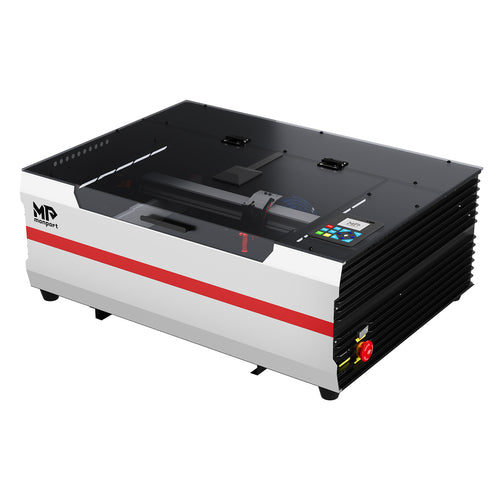
The best laser engraver for Etsy sellers is not automatically the machine with the highest power or the longest feature list. It is the system that can make your core products safely, repeatedly and at a cost your selling price can support.
For shops centered on wood, leather, glass and clear acrylic, a CO2 laser is usually the most versatile option. An enclosed diode laser can be a lower-commitment way to validate selected wood, leather and opaque-material products. For direct marking or engraving on suitable bare metals, a fiber laser is generally the better tool.
This guide explains how to match the laser source to your products, estimate total ownership cost and production capacity, compare practical machine profiles and validate a business idea before buying more equipment than you need.

Quick Answer: Which Laser Is Best for Your Etsy Products?
| Primary Etsy product | Best starting laser type | Why | Main limitation to check |
|---|---|---|---|
| Wood ornaments, signs and layered decor | CO2; diode for limited testing | Both can engrave wood, while CO2 is usually stronger for cutting and higher-volume work | Smoke staining, edge finish and sanding time |
| Clear acrylic signs, toppers and displays | CO2 | Clear acrylic responds well to the CO2 wavelength | Sheet type, edge quality, exhaust and work area |
| Leather patches and wallets | CO2 or diode | Both can process documented laser-safe leather | Composition, odor and residue; never assume synthetic leather is safe |
| Glassware and many coated tumblers | CO2 | Commonly used for glass surface effects and coating removal | Rotary fit, coating consistency and thermal stress |
| Bare-metal jewelry, pet tags and tools | Fiber | Designed for direct marking and engraving on suitable metals | Marking field, fixture accuracy and required engraving depth |
| Specialized color effects on suitable metals | MOPA fiber | Adjustable pulse characteristics offer more process control | Results vary by alloy, finish, focus and parameter stability |
Use this table as a filter, not as a promise of compatibility. Coatings, pigments, adhesives, alloys and surface treatments can change both the result and the safety profile. Test the exact stock you intend to sell.
Start With the Product, Not the Machine
Buying a laser first and then searching for products it can make reverses the business decision. Begin with one primary product family and one adjacent category that uses similar stock, finishing and packaging.
A shop that sells wooden ornaments might add layered signs because both rely on sheet material, cutting, sanding and flat packaging. A metal-jewelry shop might add engraved pet tags because both can use a fiber laser and similar small-part fixtures. This approach reduces inventory, shortens parameter testing and makes production easier to standardize.
Define the exact material and process
Do not stop at broad labels such as “wood,” “acrylic” or “metal.” Record the actual material, thickness, coating, adhesive and surface finish. Cast and extruded acrylic can behave differently. Plywood glue and veneer consistency affect cutting. Bare stainless steel, anodized aluminum and powder-coated metal require different processes.
Then decide whether the product requires cutting, surface engraving, coating removal, marking or deep engraving. A machine that creates a visible mark is not necessarily suitable for deep relief. A machine that can eventually cut a sheet may still be too slow or leave too much cleanup for profitable production.
Measure products, fixtures and batches
Measure the largest product you realistically plan to sell and add the space required for a jig, rotary or safe margin. A bed that fits one ornament may not fit a useful batch. For each shortlisted product, answer these questions:
- How many pieces should fit in one repeatable batch?
- Will blanks arrive in a tray, or will you build a fixture?
- Do handles or raised features require extra clearance?
- Will you process partial sheets, full sheets or long stock?
- Would a pass-through or conveyor solve a real workflow problem?
If wood products are central to the plan, review practical preparation and finishing considerations in this wood laser engraving guide before estimating production time.
CO2 vs Diode vs Fiber Laser for Etsy

Diode laser: useful for focused testing
Diode lasers attract new sellers because compact models may involve a lower initial commitment. They can suit wood engraving, selected wood cutting, documented laser-safe leather and some opaque materials. An enclosed system with proper extraction is preferable to an open frame for a business workspace.
A standard visible-blue diode is not the best general choice for clear acrylic or direct work on most bare metals. Some machines accept separate infrared modules, but that is a different source with its own capabilities and limitations. Slower cutting or repeated passes can also make an inexpensive machine costly in labor when order volume grows.
CO2 laser: the broadest fit for wood and acrylic shops

A CO2 laser is usually the strongest general-purpose choice for an Etsy catalog built around wood, acrylic, leather, paper, glass and similar nonmetal materials. It is particularly relevant when clear or light-colored acrylic is a core product.
When comparing CO2 laser engravers, evaluate usable work area, air assist, exhaust, cooling, bed design, rotary support, camera alignment, pass-through capability, controller compatibility and access to replacement parts. Wattage alone does not describe the workflow.
Fiber laser: the focused choice for metal products

Fiber lasers are designed for metal marking and engraving. Common Etsy applications include jewelry, stainless-steel tags, anodized aluminum, metal cards, tools, nameplates and small accessories. Many fiber systems use galvo scanning for fast beam movement, but “galvo” describes the motion system rather than the material compatibility. The laser source and wavelength still matter.
A fiber laser is not a replacement for a CO2 machine when the business depends on cutting wood or acrylic sheets. Read how the source operates in this fiber laser technology overview, then compare the intended materials with the exact product documentation.
MOPA fiber: more pulse control, not automatic color

MOPA fiber systems provide a wider range of pulse control than many standard Q-switched fiber sources. That flexibility may support controlled dark marks, fine surface work and selected color effects on suitable stainless steel or titanium. Color is not guaranteed: alloy composition, surface finish, focus and parameters must remain consistent. Do not promise customers a repeatable color based on one successful sample.
Product-to-Laser Decision Matrix
| Etsy product | Preferred machine | Important accessory or workflow | Test before selling |
|---|---|---|---|
| Wooden ornaments | CO2 or diode | Air assist and a multi-piece jig | Smoke staining, small-detail strength and finishing time |
| Clear acrylic signs | CO2 | Flat bed, exhaust and protective-film workflow | Cut edge, flame polish appearance and engraving direction |
| Leather patches | CO2 or diode | Flat fixture and residue cleanup | Supplier documentation, odor and discoloration |
| Coated tumblers | CO2 for many coatings | Compatible rotary and repeatable origin | Diameter, taper, handle clearance and coating removal |
| Bare-metal jewelry | Fiber | Small-part fixture and precise focus | Contrast, depth, heat effect and fine-text readability |
| Metal pet tags | Fiber | Batch jig and variable-data workflow | Legibility, alignment and wear resistance |
| Layered wood decor | CO2 | Air assist, larger bed and assembly station | Kerf, char, glue time and shipping durability |
| Engraved glassware | CO2 | Rotary, correct support and conservative testing | Thermal stress, surface consistency and cleanup |
How to Test a Material Before Adding It to Your Shop
A supplier label or another maker's settings are only a starting point. Use a documented test protocol for every new material, coating or batch.
- Verify composition. Obtain the manufacturer or supplier description and safety documentation. Do not process unknown plastics, coatings or adhesives.
- Record the stock. Note supplier, product code, thickness, color, finish and lot or purchase date.
- Inspect and prepare. Confirm flatness, protective film, moisture, contamination and consistent focus distance.
- Run a small parameter grid. Change one controlled variable at a time. Keep air assist, focus and artwork constant while comparing speed and power.
- Assess the full result. Check contrast, kerf, edge quality, residue, odor, warping, fine detail and cleanup time rather than judging only the first appearance.
- Test repeatability. Repeat the preferred setting on several pieces and, when practical, on stock from another part of the sheet or batch.
- Save the approved recipe. Store the file, machine, lens, focus method, fixture, settings, stock reference and finishing steps together.
Start conservatively and follow the machine and material supplier instructions. Settings from a different laser power, lens, source or controller should not be copied as if they were universal.
Calculate Capacity Before You Buy
Machine speed does not tell you how many orders you can ship. Measure the complete production cycle:
Total production time = setup + laser processing + unloading + cleaning + finishing + assembly + quality control + packaging
A short laser cycle can still belong to a labor-heavy product. Personalized spelling checks, proof approval, sanding, painting, gluing and packaging may become the real bottleneck.
Use a capacity worksheet
Daily batch capacity = available machine minutes ÷ average machine minutes per batch
Daily unit capacity = daily batch capacity × approved units per batch
Do not schedule at the theoretical maximum. Reserve time for focus checks, test pieces, cleaning, customer corrections, failed blanks and maintenance. Also calculate labor capacity separately. If the laser can produce more parts than you can finish and pack, a faster machine will not increase shipments.
Illustrative calculation template
Use your own timed production run rather than borrowed estimates. Enter the following values:
- A: available production minutes per day
- B: machine minutes per batch
- C: approved units per batch
- D: hands-on labor minutes per unit
- E: available labor minutes per day
Machine-limited capacity is (A ÷ B) × C. Labor-limited capacity is E ÷ D. Your realistic maximum is the lower result, reduced further by a buffer based on your own failure, maintenance and order-change history. This reveals whether the next investment should be a faster laser, a larger batch jig or a better finishing and packing station.
Calculate the True Cost of an Etsy Laser Setup

The purchase price is only one part of the investment. Budget for exhaust or filtration, cooling, air assist, a suitable computer, control and design software, rotary equipment, beds and fixtures, documented safety equipment, electrical work, initial stock, packaging and maintenance parts.
Total setup cost = machine + required accessories + workspace preparation + software + initial stock + safety equipment + contingency
Do not spend the full budget on the machine and leave nothing for material validation or ventilation. If a CO2 setup will be used regularly, understand that the tube, power system and optics are service items. Availability of parts such as a replacement CO2 laser tube, a compatible CO2 power supply and the correct focus lens matters more than a long accessory list with no support path.
Build a unit-cost model
Unit cost = blank material + machine allocation + direct labor + finishing + packaging + selling costs + expected waste
For a defensible result, use invoices for blanks and packaging, timed labor, your current platform charges and an expected-waste allowance based on real production records. Keep shipping income and shipping expense visible rather than hiding them inside an optimistic margin.
Calculate a contribution amount before estimating payback:
Contribution per order = net order revenue − variable order cost
Orders to recover setup cost = total setup cost ÷ contribution per order
This is a planning model, not a demand forecast. A low break-even order count does not prove those orders will arrive.
Workspace and Safety Are Buying Criteria
A machine that cannot be operated safely in the available room is not an affordable machine. Laser classification, enclosure design, interlocks, wavelength-specific controls and operating procedures all matter. The U.S. Food and Drug Administration's laser product guidance provides a useful regulatory starting point; the manufacturer's instructions and applicable local workplace rules still control your setup.
Ventilation, material verification and fire control
Laser processing can create smoke, particles and gases. Extraction or filtration must be selected for the actual material and process, not merely for odor reduction. Verify airflow requirements, filter stages, replacement intervals and the permitted exhaust arrangement. Never process unknown plastics. PVC and other chlorine-containing materials should not be laser processed.
Never leave active laser work unattended. Keep the bed and exhaust path free of residue, secure thin stock against movement, maintain appropriate fire-response equipment and document a shutdown procedure. An enclosure helps control access and fumes, but it does not replace supervision, functional interlocks or maintenance.
Cooling, power and environment
CO2 tubes and chillers have operating-temperature and coolant requirements. A garage may freeze, overheat or develop condensation even when a climate-controlled room does not. Confirm the circuit, plug, grounding, ambient limits, coolant requirements, chiller care and storage procedure before delivery.
Features That Matter in Etsy Production
- Usable work area: size the bed for the largest product and the desired batch fixture, not a single small sample.
- Camera positioning: useful for irregular blanks and sheet utilization, but it still requires calibration and does not replace production jigs.
- Autofocus: can reduce setup time, but focus should be verified when stock thickness, lenses or rotary setups change.
- Rotary compatibility: confirm roller or chuck type, diameter range, length, weight, handle clearance, riser requirements and controller support.
- Air assist: can improve cutting and control smoke at the processing point; required delivery varies by material and task.
- Pass-through or conveyor: valuable only when long products or repeat sheet workflows justify the handling complexity.
- Software: check vector and image support, layer control, variable data, camera and rotary support, operating systems, licensing and offline access.
- Parts and service: check warranty terms, support hours, setup documentation, replacement availability and repair procedures.
Before assuming a controller will work with a preferred program, consult the official LightBurn laser-type documentation and verify the exact controller with the software vendor and machine manufacturer. A general laser engraving software workflow guide can also help you map file preparation, but live compatibility documentation should decide the purchase.
Practical Monport Machine Profiles for Etsy Sellers
The following profiles are not interchangeable recommendations. They address different product categories. Confirm the live product page, included components, marking or working area, electrical requirements and current warranty before purchasing.
| Machine profile | Best fit | Why it may suit Etsy production | Important limitation |
|---|---|---|---|
| Monport MEGAS 70W desktop CO2 laser | Wood, acrylic and mixed nonmetal batch products | Desktop CO2 format aimed at cutting, engraving and repeat layouts | Requires appropriate extraction and cooling; not the direct bare-metal solution |
| Monport GA 100W MOPA fiber laser | Premium metal personalization and demanding marking | Integrated MOPA configuration with autofocus for a focused metal workflow | Galvo marking field is different from a sheet-cutting bed; unsuitable as a wood or acrylic cutting replacement |
| Monport GT 60W MOPA fiber laser | Metal tags, jewelry, tools and controlled surface effects | MOPA pulse control and autofocus can support repeatable metal-product development | Color and depth still require material-specific testing; fixtures are essential for small blanks |
| Monport GT 100W split MOPA fiber laser | Higher-demand or deeper metal engraving workflows | Higher-power MOPA profile for sellers whose validated products need more metal-processing capability | Higher capability does not improve wood or acrylic versatility and may be unnecessary for light surface marks |
Choose a CO2 profile when clear acrylic, cut wood or broad nonmetal production drives revenue. Choose a fiber profile when direct metal work drives revenue. A shop selling both acrylic wedding decor and bare-metal jewelry may ultimately need two dedicated sources; start with the one serving the validated primary category.
When You Should Outsource Before Buying
Buying is not always the best first step. Outsource prototypes or early orders when demand is uncertain, the required laser type is unclear, the workspace cannot yet support extraction, or a seasonal product may disappear before the machine pays for itself.
Outsourcing can reveal the required finish, acceptable turnaround time and realistic selling price. Ask the production partner to identify the material and process, but do not assume their machine settings will transfer directly to a different system. Buy when ownership solves a measured constraint such as lead time, batch cost, customization control or capacity.
A 30-Day Validation Plan
Week 1: define three related products
Choose three products that share material and workflow. Record the blank, intended process, personalization options, finish, packaging, shipping size and target selling price. Reject ideas that require unsafe unknown stock or incompatible laser sources.
Week 2: validate the offer
Create accurate mockups or outsourced prototypes. Compare competing listings without copying designs, photos or descriptions. Check whether a buyer can understand the material, size, personalization, turnaround and price without messaging you for basic details.
Week 3: make a repeat batch
One attractive sample does not demonstrate production readiness. Make a small repeat batch and record setup time, laser time, finishing, packaging, failed pieces, material variation and readability. Photograph defects as well as successful outcomes.
Week 4: review margin and bottlenecks
Complete the capacity and unit-cost worksheets using measured inputs. Invest only when the machine solves a verified limitation such as insufficient work area, slow cutting, unreliable alignment, poor batch consistency or inability to process the core material.
Build an Etsy Workflow Around the Machine
A laser is only one stage of the order. Build a controlled path for receiving personalization, checking spelling and dates, approving proofs, saving production files, matching files to blanks, tracking batch positions, inspecting finished pieces and handling remakes.
Your listings must also reflect what you actually make. Etsy's current Creativity Standards explain how items made, designed, sourced or handpicked by sellers are categorized and include image requirements for qualifying seller-made items. Read the current policy before launch and whenever Etsy announces changes.
Use original product photography, disclose relevant production partners and avoid artwork, characters, logos or phrases you do not have the right to use. A laser makes reproduction easy; it does not grant intellectual-property permission.
Common Buying Mistakes
- Buying by wattage alone: source type, work area, beam delivery, workflow and support may matter more than a larger number.
- Ignoring clear acrylic: if it is a core material, validate it before choosing a visible-blue diode.
- Counting only laser time: sanding, painting, assembly and packaging can erase the apparent speed advantage.
- Choosing too small a work area: include batch fixtures, rotary clearance and likely future product sizes.
- Treating ventilation as optional: smoke control and material verification are part of the system cost.
- Expecting one source to process everything: CO2, diode and fiber lasers have different strengths.
- Buying for imagined demand: viral products do not establish repeatable orders or sustainable margin.

Frequently Asked Questions
What is the best laser engraver for an Etsy beginner?
For a focused wood or documented laser-safe leather range, an enclosed diode or entry-level CO2 system may be practical. If clear acrylic is central, choose CO2. If the product is suitable bare metal, choose fiber. The best beginner machine supports a narrow, tested product range and fits a safe workspace.
Is a CO2 or diode laser better for Etsy?
A diode may reduce the initial commitment for selected materials. A CO2 laser is generally more versatile for wood, glass and acrylic, including clear acrylic, and may offer a stronger path to cutting and batches. Compare total setup cost and complete production time rather than machine price alone.
What laser is best for acrylic Etsy products?
A CO2 laser is generally the strongest choice for clear, translucent and many colored acrylic products. Confirm whether the sheet is cast or extruded, keep supplier records and test the exact stock for edge quality, engraving appearance and fumes.
What laser is best for metal jewelry?
A fiber laser is usually appropriate for direct marking and engraving on suitable bare metals. MOPA fiber systems add pulse flexibility for specialized surface effects, but the alloy, finish, focus and desired depth must be tested.
How much laser power does an Etsy shop need?
There is no universal wattage. Required power depends on the source type, material, thickness, cutting or engraving task, desired cycle time and production volume. Request or run tests on the exact material and judge the entire finished workflow.
Do I need a rotary attachment?
You need a rotary when cylindrical items such as tumblers, mugs, glasses or round containers are central to the range. Confirm diameter, taper, weight, length, handle clearance, riser needs and software configuration before buying.
Can I use a laser engraver in an apartment?
Only if the specific machine, enclosure, ventilation, electrical supply, noise and local rules can be addressed safely. Compact size does not remove fumes, fire risk or the need for verified materials. If compliant exhaust is not possible, outsource production or use another workspace.
Can one laser handle wood, acrylic and metal?
A CO2 laser can process wood and acrylic and may remove some metal coatings, but it is not a general substitute for a fiber laser on bare metal. A mixed nonmetal and bare-metal business may need two dedicated sources.
Is LightBurn required?
No. Some machines use LightBurn, while others use different manufacturer or controller software. Verify the exact controller, operating system, license, camera and rotary support, file formats and offline operation before purchase.
How do I know whether a laser will pay for itself?
Use measured demand, complete setup cost, timed labor, expected waste and contribution per order. Calculate the number of orders required to recover the setup cost, then compare that number with conservative sales history. Do not assume continuous machine use.
Final Buying Checklist
- The laser source supports the primary material and required process.
- The work area fits both the product and a useful batch fixture.
- Repeat tests on the exact stock meet quality and cleanup requirements.
- Measured cycle time supports realistic order volume.
- Ventilation, cooling, electrical supply and supervision fit the workspace.
- Rotary equipment, fixtures, software and safety controls are included in the budget.
- Replacement parts, documentation and technical support are available.
- The unit-cost model includes labor, waste, packaging and selling costs.
- The purchase solves a measured bottleneck rather than imagined demand.
The best laser engraver for Etsy sellers is the one that produces a defined product reliably, fits the available workspace and leaves enough margin after materials, labor, finishing, packaging and selling costs. Start with three related products, verify every material and measure the complete workflow. Then buy the laser that removes the real constraint.
Technical review basis: Laser-source guidance, software compatibility, Etsy policy and safety statements were reviewed against the official resources linked in this article on September 20, 2026. Product configurations and policies can change; verify the current product page, manual, software documentation and platform rules before purchasing or publishing operational claims.