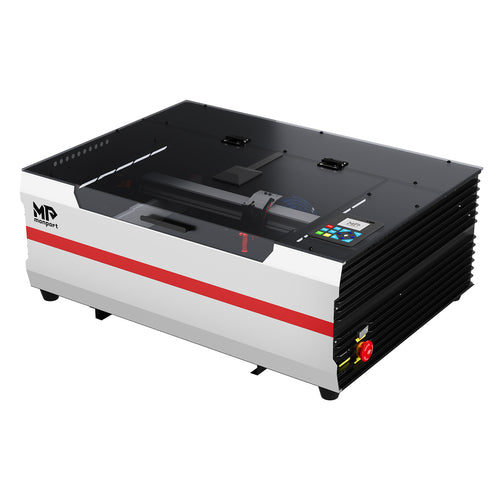
Precise Marking for Heat-Sensitive Materials
Electronics manufacturers need markings that are clear, permanent, and easy to read without damaging delicate parts. This is where a GM 10W UV Laser can offer a practical advantage. Unlike processes that create stronger heat effects, UV marking uses short-wavelength laser energy for fine, controlled processing. A UV laser engraver is well suited for plastic enclosures, PCBs, connectors, electronic components, glass, acrylic, and other sensitive materials.
For companies producing electronic products, identification can include serial numbers, logos, QR codes, part numbers, and other tracking information. The goal is simple: create a durable mark while keeping the component clean and functional.

Monport 10W UV Galvo Laser Engraver & Marking Machine

What Makes UV Laser Marking Different?
A GM 10W UV Laser is designed for applications where precision matters more than simply removing large amounts of material. Its UV wavelength allows fine marking with limited heat impact, making it useful for delicate surfaces and detailed electronic components.
| Feature | Benefit for Electronics |
|---|---|
| Low thermal impact | Helps reduce heat-related surface damage |
| Fine spot size | Supports small text and detailed graphics |
| High contrast | Makes identification easier to read |
| Fast galvanometer scanning | Supports efficient marking workflows |
| Wide material compatibility | Useful for plastics, ceramics, glass, and electronics |
The GM 10W UV Laser has a spot size of approximately 0.0019 mm. This is around 1/40 the spot size of a typical fiber laser, allowing it to produce extremely fine markings and detailed designs. This level of precision can be particularly useful for small components, product identification, serial numbers, logos, and other markings where clean results are important.
Frequently Asked Questions
What materials can a 10W UV laser mark?
A 10W UV laser can mark a wide range of materials, including certain plastics, ceramics, glass, and electronic components. The exact results depend on the material's composition, surface finish, and marking requirements.
Is a UV laser suitable for marking electronic components?
Yes. A UV laser can be suitable for electronic components because its shorter wavelength and lower thermal impact allow detailed markings while helping minimize heat-related surface damage. It is commonly considered for applications that require small text, codes, logos, or other fine identification marks.

Plastic Enclosures and Electronic Housings
Plastic is widely used for electronic housings, switches, connectors, covers, and control components. However, excessive heat can discolor or deform certain plastics. A UV laser engraver can provide a cleaner alternative for applications that require precise surface identification.
With a GM 10W UV Laser, manufacturers can mark model numbers, warning symbols, serial numbers, logos, and QR codes directly onto suitable plastic components. The process is designed to produce clear markings with minimal blackening, smoke, and odor.
This can be especially useful when appearance and traceability are both important.
PCB and Component Identification
PCBs and electronic components often contain very small areas for identification. Traditional marking methods may not provide the precision needed for tiny characters or detailed codes.
A GM 10W UV Laser can help create fine identification marks while keeping the process controlled. Possible applications include:
- PCB identification and tracking
- Component numbering
- QR and data matrix codes
- Connector identification
- Product logos
- Serial numbers
- Production and batch information
For manufacturers handling many component variations, permanent marking can also make inspection, assembly, and product tracking easier.

Fine Details With Minimal Thermal Damage
One of the key benefits of a GM 10W UV Laser is its ability to work with sensitive materials while limiting unwanted heat effects. This is often called cold processing because the marking process can create less thermal stress than conventional laser technologies.
The result can be cleaner edges, sharper details, and less surface damage when the correct settings and material are used. A UV laser engraver is therefore worth considering when a project requires precision rather than aggressive cutting or deep engraving.
High-Resolution Marking for Industrial Applications
The supplied specifications indicate that the GM 10W UV Laser can support engraving resolution up to 16K. Its industrial-grade all-metal galvanometer scanner is also designed for high-speed operation, with speeds of up to 15,000 mm/s.
This combination can help businesses handle both detailed graphics and repeated identification work. A water-chiller integration also helps maintain operating temperature, supporting stable laser performance during operation.

More Than Electronics: One Machine, Many Materials
Although electronics are an important application, the GM 10W UV Laser is not limited to PCBs and plastics. UV marking can also be used on:
- Glass
- Crystal
- Acrylic
- Ceramics
- Delicate plastics
- Other heat-sensitive materials
Its ability to create detailed marks inside suitable transparent materials also expands the range of possible applications.
Why Choose the Monport 10W UV Galvo Laser?
The GM 10W UV Laser is a practical choice for businesses looking for detailed marking across sensitive materials. The Monport 10W UV Galvo Laser Engraver & Marking Machine combines high-resolution UV processing with a high-speed galvanometer system and compatibility with popular LightBurn software.
It also supports additional accessories such as protective covers and purifiers, helping businesses build a more suitable marking setup for their workspace.

Key Takeaways
- GM 10W UV Laser technology is suitable for many heat-sensitive applications.
- UV processing can help reduce unwanted thermal damage.
- Fine spot size supports detailed industrial identification.
- Electronics applications include PCBs, connectors, housings, and components.
- Markings can include serial numbers, logos, QR codes, and part information.
- The system can also work with glass, acrylic, crystal, and ceramics.
Frequently Asked Questions
Is UV laser marking suitable for plastic?
Yes. A UV laser engraver can be suitable for many plastic materials because UV processing can create precise marks with limited heat impact. Testing is recommended because different plastics respond differently.
Can UV lasers mark PCBs?
Yes. UV marking can be used for suitable PCB identification applications, including codes, numbers, logos, and tracking information.
Is UV marking better than fiber laser marking?
It depends on the material and application. A GM 10W UV Laser is particularly useful when fine detail and reduced thermal impact are priorities, while fiber lasers are commonly selected for many metal-marking applications.

Choose Precision for Your Next Marking Application
When electronics, plastic components, and other sensitive materials require permanent identification, precision matters. The GM 10W UV Laser offers a combination of fine resolution, controlled UV processing, high-speed scanning, and broad material possibilities.
If your business needs cleaner identification for PCBs, plastic enclosures, connectors, or electronic components, explore the Monport 10W UV Galvo Laser Engraver & Marking Machine and choose a marking solution designed around precision and production needs.