In packaging manufacturing, knowing where a component came from, when it was produced, and which production batch it belongs to can make a major difference. Permanent identification gives manufacturers a practical way to connect physical components with production records, quality checks, and supply-chain information.
That is where GA 60W Fiber Laser technology can become useful. With precise, high-speed marking capabilities, a 60W MOPA fiber system can support laser metal marking for serial numbers, QR codes, Data Matrix codes, batch information, logos, and other identifiers directly on suitable metal surfaces.
For packaging manufacturers working across food, beverage, healthcare, personal care, and consumer goods, traceability can become especially valuable as products and components move through increasingly complex supply chains. Amcor, for example, operates across flexible and rigid packaging and serves a broad range of these markets.
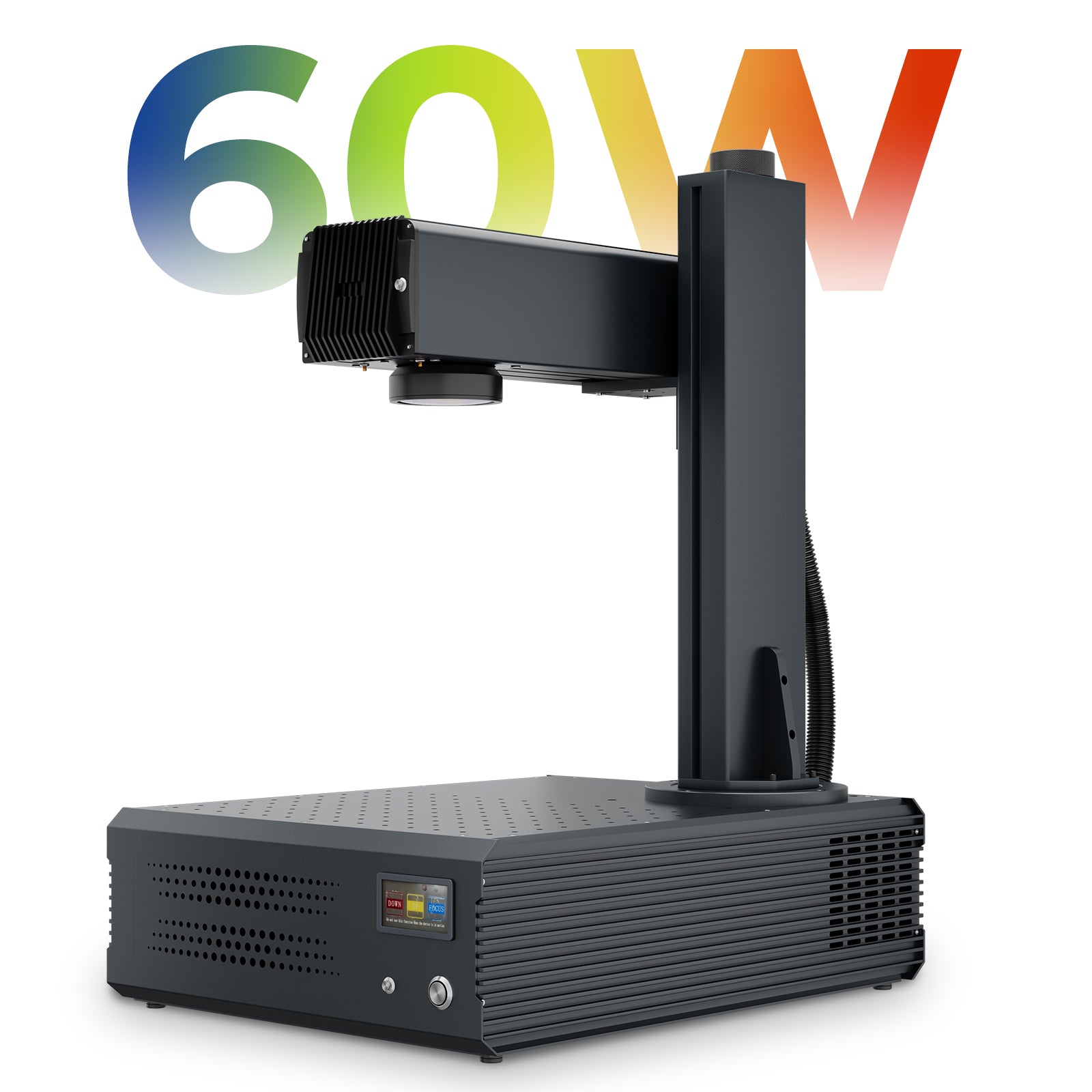
Monport GA 60W MOPA Fiber Laser Integrated Engraver & Color Marking Machine with AutoFocus

What Is Product Traceability in Packaging Manufacturing?
Product traceability is the ability to follow a product, component, or production batch through different stages of manufacturing and distribution.
A traceability system may connect a physical item with information such as its serial number, production date, batch number, production line, material lot, or inspection record. Instead of relying only on paperwork or removable labels, manufacturers can use a permanent identifier directly on a component.
This is particularly useful when a metal component needs to remain identifiable after handling, cleaning, assembly, or extended use.
Why Fiber Laser Marking Supports Traceability
Fiber lasers use a concentrated beam of light to create controlled changes on the surface of suitable materials. Depending on the material and selected parameters, the process can produce surface marks, engraving, or other forms of permanent identification.
Unlike an adhesive label, a properly produced laser mark does not depend on glue or printed ink remaining intact. The durability of the final mark still depends on the material, marking method, depth, settings, and environment, so manufacturers should test the application before putting it into production.
For manufacturing teams, that distinction matters. A serial number that remains readable on a component can make it easier to connect the physical part with its digital production history.
What Can Be Marked for Better Traceability?

Serial Numbers
A unique serial number can give every component its own identity.
For example, a manufacturer could assign sequential numbers to metal tooling components, machine parts, closures, fixtures, or other production assets. Software can also be configured to generate sequential identifiers automatically, reducing the need for manual numbering.

QR and Data Matrix Codes
QR and Data Matrix codes can hold more information than a simple printed identifier.
A Data Matrix code, for instance, can contain information such as a part number, serial number, lot code, or production date in a compact format. When marked directly onto a suitable metal component, the code can stay with the part instead of relying on a separate label.
This can help production teams quickly retrieve information when the code is connected to the company's internal records.

Batch and Production Information
Batch numbers can help manufacturers identify groups of products produced under the same conditions.
If an issue is discovered later, the batch identifier can make it easier to determine which group of components or products needs additional inspection. Traceability therefore becomes more than simply “putting a number on something”; it becomes a connection between the physical product and its production history.

Logos and Product Identification
Laser marking can also be used for company logos, product names, model numbers, technical symbols, and other identification details.
For packaging equipment and metal components, this provides a clean way to combine brand identification with functional information without adding a separate printed label.
How to Use a 60W Fiber Laser for Industrial Marking
Choosing the right marking system starts with the application rather than the wattage alone.
Before marking production components, identify the material, required mark depth, code size, desired contrast, production volume, surface shape, and available marking area. These factors determine whether a particular laser and parameter combination will produce a reliable result.
A 60W system is attractive for demanding applications because higher power can provide more processing capability for faster or deeper marking compared with lower-power systems. However, higher wattage does not automatically make every application better; the correct power, speed, frequency, pulse width, focus, and material settings still need to be established through testing.
Where the Monport GA 60W Fits
For manufacturers looking for a desktop-format system capable of demanding metal identification work, the Monport GA 60W Upgraded Integrated MOPA Fiber Laser Engraver & Marking Machine with Auto Focus is designed around speed, control, and repeatable positioning.
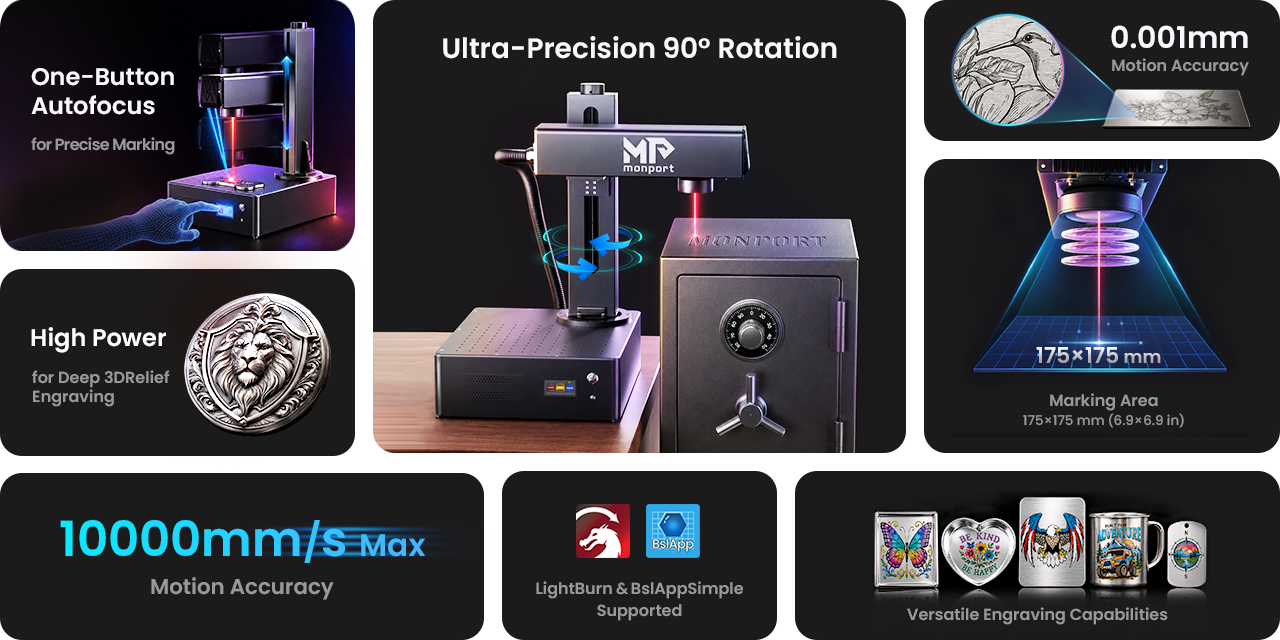
The GA 60W Fiber Laser has a 60W laser power, 1064nm wavelength, and a 6.9 × 6.9-inch (175 × 175mm) working area. Its listed marking speed is 10,000mm/s up to 15,000mm/s.
Its MOPA configuration also provides an adjustable frequency range of 1–3000kHz and pulse width of 2–500ns. That level of control can be useful when manufacturers need to fine-tune how the laser interacts with different metal surfaces rather than relying on one fixed setting.
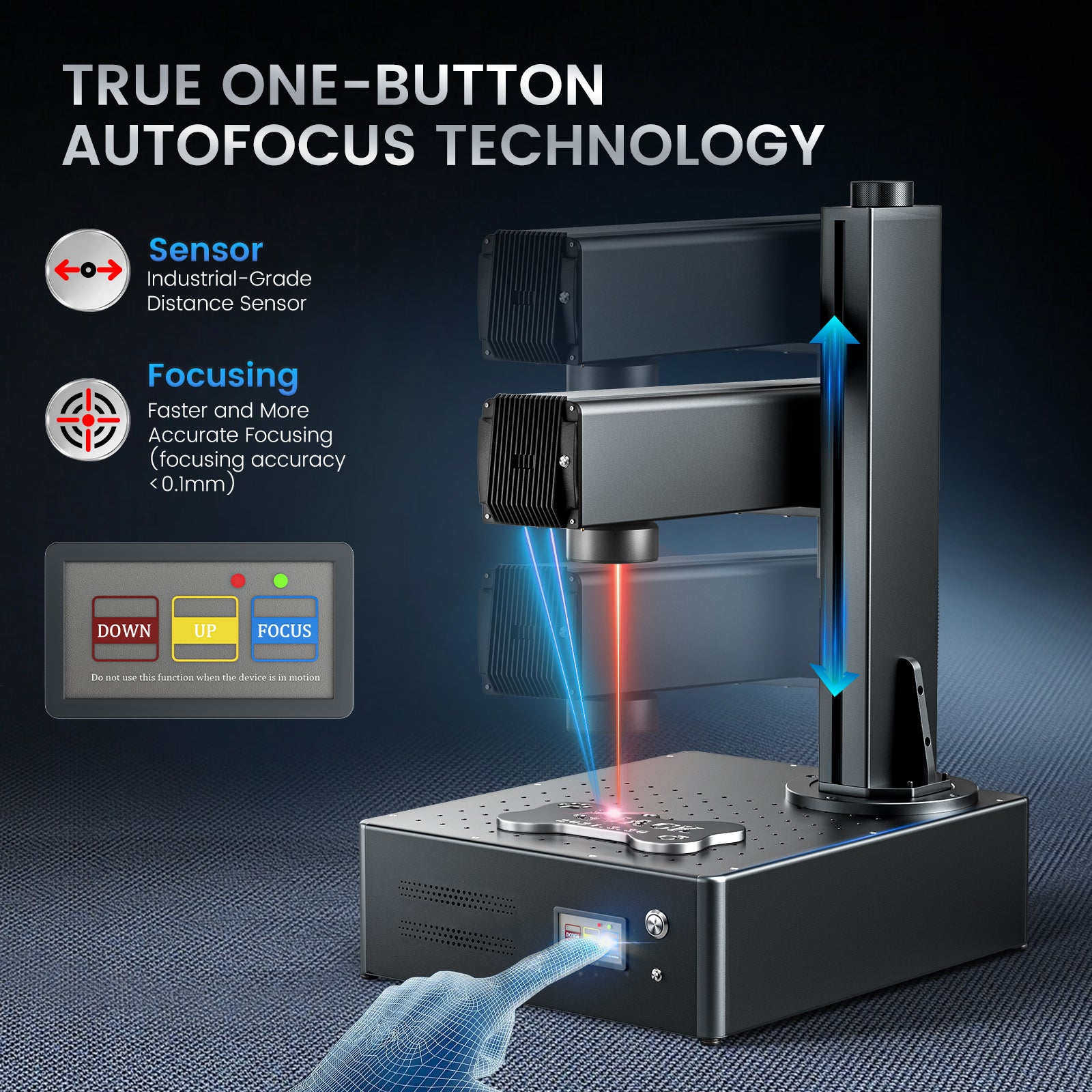
The machine uses an integrated aluminum body and integrated optics, while its autofocus system is designed to achieve focusing with a single click, with a stated error of less than ±1mm. Manual focusing is also available using three red lights.
Another practical feature is the ±90° adjustable vertical arm. This gives operators more flexibility when positioning the machine for different workpieces and marking orientations.
For teams using LightBurn, the GA 60W is also listed as LightBurn-compatible, alongside BslAppSimple. Its compact working area makes it particularly suited to smaller components, plates, parts, and other objects that can be positioned within the 175 × 175mm field.
The manufacturer lists a machine dimension of 42cm × 35cm × 62cm, a package dimension of 74cm × 61cm × 36cm, and an expected service life of 100,000 hours (MTTF).
For manufacturers handling frequent identification work, consider the GA 60W when speed, precise positioning, and flexible control are more important than simply choosing the lowest-cost marking system.
A Practical Traceability Workflow
A useful workflow can be straightforward.
First, determine what information must appear on the component. This might be a serial number, Data Matrix code, batch number, model number, or combination of these.
Next, select the appropriate marking location and establish the laser parameters through sample testing. The goal is not simply to create a visible mark; the identifier should be consistent, readable, and appropriate for the component's expected operating conditions.
After marking, manufacturers can use visual inspection or automated code verification where appropriate. Industrial traceability systems may also connect marking equipment with production software so that identification data moves between systems rather than being entered manually.
This creates a useful chain:
Production data → unique identifier → permanent mark → verification → traceability record
That chain is what makes laser marking valuable in a broader manufacturing process.
Why 60W Can Make Sense for Demanding Applications
A 60W fiber laser is not necessary for every marking job. Simple identification tasks may be handled adequately by lower-power systems.
The advantage of moving to a 60W system becomes clearer when production requires faster processing, stronger engraving capability, or greater flexibility across different marking applications. Current industry guidance generally positions 50W and 60W fiber systems toward higher-volume work, deeper marking, and applications where cycle time matters.
For packaging manufacturing, that can mean having one system capable of handling routine identification while also providing additional capacity for more demanding metal-processing jobs.
Key Takeaways
-
Traceability connects physical components with production and supply-chain information.
-
Serial numbers, QR codes, Data Matrix codes, batch numbers, logos, and model information can all support identification.
-
Fiber lasers are well suited to permanent marking on many metal surfaces.
-
A 60W system can provide additional speed and processing capability for demanding marking applications.
-
MOPA technology gives operators additional control through adjustable frequency and pulse width.
-
The Monport GA 60W provides a 6.9 × 6.9-inch working area, 60W power, 1064nm wavelength, autofocus, and marking speeds listed at 10,000mm/s, with the supplied product information specifying up to 15,000mm/s.
-
Successful traceability depends on the complete workflow—not just the laser. Mark design, parameter testing, verification, data management, and production integration all matter.
Conclusion
Effective traceability starts with giving every important component a reliable identity. For packaging manufacturing, permanent codes and identifiers can help teams connect physical parts with production information while reducing dependence on removable labels.
A GA 60W Fiber Laser can support this approach with 60W power, 1064nm wavelength, autofocus, MOPA control, and high-speed marking capabilities. For suitable metal components, laser metal marking can create serial numbers, Data Matrix codes, QR codes, batch information, and logos that remain directly associated with the part.
The Monport GA 60W is particularly relevant when a manufacturer needs more than basic identification. Its 175 × 175mm working area, 10,000mm/s listed marking speed, adjustable 1–3000kHz frequency, 2–500ns pulse width, and ±90° arm adjustment provide flexibility for different production requirements.
Ultimately, the best marking solution is the one that fits the material, identifier, production speed, and traceability process. When those pieces work together, laser metal marking becomes a practical part of a manufacturing system rather than simply another step on the production floor.
If your production depends on permanent component identification, evaluate the marking material, code requirements, cycle time, and verification process first—then choose a fiber laser that gives your team enough capability for today's workload and tomorrow's demands.
Frequently Asked Questions
What is fiber laser marking used for?
Fiber laser marking is commonly used to create permanent identification such as serial numbers, barcodes, QR codes, Data Matrix codes, logos, and product information on suitable metals and other compatible materials.
Is fiber laser marking permanent on metal?
Yes. Fiber laser marking is generally permanent, although durability depends on the material, marking method, depth, surface condition, and operating environment.
How many watts do I need for metal marking?
The required power depends on the material and application. Lower-power fiber lasers can handle many identification jobs, while 50W and 60W systems can be useful when faster processing or deeper marking is required.
Can a fiber laser mark QR codes and Data Matrix codes?
Yes. Fiber lasers can create machine-readable QR codes and Data Matrix codes directly on suitable metal surfaces. These codes can be used to connect individual components with production and traceability information.
What can a 60W fiber laser engrave?
A 60W fiber laser can mark and engrave suitable materials including stainless steel, aluminum, brass, steel, titanium, and other compatible surfaces. The exact result depends on the material and laser parameters.