If you own a laser engraver—or are deciding whether one fits your business—the best Etsy product is not simply the item with the most search results. It is a product that serves a clear buyer, benefits from customization, fits your machine and workspace, and can be produced repeatedly without hidden labor consuming the margin.
Good starting points include ornaments, cake toppers, pet tags, leather accessories, small business signs, and other products that are compact, easy to photograph, and simple to personalize. Larger wedding signs, layered wall art, tumblers, corporate awards, and metal products can also work, but they introduce additional questions about equipment, proofing, packaging, or production volume.
This guide compares 18 laser-cut and engraved product ideas, explains where each one fits, and gives you a practical process for choosing, validating, and pricing a product. It is not a ranking of Etsy sales or a promise that any category will be profitable. Use it as a decision framework, then validate demand and costs for your own market.
For a broader view of possible business models, see these DIY craft business ideas you can start with a laser engraver.

Quick Answer: What Should You Sell on Etsy?
For a first launch, prioritize a product with five qualities:
- A specific buyer: The product is for a recognizable audience, recipient, or occasion.
- Useful personalization: A name, date, portrait, logo, location, or custom size makes the product more meaningful.
- Repeatable production: You can reproduce the result without rebuilding the workflow for every order.
- Manageable fulfillment: The item can be packed and shipped without excessive cost, breakage, or assembly.
- Sustainable unit economics: The price can cover design work, materials, machine time, labor, packaging, platform fees, errors, and profit.
If you are new, a small personalized product is usually easier to test than a large, fragile, or highly customized piece. That does not make small products automatically better; it simply reduces the number of operational problems you must solve at the same time.
Compare the 18 Product Ideas
The ratings below are relative planning guidance, not Etsy demand or profitability scores. Actual difficulty depends on the design, material, machine, finish, order size, and fulfillment method.

Personalized Gifts and Everyday Products

1. Personalized Name and Family Signs
Name signs connect naturally to weddings, housewarmings, nurseries, anniversaries, new homes, and realtor closing gifts. The opportunity is not “wood signs” as a broad category; it is a defined product for a defined buyer, such as a modern acrylic nursery name, a layered family-name sign, or a closing gift with the property coordinates.
Wood and acrylic are common choices. A CO₂ laser can support both cutting and engraving on compatible materials, while layered construction can increase perceived depth without requiring a completely different product line. If you plan to test several designs, start with one or two standard sizes and a limited finish palette. Too many combinations create purchasing, photography, and fulfillment complexity before demand is proven.
The difficult part is often not laser time. Sanding, painting, alignment, adhesive curing, mounting hardware, and protective packaging may take longer than expected. Large signs should be packaged and drop-tested before the listing goes live. If shipping becomes uneconomical, offer a smaller format, a flat-pack design, or local pickup.
2. Pet ID Tags and Memorial Products
Pet products can serve both practical and emotional needs. Possible offers include ID tags, kennel signs, leash holders, memorial plaques, portrait ornaments, bowl nameplates, and remembrance keepsakes.
Choose the process by material. A fiber laser is the more direct option for many bare-metal tags, while a CO₂ laser can produce wood signs, memorial pieces, and compatible coated or non-metal products. For an ID tag, readability is more important than decorative detail: test the smallest phone number, check contrast under different lighting, and confirm that the mark remains legible after normal handling.
Memorial items require a more careful order form than a generic gift. Make the spelling, date, image quality, proof approval, and revision limit explicit. This reduces the chance of remaking an emotionally sensitive order because the buyer misunderstood the personalization process.
3. Engraved Cutting Boards and Recipe Boards
Cutting boards can be positioned for weddings, anniversaries, housewarmings, realtor gifts, family recipes, or kitchen décor. Handwritten recipe engraving is particularly distinctive because the buyer is paying for the preservation of a personal artifact, not merely a name added to a blank board.
The listing should distinguish between a decorative display piece and a board intended for food preparation. Explain where the engraving is placed, how natural grain affects the result, and what care the buyer should follow. Every wood species—and sometimes every board—can respond differently, so test the actual blanks you intend to sell rather than relying only on a generic setting chart.
When comparing material options, start with consistent, laser-ready stock. Monport’s plywood material collection is useful for layered signs and craft projects, while solid cutting-board blanks should be sourced and tested specifically for the intended use.
4. Personalized Leather Accessories
Leather bookmarks, luggage tags, keychains, journal covers, patches, card holders, cord organizers, and wallets are compact and relatively easy to ship. They become more competitive when designed for a specific audience: teacher bookmarks, wedding-party luggage tags, company patches, travel gifts, or graduation journal covers.
Material identification is essential. Natural leather and different synthetic products do not behave the same way, and an item described as “faux leather” is not automatically laser-safe. Obtain reliable composition information or a safety data sheet, and do not process PVC-containing or unknown materials.
Production planning should include smoke residue, masking, cleaning, edge appearance, odor, and finishing—not just the engraving pass. A small accessory can have excellent batch potential, but only if the post-processing time is controlled.
5. Engraved Tumblers and Drinkware
Drinkware can target wedding parties, teachers, sports teams, outdoor customers, companies, clubs, and family events. The category is crowded, so “name on a tumbler” is rarely a complete positioning strategy. A clearer offer combines a buyer niche, a recognizable design style, and a useful customization choice.
Cylindrical objects usually need a rotary device that turns the workpiece while the laser runs. Roller and chuck systems support different shapes, and tapered cups require more setup than straight cylinders. Before offering multiple blank types, confirm the diameter range, available machine clearance, rotary compatibility, coating behavior, and design distortion.
If drinkware is central to the business, compare compatible options in the rotary axis collection and test the complete workflow—from alignment through cleanup—on the exact blank you plan to list.

Wedding and Event Products
6. Wedding Welcome Signs and Seating Charts
Wedding signs have a clear occasion, deadline, and personalization requirement. A coordinated collection can include a welcome sign, seating chart, bar menu, directional signs, guest-book sign, and table numbers. Selling a visual system is usually more coherent than listing unrelated one-off designs.
The operational risk is fulfillment. Large acrylic can scratch or crack; large wood signs increase dimensional shipping charges; mirror finishes show dust and fingerprints; seating charts create last-minute name changes. Define a final approval date, revision limit, production cutoff, material specification, and packaging method before accepting the order.
For large work, local pickup or event-planner partnerships may be more practical than nationwide shipping. When shipping is required, photograph the packaging method and test it before promising a delivery date.
7. Personalized Cake Toppers
Cake toppers are one of the easier ideas to prototype because they use little material, ship flat, and can be adapted to weddings, birthdays, graduations, baby showers, anniversaries, hobbies, and company events.
The design challenge is structural. Thin script connections, narrow stems, and tight interior spaces may look elegant on-screen but break during cutting, cleaning, packaging, or insertion. Create minimum thickness rules for fonts and connectors, then test every new template before making it available for personalization.
Clear, mirrored, glitter, and colored acrylic can support different styles. Browse laser-ready acrylic materials for possible color directions, but verify every sheet type and thickness on the machine before production.
8. Place Cards, Table Numbers, and Favor Tags
Event place cards and table numbers turn a small product into a multi-unit order. The same design language can also extend to reserved signs, menu markers, favor tags, and drink charms.
The main production problem is data accuracy. A 100-name order requires a reliable workflow for importing names, checking duplicates, confirming spelling, laying out parts, and matching finished pieces to the buyer’s list. Use a standardized spreadsheet, a proof file, naming conventions, and a final quantity check.
Design products for batch layout from the start. Shared material thickness, common dimensions, and efficient nesting reduce setup time and waste more effectively than trying to optimize each name individually.
9. Laser-Cut Invitations, Vow Books, and Guest Books
Laser-cut invitation sleeves, engraved guest-book covers, vow books, keepsake boxes, and proposal boxes can expand a wedding collection. They also create natural cross-sell opportunities with signs and table décor.
These products are more labor-intensive than their material cost suggests. Account for paper alignment, folding, adhesive, ribbons, hardware, assembly, quality control, and postage thickness. For invitations, make and mail a finished sample before deciding what shipping or postage to promise.
A practical launch does not need every wedding product. Start with one central item and one or two matching additions, then expand only after the proofing and assembly workflow is reliable.
Home, Seasonal, and Decorative Products

10. Seasonal Ornaments
Ornaments are compact, highly customizable, and suitable for batch layouts. Themes can include Christmas, Halloween, new homes, new babies, memorials, pets, teachers, couples, family milestones, and company gifts.
Seasonality creates both an opportunity and a deadline. Samples, listing photography, packaging, and production tests should be complete before search demand peaks. A design system that changes names, dates, or icons is easier to expand than an entirely new construction for every holiday.
Keep the final package in mind while designing. Fragile internal cutouts, loose layered parts, and long decorative elements may increase remakes even when the item cuts cleanly.
11. Door Hangers and Interchangeable Signs
Door hangers work across family names, classrooms, nurseries, new homes, business hours, and seasonal décor. Interchangeable pieces can extend one base design across several occasions and may encourage repeat purchases.
Before listing, decide whether the product is intended for indoor use, a protected porch, or full outdoor exposure. Material, adhesive, paint, sealant, and hanging hardware must support the claim. Avoid vague “weatherproof” language unless the full assembly has been tested for that environment.
Finished weight and packaging matter. A lightweight design may ship more safely and cost less without reducing the visual effect.
12. Acrylic Night Lights
An acrylic night light generally combines an engraved panel with an LED base. Names, dates, pet line art, maps, children’s designs, and memorial artwork can all provide meaningful personalization.
The acrylic edge, engraving direction, panel thickness, and fit in the base affect how the image lights. Test the actual base and panel combination instead of assuming that every nominal thickness fits the slot. The listing should state what is included, the power method, available colors, dimensions, and whether the panel is replaceable.
Photography is part of the product. Show the light turned on in a darker setting, turned off in normal room light, and next to an object that establishes scale. A close-up alone may hide the base quality or overall size.
13. Layered Wall Art and Maps
Layered wall art can include maps, landscapes, family trees, geometric designs, nursery décor, and hobby themes. Multiple layers create depth and can raise perceived value, but they also add cutting time, alignment, adhesive work, finishing, and packaging risk.
Design for assembly. Include registration points or a repeatable jig, test the adhesive on finished surfaces, and decide how the piece will hang before it is photographed. Limit the first collection to a few standard sizes so that material purchasing and packaging remain predictable.
Large layered products are not automatically better. A smaller design that ships safely and assembles consistently may be more suitable for a first online launch.
Business and B2B Products

14. QR Code and Social Media Signs
Countertop signs for menus, reviews, Wi-Fi, payment links, booking pages, and social profiles serve cafés, salons, vacation rentals, studios, market vendors, and independent retailers. Unlike a one-time gift, a business sign can lead to related orders when the customer opens another location or changes a campaign.
Scanning is the first quality requirement. Keep sufficient contrast and clear space around the code, avoid overly reflective interference, and test the finished sign with several phones, angles, and distances. Do not approve production from the URL alone; test the final rendered code.
Build a proof that shows the logo, destination, size, material, color, and stand configuration. This reduces misunderstanding and provides a record of what the client approved.
15. Corporate Gifts and Awards
Corporate orders can include desk nameplates, recognition plaques, awards, branded drinkware, onboarding gifts, event gifts, and client thank-you pieces. The potential advantage is quantity, but quantity also magnifies every spelling, logo, alignment, and finishing error.
Create a formal approval checklist covering the logo file, brand colors, names, quantity, dimensions, material, finish, packaging, shipping destination, deadline, and permission to reproduce supplied assets. For personalized batches, require a final name list in a defined format.
Do not quote from material cost alone. Corporate work may include design cleanup, sample production, individual packaging, split shipping, and deadline risk that consumer listings do not carry.
16. Metal Business Cards, Asset Tags, and Nameplates
Fiber laser owners can produce metal business cards, identification plates, tool tags, serialized labels, jewelry, and industrial-style nameplates. These are not one market: a promotional card, a decorative tag, and an asset label have different durability and verification requirements.
Choose the metal and laser source together. Stainless steel, anodized aluminum, brass, coated cards, and painted surfaces can produce different results, while a MOPA fiber laser adds process flexibility for certain marks and colors. If metal is your primary product family, review the fiber laser engraver collection before selecting products around a machine.
Never describe a decorative tag as suitable for regulated, safety-critical, or compliance marking without verifying the material, mark durability, applicable standard, and customer requirement.
Digital Products and DIY Experiences
17. Original SVG and Laser-Cut Files
Digital files remove physical packaging and shipping, but they do not remove product development. Buyers need files that open correctly, cut cleanly, assemble as shown, and include enough guidance to reproduce the result.
Test every design on a physical machine. State the included formats, intended material thickness, finished dimensions, assembly method, kerf allowance, compatible software, font requirements, and license terms. Kerf is the width of material removed by the laser; it affects tab-and-slot fits and may require the buyer to adjust the file for a different machine or material.
Etsy permits digital downloads of a seller’s original designs under its current Creativity Standards. Do not bundle or resell work you did not create or have the right to distribute.
18. DIY Craft Kits
DIY kits sell an experience rather than only a finished object. A kit might contain pre-cut ornament pieces, a layered sign, a miniature house, a classroom project, or event activity components.
Completeness determines whether the kit feels helpful or frustrating. List every included item, identify anything the buyer must supply, and test the instructions with someone who has never seen the project. Their questions reveal missing steps that the designer may overlook.
Children’s kits require particular care. Material choice, small parts, coatings, tools, packaging, labeling, and age claims may introduce product-safety obligations. Do not market a kit for children until those requirements have been reviewed for the intended market.
How to Choose the Right Product for Your Machine and Shop
The best idea on paper can be the wrong product for your equipment or operating model. Evaluate the following before building a full collection.
1. Start with the material and process
Ask whether the product requires cutting, surface engraving, direct metal marking, deep engraving, or cylindrical work. Those are different processes.
If you are still comparing platforms, Monport offers separate collections for CO₂ laser engravers, fiber laser engravers, and desktop laser engravers. Choose by material, product dimensions, cutting requirements, order volume, ventilation, and workflow—not wattage alone.
2. Measure the complete production cycle
Record the time required for:
- Customer communication
- Artwork cleanup and personalization
- Proof creation and revision
- Material preparation
- Machine setup and focusing
- Cutting or engraving
- Cleaning and finishing
- Assembly
- Quality control
- Packaging and labeling
A ten-minute laser job can still require forty minutes of manual work. That manual work must be included in capacity and pricing decisions.
3. Check whether the product fits your fulfillment model
Small, flat, non-fragile products are generally easier to launch online. Large signs, glassware, lamps, and assembled wall art may still be viable, but they need packaging tests and may work better with local pickup or regional delivery.
4. Choose a product family, not random listings
A focused shop is easier to understand and operate. Instead of listing one ornament, one industrial tag, one wedding sign, and one wallet, build a small family around one buyer:
- Wedding welcome sign + table numbers + place cards
- Pet tag + leash holder + memorial ornament
- QR sign + desk plaque + business-hours sign
- Cutting board + recipe board + matching coasters
Shared materials, design language, photography, and customer questions make the collection more efficient.
How to Validate an Etsy Product Before You Invest
Validation does not mean copying the first popular listing you find. It means checking whether a defined buyer problem, production method, and price structure can work together.

Step 1: Write the buyer-specific search phrase
Replace a broad term such as “wood sign” with phrases that express the buyer and occasion:
- Personalized realtor closing gift
- Acrylic wedding seating chart
- Engraved memorial ornament for dog
- QR review sign for salon
These phrases reveal a more specific search intent and make competitive analysis more useful.
Step 2: Review the search results as a product researcher
Record:
- Common styles and materials
- Typical size options
- Personalization fields
- Processing times
- Shipping promises
- Photo conventions
- Price range
- Repeated claims
- Signs of heavy product similarity
Do not treat a visible listing price as profit. It does not reveal discounts, advertising, labor, material waste, returns, or the seller’s actual sales volume.
Step 3: Read recent reviews for unmet needs
Look for repeated comments about:
- Size being smaller than expected
- Hard-to-read engraving
- Scratches or broken parts
- Slow proof approval
- Inaccurate color expectations
- Weak packaging
- Missing instructions
- Difficult assembly
These complaints can become product requirements. For example, if buyers repeatedly misunderstand size, add a scale photo and exact dimensions rather than relying on decorative lifestyle images.
Step 4: Define a meaningful difference
Useful differentiation can come from:
- A more specific audience
- Better ordering instructions
- A coordinated collection
- Improved packaging
- Faster proofing
- A distinctive design system
- A more practical size or mounting method
Adding another font is rarely enough if every other part of the offer is identical.
Step 5: Make three complete samples
Produce the item from customer input through final packaging at least three times. Track time, material use, errors, cleanup, and assembly. One successful prototype does not prove that the workflow is repeatable.
Step 6: Launch a focused test collection
Start with three to five related listings rather than dozens of unrelated products. Use the same material and buyer group where possible, then compare which designs receive visits, saves, questions, and orders.
How to Price Laser Products on Etsy
Do not price a laser product by multiplying the blank cost by an arbitrary number. Use a cost model that reflects the complete order.
Minimum sustainable price = direct materials + consumables + design labor + production labor + machine cost allocation + packaging + platform/payment fees + advertising allowance + overhead + waste/remake allowance + target profit
Build the calculation in this order
- Direct materials: Blank product, sheet material, hardware, adhesive, finish, LED base, or other components.
- Consumables: Masking, cleaning supplies, marking compound, blades, tape, and packaging inserts.
- Labor: Design setup, customer messaging, proofing, machine setup, finishing, assembly, and packing.
- Machine allocation: A consistent amount that contributes to equipment cost, maintenance, ventilation, cooling, and replacement parts.
- Waste and remakes: Material lost to testing, defects, spelling mistakes, breakage, and customer-service replacements.
- Selling costs: Listing, transaction, payment processing, and applicable advertising fees.
- Profit: What remains after the business has paid its costs—not the difference between the blank and the selling price.
Etsy’s current U.S. fee policy lists a $0.20 listing fee and a 6.5% transaction fee; payment processing and advertising charges may also apply and can vary. Review the current Etsy Fees and Payments Policy before publishing a price because platform terms can change.
For custom work, state how many proofs or revisions are included. A simple name change and a customer-supplied sketch that needs extensive cleanup should not silently receive the same amount of design labor.
Etsy Rules Laser Sellers Should Check
Laser-made products can qualify under Etsy’s “made by a seller” standard when the seller uses the equipment to make the item. Etsy’s current examples specifically include wooden décor made with a laser cutter.
Before listing, check that:
- The item fits Etsy’s current Creativity Standards.
- Listing photos show the real finished product.
- The first image for a personalized item shows a completed customized example rather than a blank with “Your Text Here.”
- Digital files are your original designs or properly licensed for resale.
- Production partners are disclosed when required.
- You have the right to use customer-supplied or seller-created logos, characters, lyrics, team marks, and other protected content.
- Safety and performance claims are accurate and supportable.
Policies change, so review Etsy’s official rules instead of relying on an old blog summary.
Common Mistakes to Avoid
Treating popularity as proof of opportunity
Many competing listings may confirm buyer interest, but they can also indicate heavy similarity. Demand and your ability to differentiate must be evaluated together.
Launching too many variations
Every size, color, font, material, and personalization field adds inventory, photography, proofing, and customer-service work. Begin with controlled choices.
Counting only laser time
Cleaning, sanding, painting, gluing, proofing, packing, and messages often determine the real labor cost.
Skipping full-workflow testing
A design that cuts successfully can still fail during assembly or shipping. Test through the moment the package is ready for the customer.
Buying a machine before defining the product
List your required materials, maximum product dimensions, cutting needs, order volume, ventilation plan, and available workspace first. Then compare machines against that workflow. This small-business laser cutter guide explains why business use should be judged by workflow rather than wattage or purchase price alone.
When It May Be Time to Upgrade Production
A machine upgrade makes sense when the current workflow—not a marketing claim—shows a clear constraint. Common signals include:
- Orders no longer fit the available work area
- Repeated manual focusing slows production
- Clear acrylic or regular cutting has become central to the product line
- Batch layout and camera alignment would reduce setup time
- The machine cannot support the required rotary or pass-through workflow
- Production queues are delaying promised turnaround times
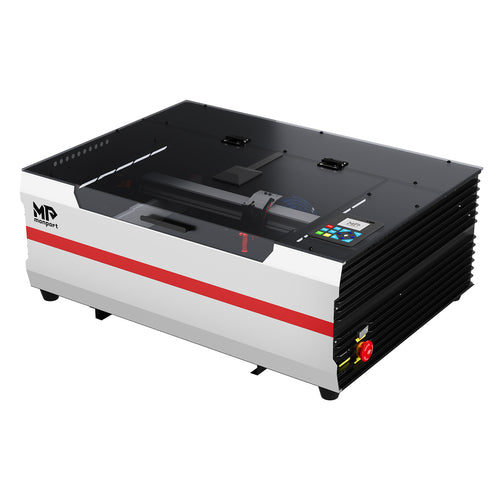
For sellers moving from occasional projects toward repeated wood and acrylic production, the Monport MEGAS 70W desktop CO₂ laser is one production-oriented option to evaluate. Its suitability still depends on the products, material thicknesses, workspace, ventilation, and order volume you have already defined.
Frequently Asked Questions
What are the easiest laser products to sell on Etsy for beginners?
Small products such as ornaments, cake toppers, leather keychains, place cards, pet tags, and simple signs are usually easier to prototype and ship than large signs, glassware, or assembled lamps. The best choice still depends on the machine, material knowledge, and target buyer.
Can I sell laser-cut products on Etsy?
Yes. Etsy’s current Creativity Standards allow qualifying items made by a seller with computerized tools such as a laser cutter. The design, photos, production arrangement, and listing must still comply with Etsy’s seller, creativity, intellectual-property, and safety rules.
What laser products are easiest to ship?
Flat and compact products—including tags, bookmarks, ornaments, cake toppers, place cards, metal cards, and unassembled kits—generally create fewer fulfillment problems than glassware, large signs, or complex layered art.
Is a CO₂ laser a good choice for Etsy products?
A CO₂ laser is a practical option when the planned products require cutting and engraving compatible materials such as wood, acrylic, paper, leather, rubber, and glass surfaces. Confirm the exact material and machine capability before processing.
Do I need a fiber laser to engrave metal products?
A fiber laser is the more direct choice for marking and engraving many bare metals. Some coated or treated metal products can be processed by other methods, but the result depends on the surface, laser source, wavelength, and desired mark.
Can I sell SVG laser files on Etsy?
Yes, if the files are your original designs or you otherwise hold the necessary rights. Test the design physically and state the formats, dimensions, material assumptions, assembly method, kerf considerations, software compatibility, and license terms.
Are laser-engraved products profitable?
They can support a profitable business, but no product category guarantees profit. Results depend on demand, differentiation, price, labor, production efficiency, material waste, shipping, platform fees, advertising, returns, and equipment costs.
Final Takeaway
If you are deciding what to sell on Etsy with a laser engraver, do not begin with 50 unrelated products. Begin with one buyer group, one material family, and three to five connected listings.
Research the buyer’s language, make complete samples, record every production step, test the packaging, and calculate the real cost before increasing the catalog. Once a product shows genuine demand and a repeatable workflow, expand into related items or invest in equipment that removes a specific production constraint.
That approach is slower than chasing a list of “winning products,” but it gives you something more useful: a shop you can actually operate.