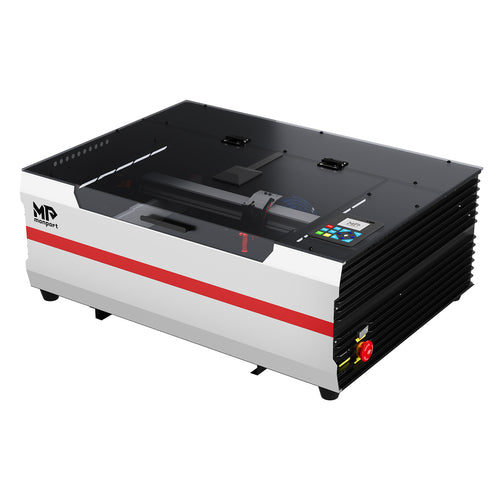
This guide keeps the original intent of the source article (how to engrave glass with a Mega-class CO2 system), but updates the workflow to Monport’s current promoted desktop model: Monport Mega S. Mega S is listed as a 70W CO2 desktop laser with a 700 × 350mm working space and up to 600mm/s max working speed—helpful when you want consistent results across repeat glass jobs.

Before you start: glass “engraving” with CO2 is usually glass etching
Most CO2 workflows create a frosted/etched look by micro-fracturing the glass surface (not deep carving). Your results depend heavily on preparation, focus, and heat management—so the steps below matter.
What you need
- Clean, flat glass (start with flat plaques or panels; curved glassware is harder)
- Lint-free cloth + glass cleaner (or mild soap/water)
- Masking tape / transfer tape (optional)
- Moist paper towel method supplies (optional: paper towel + clean water spray)
- Design file (SVG/DXF/PNG, etc.) and your engraving software
- Proper exhaust/ventilation and eye protection
Step 1: Clean and prep the glass
- Degrease the surface: fingerprints and oils cause inconsistent frosting.
- Dry completely before placing on the bed (unless you’re using a controlled “moist paper towel” method during engraving).
- Stabilize the glass: use a jig or corner stops to prevent movement.
Step 2: Set up Mega S for repeatable placement
The fastest way to waste glass is misalignment. Use a repeatable placement workflow:
- Place the glass squarely on the bed and confirm it’s stable.
- Import your design and size it to your engraving area.
- Use camera preview/alignment (Mega S highlights camera preview for placement) to confirm position before you run.
For the full Mega S feature list and current specs, verify on the official page: Monport Mega S product page.
Step 3: Focus correctly (this is where glass quality comes from)
Consistent focus improves line sharpness and helps you avoid “patchy” frosting. Mega S highlights Auto Focus to adjust focus based on material thickness/height—useful for repeat jobs and small variations between pieces.

Step 4: Choose your glass etching method
Option A: Masking tape method (cleaner contrast on many designs)
- Apply masking/transfer tape smoothly over the engraving area.
- Engrave through the tape; peel after engraving, then clean residue.
- This can reduce surface staining and help the frost look more uniform.
Option B: Moist paper towel method (heat control to reduce chipping)
- Place a thin damp paper towel layer over the engraving zone.
- Use lighter settings and test first—this method can help reduce micro-cracks on some glass types.
- Keep airflow/exhaust managed so the towel doesn’t shift.
Step 5: Starter settings (then run a test grid)
Glass composition varies a lot—always test first on a scrap corner or a spare piece. Use these as starting ranges and dial in with a small test grid:
- Power: low to moderate (raise slowly only if the mark is too faint)
- Speed: moderate to fast (increase speed if you see chipping)
- Passes: 1 light pass; consider 2 light passes instead of 1 heavy pass
- Line interval: tighter for whiter frost; loosen if overheating creates haze
- Air assist: gentle airflow (enough to clear debris; avoid blasting damp materials)
Step 6: Run the job safely
- Do not leave the machine unattended.
- Keep exhaust running to remove fumes/residue.
- Wear appropriate eye protection and follow your shop’s safety protocols.
Troubleshooting: common glass engraving problems
- Chipping/cracking: lower power, increase speed, try 2 lighter passes, use moisture/masking methods.
- Frost looks uneven: re-clean glass, improve focus consistency, stabilize the piece, adjust line interval.
- Mark is too faint: slow slightly or increase power in small steps (test grid first).
- Smoke staining: improve exhaust, use masking film, clean residue immediately after engraving.

Ready to build a more repeatable glass workflow (camera placement, autofocus, batch-friendly setup)? Explore Monport Mega S here.