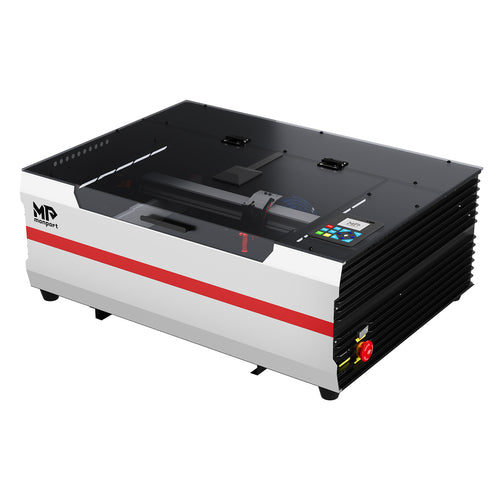
Leather is one of the most satisfying materials to laser engrave: it personalizes beautifully, sells well, and works across products like wallets, patches, belts, keychains, journals, and bag tags. But leather is also sensitive to heat and smoke, so beginners get the best results when they follow a repeatable workflow—clean placement, consistent focus, and properly tested settings. This refreshed version keeps the original topic and search intent, but updates the machine positioning to Monport’s current promoted desktop CO2 model: Monport Mega S.

Why leather is a beginner-friendly laser material
- High perceived value: personalized leather products sell well.
- Fast product cycles: many leather items engrave quickly once your settings are dialed in.
- Great contrast: the right leather + settings can create a clean, premium mark.
Mega S basics (what matters for leather workflows)
Leather engraving is about consistent focus, smoke management, and repeatable placement—especially if you’re doing batches of patches or tags. Mega S is positioned as a 70W CO2 desktop laser with a listed 700 × 350mm working space and up to 600mm/s max working speed. It also highlights workflow features like camera preview, batch-style tools (Smart Batch Fill), and Auto Focus. Always confirm the latest specs and included features on the official page: Monport Mega S product page.
Quick spec snapshot (from the Mega S page)
- Laser power: 70W CO2
- Working space: 27.56" × 13.78" (700 × 350mm)
- Max working speed: 600mm/s
- Air assist: 50kPa (supports cleaner engraving and less scorching)
- Exhaust fan: > 500 CFM (helps reduce smoke staining)

Step 1: Choose the right leather (and avoid surprises)
Best beginner pick: vegetable-tanned leather
Vegetable-tanned leather tends to engrave with reliable contrast and less chemical variability than many treated leathers. It’s a great place to learn, test settings, and build repeatable products.
Leathers that need extra testing
- Chrome-tanned / heavily dyed leather can engrave unevenly and may produce stronger odors/smoke.
- Finished / coated leather can react differently depending on the finish layer.
Always test on a scrap piece first and use proper ventilation.
Step 2: Prep your design for clean results
- Use simple shapes for your first projects (logos, monograms, line art).
- Choose readable fonts and avoid ultra-thin strokes until your settings are dialed in.
- Convert to vector for crisp edges when possible.
Step 3: Placement + focus (the “beginner shortcut” to better leather work)
The two fastest ways beginners waste leather are misalignment and inconsistent focus. A repeatable workflow fixes both. Mega S highlights a camera preview approach for positioning and Auto Focus to keep focus consistent across pieces. For small-batch products (patches, tags), this can reduce rework. See Mega S workflow features.

Step 4: Starter settings for leather (then test grid)
Leather varies dramatically by tannage, dye, and thickness, so treat these as starter ranges. Run a small test grid before you engrave a final piece:
- Power: low–mid (increase slowly until you get the contrast you want)
- Speed: mid–fast (increase speed if the leather scorches)
- Line interval: moderate for text/logos; tighter for detailed graphics
- Air assist: on (helps reduce scorching and residue)
- Exhaust: on (reduces smoke staining and odor)
Step 5: Clean-up and finishing (make it look “store-ready”)
- Wipe residue: use a dry cloth or soft brush to remove soot.
- Condition lightly: a small amount of leather conditioner can deepen the look after engraving.
- Seal if needed: for items handled daily, consider an appropriate finish (test first).
Beginner leather project ideas (easy to sell)
- Leather patches (hats, bags, apparel)
- Keychains and bag tags
- Wallet personalization
- Journal covers
- Pet collars and ID tags
When Mega S makes the biggest difference
If you’re doing occasional gifts, most CO2 workflows can work. If you’re building repeat orders, Mega S is positioned around faster setup and repeatability (camera placement, Auto Focus, Smart Batch Fill). For current pricing, included items, and feature details, confirm here: Explore Monport Mega S here.