


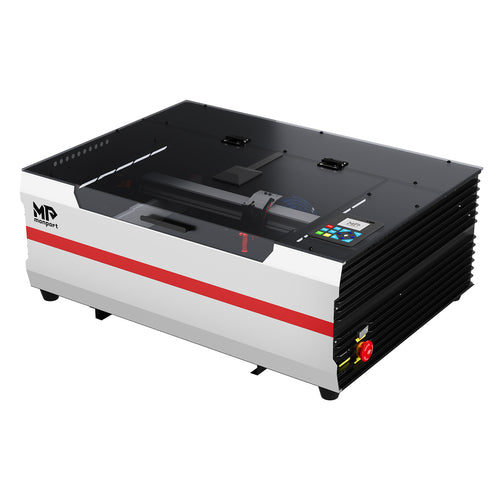
When you’re choosing between a Mega CO2 laser vs diode laser for acrylic, the “right” pick depends on the acrylic type (clear vs colored), the finish you want (frosted engraving vs surface marking), and how repeatable your workflow needs to be. The original comparison highlighted why CO2 systems are commonly favored for acrylic work—especially when you want clean cuts and high-contrast engraving. This updated version keeps the same search intent, but reframes the decision around today’s promoted model: Monport Mega S.

Quick takeaway: why CO2 often wins for acrylic (especially clear acrylic)
Many creators discover the hard way that clear acrylic is challenging for diode lasers because the material doesn’t absorb visible-blue diode wavelengths well—so results can be inconsistent unless you use workarounds (masking, coatings, etc.). Monport’s own guide on diode + clear acrylic calls out these limitations and why users often move to CO2 when quality becomes critical.
Mega CO2 vs diode laser: the 5 differences that show up on real acrylic jobs
1) Engraving visibility on clear acrylic
If your goal is a bright, frosted look on clear acrylic (signs, awards, LED edge-lit designs), CO2 is typically the smoother path. Diode can work better on colored or frosted acrylic (where absorption is higher), but clear acrylic is where diode users most often run into “faint marks” or “it barely shows” issues without prep.
2) Cutting performance and edge quality
Acrylic cutting is not just “can it cut?”—it’s “does it cut cleanly?” CO2 systems are widely used for acrylic because they can produce a more consistent cut path and cleaner edges, especially as thickness increases. Mega S specifically is positioned as a 70W CO2 desktop system, with Monport listing acrylic cutting capability and a production-focused feature stack for repeat jobs.
3) Placement accuracy (logos, awards, signage layouts)
Acrylic projects tend to be unforgiving: even small placement errors look obvious. Mega S highlights a camera-based workflow for preview/positioning and a tighter “repeatable setup” approach so you can place designs more confidently before engraving. If you’re producing the same layout across multiple blanks, that camera + batch workflow matters more than raw power alone.
4) Speed for batch production
When you’re engraving a single acrylic keychain, almost any machine can feel “fast enough.” But if you’re engraving 30–200 pieces (tags, signs, award plates), workflow speed becomes the product. Monport lists Mega S at 600mm/s max working speed and includes automation-oriented features like Smart Batch Fill (to apply designs across matching shapes).
5) Smoke management and consistency
Acrylic engraving and cutting create fumes and residue—good exhaust supports cleaner, more repeatable results. Mega S lists an exhaust fan of > 500 CFM, which supports higher-throughput acrylic work where you want less “haze” variation between pieces.
Why Mega S is the “CO2 pick” for acrylic creators right now
If you’re shopping in the “Mega CO2 vs diode” decision window, Mega S is positioned as the upgraded, production-leaning CO2 option in Monport’s desktop lineup:
- 70W CO2 laser platform
- Working space: 27.56" × 13.78" (700 × 350mm)
- Max working speed: 600mm/s
- High-detail support: recommended 300DPI, supports up to 1000DPI
- Auto Focus for consistent focusing across material thickness variation
- Smart Batch Fill to speed up repeating layouts
If you want to review the full details and what’s included, start here: Monport Mega S product page.

Choosing guide: which laser is best for your acrylic workflow?
Pick a diode laser if…
- You mainly engrave dark / colored / coated acrylic and you’re okay using prep methods for tricky materials.
- You’re prioritizing a lower-cost entry point and slower output is acceptable.
- You do not need polished acrylic cutting performance as a core requirement.
Pick a CO2 laser (Mega S) if…
- You engrave clear acrylic and want stronger, more consistent visibility without relying on heavy workarounds.
- You want cleaner cutting potential and more “business-ready” repeatability.
- You produce acrylic items in batches (signage, awards, product tags) and want faster layout + repeat workflows.
If your acrylic projects are already turning into orders, it’s worth evaluating Mega S directly: Explore Mega S here.




2 Comments
555
555