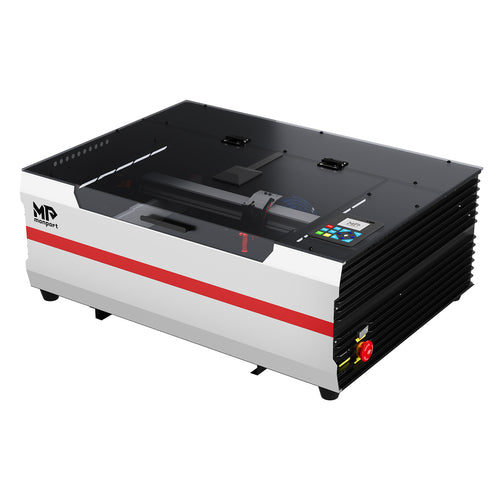
Stone engraving is one of the fastest ways to create premium, “keeps forever” products—slate coasters, memorial stones, wedding favors, address plaques, and decor tiles. But the results you get depend heavily on the laser type and the stone surface you’re working with. This refreshed version keeps the original intent of the source article (Mega CO2 vs diode for stone engraving), but updates the machine positioning to Monport’s current promoted desktop CO2 model: Monport Mega S.

Quick takeaway: CO2 vs diode for stone engraving
Most creators choose their laser type based on two things: contrast (how visible the mark is) and workflow repeatability (how fast you can produce consistent results). In general:
- CO2 lasers are commonly used for stone products like slate and coated stones, especially when you want consistent marking and the option to run bigger batches.
- Diode lasers can be useful for certain surface coatings and smaller “maker” workflows, but results vary more with stone type, finish, and color.
No matter what you use, test first: stone composition and surface finish (polished vs matte vs coated) can change outcomes dramatically.
5 differences that show up in real stone projects
1) Contrast on slate, granite, and coated stones
Slate is popular because it often produces strong contrast. Granite and marble can vary depending on color and polish. Coated stones (or painted tiles) may engrave by removing a coating rather than changing the stone itself—so the best laser choice depends on the surface layer.
2) Repeatability and placement accuracy
Stone products often need “tight” placement (centered logos, names, dates). A workflow that supports accurate preview and fast alignment reduces scrap. Mega S highlights Camera Preview for placement plus a faster alignment workflow, which helps when you’re engraving premium blanks you don’t want to waste.
3) Batch efficiency
If you’re engraving sets (coasters, favors, memorial stones), batch workflow becomes the difference between hobby and business. Mega S highlights Smart Batch Fill—useful when you want the same design applied across repeated shapes and layouts. See Mega S features here.
4) Focus consistency across uneven thickness
Stone pieces aren’t always perfectly uniform. Focus consistency helps you keep marks crisp and predictable. Mega S highlights Auto Focus to adjust the head based on material thickness/height, improving repeatability across batches.
5) Dust and residue management
Stone engraving can generate fine residue. Good exhaust and thoughtful workflow help keep results cleaner and reduce cleanup time between runs.
Why Mega S is positioned as the “CO2 upgrade” for stone engraving
If you’re leaning CO2 for custom stone work, Mega S is listed as a 70W CO2 desktop laser with a 27.56" × 13.78" (700 × 350mm) working space and a max working speed listed as 600mm/s. It also highlights production-style workflow features (camera placement, Auto Focus, batch tools) that support repeat orders. For the current official details, confirm on the product page: Monport Mega S product page.

Starter workflow for cleaner stone engraving (works for CO2 and diode)
Step 1: Choose the right stone blank
- Slate is often a strong starting point for contrast-driven products (coasters, plaques).
- Granite/marble can look premium, but you’ll need testing to find the best contrast.
- Coated tiles/stones can engrave beautifully—results depend on coating thickness and adhesion.
Step 2: Clean and stabilize
- Wipe off dust/oils so marks stay consistent.
- Use a simple jig (corner stops) so every stone loads into the same position.
Step 3: Placement + focus
Confirm placement before engraving, especially for premium blanks. Keep focus consistent for sharper results. Mega S highlights Auto Focus as part of its repeatability workflow.

Step 4: Settings strategy (then test grid)
Because stone varies so much, don’t start with “max power.” Start with a test grid and adjust in small steps:
- Power: low–mid to start (increase gradually for visibility)
- Speed: moderate to fast (slow slightly only if marks are too light)
- Passes: try 2 light passes instead of 1 aggressive pass if you’re chasing contrast
- Line interval: tighter for detailed graphics; loosen slightly if overheating reduces clarity
- Air assist / exhaust: keep enabled for cleaner results and easier cleanup
Ready to evaluate Mega S for repeat stone engraving (placement + autofocus + batch workflow)? Explore Monport Mega S here.