Starting a laser engraving business in 2026 can be an attractive option for entrepreneurs who want to sell personalized products, signage, gifts, décor, promotional items, or custom business products. However, the laser CO2 price is only one part of the investment.
A realistic startup budget also needs to account for ventilation, materials, software, safety equipment, packaging, marketing, and working capital.
For many small businesses, a practical starting budget can range from about $3,500 to $10,000+, depending on the type of CO2 laser machine, production capacity, workspace, and product niche.
This guide breaks down the major costs so you can build a more realistic 2026 laser engraving business budget.
How Much Does It Cost to Start a Laser Engraving Business?
A small laser engraving business can potentially be started for approximately $3,500–$6,000 with a capable desktop CO2 laser and basic accessories. A more production-focused setup can easily reach $7,000–$10,000 or more.
Here is an example of how the budget can look:
| Startup Expense | Estimated Budget |
|---|---|
| CO2 laser machine | $2,500–$5,000+ |
| Ventilation/exhaust | $200–$800 |
| Computer | $500–$1,200 |
| Software | $0–$300+ |
| Materials | $300–$1,000 |
| Safety equipment | $100–$400 |
| Packaging | $100–$300 |
| Website/e-commerce | $100–$500 |
| Initial marketing | $200–$1,000 |
| Working capital | $500–$2,000+ |
| Potential total | $4,000–$12,000+ |
These are planning estimates rather than fixed prices. Your actual investment depends heavily on your machine, location, production volume, and business model.
1. The Biggest Expense: Your CO2 Laser Machine
The CO2 laser machine will usually be the largest investment when starting a laser engraving business.
Entry-level machines may cost a few thousand dollars, while professional production systems can cost considerably more.
Instead of choosing solely based on the lowest laser CO2 price, consider what the machine can actually produce.
Important specifications include:
- Laser power
- Working area
- Engraving speed
- Cutting capability
- Spot size
- Autofocus
- Camera alignment
- Cooling system
- Exhaust system
- Software compatibility
- Batch-production features
- Material compatibility
- Upgrade options
A cheaper machine can become expensive if it requires frequent manual alignment, has limited production capacity, or cannot handle the products you intend to sell.
Consider the Monport MEGAS 70W CO2 Laser
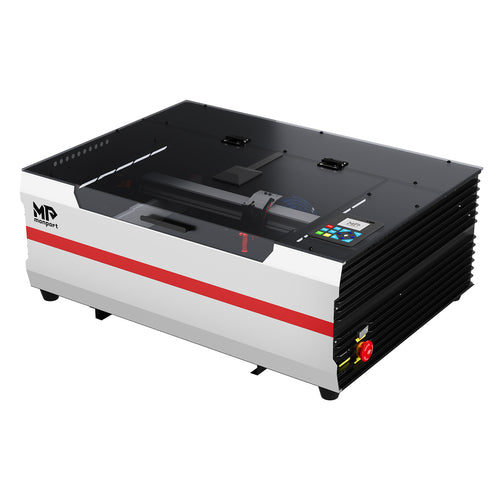
For entrepreneurs planning to move beyond hobby production, the Monport MEGAS 70W CO2 Laser Engraver & Cutter is an example of a production-oriented desktop CO2 laser machine.

Its 70W CO2 laser is designed for engraving and cutting applications, with a maximum engraving speed of up to 600 mm/s. The system also combines features such as autofocus, camera alignment, batch engraving capabilities, Visual Canvas, and compatibility with LightBurn.
Its reported minimum spot size can reach 0.03 mm with a 1.5-inch focus lens, while the standard stated spot-size range is around 0.05–0.08 mm depending on configuration.
For a small business, these capabilities matter because productivity is part of the machine's return on investment.
2. Ventilation and Exhaust: Don't Skip This Cost
Laser engraving produces smoke, fumes, and particles, depending on the material being processed.
 Fume Extractor
A proper exhaust setup is therefore an important part of your startup budget.
You may need:
- Exhaust ducting
- Inline fan
- Ventilation outlet
- Air filtration
- Clamps and connectors
- Replacement filters, if applicable
Budget approximately $200–$800 for a basic setup, although requirements can vary significantly depending on the workspace and machine.
Always follow the laser manufacturer's installation instructions and local building, fire, and workplace-safety requirements.
Also, never assume that every material is safe to laser. Materials such as PVC and vinyl can release hazardous gases and should not be processed unless the manufacturer specifically confirms compatibility.
3. Computer and Design Software
Your laser is only one part of the production system. You also need a computer capable of running your design and laser-control software reliably.

A reasonable computer budget could be $500–$1,200.
You may also need software for:
- Vector design
- Photo editing
- Laser control
- Layout
- Typography
- Product mockups
Some software is free, while professional programs may require a one-time purchase or subscription.
For users who prefer LightBurn, choosing a compatible machine can simplify the workflow. MEGAS supports advanced LightBurn functions, including autofocus, wireless connectivity, and camera functionality.
4. Materials: Your First Inventory
Another common mistake is spending nearly the entire budget on the laser and having little money left for materials.

Your starting inventory might include:
Wood
- Plywood
- MDF
- Hardwood
- Veneer
Acrylic
- Clear acrylic
- Colored acrylic
- Mirrored acrylic
Other materials
- Leather
- Paper
- Cardboard
- Certain coated products
- Engraving blanks
Your initial material budget could be around $300–$1,000.
Don't buy huge quantities immediately. Start with materials that directly support your first product range.
For example, if you plan to sell personalized wooden signs, invest primarily in suitable wood, rather than purchasing dozens of unrelated materials.
5. Safety Equipment and Accessories
Safety should be included in the initial budget rather than treated as an optional expense.
Depending on your machine and workspace, you may need:
- Fire extinguisher
- Safety signage
- Smoke detection
- Appropriate protective equipment
- Emergency shutoff access
- First-aid supplies
- Proper electrical connections

The MEGAS is designed around an enclosed-track construction and states compliance with IEC 60825 Class 1 laser safety standards, although laser classification can depend on the specific setup and operating conditions.
Never leave a laser operating unattended.
6. Packaging and Shipping Supplies
If you sell physical products online, packaging quickly becomes a recurring business expense.
Your initial budget may include:
- Shipping boxes
- Bubble wrap or protective packaging
- Mailers
- Tissue paper
- Stickers
- Thank-you cards
- Product labels
- Tape
- Shipping labels
A starting budget of $100–$300 can be enough for a small product line.
As sales grow, track packaging cost per order. This helps you calculate your true profit instead of looking only at the selling price minus material cost.
7. Website, Marketplace, and Payment Costs
You need somewhere to sell your products.
Possible channels include:
- Your own website
- Etsy
- Amazon
- Social media
- Local marketplaces
- Craft fairs
- Direct business-to-business sales
Your website may involve costs for hosting, an e-commerce platform, domain registration, apps, and payment processing.
A reasonable initial allocation could be $100–$500, although marketplace fees and advertising can increase your ongoing costs.
8. Marketing Budget
A laser engraving business doesn't automatically generate customers simply because you own a laser.
Set aside money for marketing.
Your initial marketing budget could be $200–$1,000, depending on your strategy.
You can promote products through:
- Short-form videos
- Social media
- Google Search
- Local business partnerships
- Email marketing
- Marketplace listings
- Content marketing
- Referral programs
- Craft markets
Laser engraving is particularly visual, making before-and-after videos and production demonstrations useful content formats.
Instead of advertising every product, identify your most profitable product category and focus your marketing around it.
9. Don't Forget Working Capital
This is one of the most important parts of your startup budget.
Suppose your machine costs $3,500 and you spend another $1,000 on accessories and materials. That does not mean you should spend the remaining cash immediately.
Keep money available for:
- Replacement materials
- Machine maintenance
- Unexpected repairs
- Packaging
- Advertising
- Software
- Shipping
- Customer refunds
- New product testing
Having $500–$2,000+ in working capital can provide much-needed breathing room during the first few months.
10. How Much Should You Actually Budget?
Here are three example approaches.

Budget Startup: Around $4,000–$5,000
Best for entrepreneurs testing the market.
Possible allocation:
- Entry-level CO2 laser: $2,500
- Ventilation: $300
- Materials: $400
- Safety/accessories: $200
- Computer/software: $500
- Packaging: $100
- Marketing: $200
- Working capital: $300
This approach keeps initial spending low but may limit production capacity.
Small-Business Setup: Around $6,000–$8,000
This provides more room for production.
You could allocate:
- 60–70W CO2 laser: $3,000–$4,500
- Ventilation: $500
- Materials: $700
- Computer/software: $700
- Safety/accessories: $300
- Packaging: $200
- Marketing: $500
- Working capital: $1,000
A machine such as the Monport MEGAS 70W fits the type of production-focused setup that can bridge the gap between hobby equipment and larger industrial systems.
Production-Focused Setup: $10,000+
A higher budget can support:
- More powerful equipment
- Larger material inventory
- Better ventilation
- Additional accessories
- Higher marketing spend
- More working capital
- Multiple product categories
This approach makes more sense if you already have customers or a clear sales strategy.
How to Calculate Your Laser Engraving Business ROI
Don't judge a machine solely by its purchase price.
Instead, calculate:
Profit per product = Selling price − material cost − packaging − marketplace/payment fees − labor − advertising cost
Then:
Break-even units = Total startup investment ÷ profit per product
For example, if your total initial investment is $6,000 and your average net profit is $20 per product:
$6,000 ÷ $20 = 300 products
You would need to sell approximately 300 products to recover the initial investment, assuming your profit calculation includes all relevant variable costs.
This is why production features can matter.
A machine that helps you process multiple pieces efficiently may produce more business value than a cheaper machine that requires extensive manual setup.
What Can You Sell With a CO2 Laser?
A CO2 laser can open up many potential product categories.

Popular possibilities include:
- Personalized signs
- Wedding décor
- Wooden ornaments
- Acrylic signs
- Business signage
- Name plates
- Custom gifts
- Jewelry boxes
- Home décor
- Promotional products
- Wedding invitations
- Personalized packaging
- Awards and plaques
- Corporate gifts
The best products aren't necessarily the ones that sell for the highest price. Look for products with a combination of good demand, reasonable material costs, manageable production time, and enough room for customization.
Is a 70W CO2 Laser Worth It for a Small Business?
For entrepreneurs expecting regular production, a 70W system can be worth considering because it provides substantially more production capability than many entry-level desktop machines.
The MEGAS 70W combines power with workflow-focused features such as:
- Up to 600 mm/s engraving speed
- Autofocus
- Camera alignment
- Batch engraving
- Visual Canvas
- Conveyor compatibility
- LightBurn support
- Fine engraving capability
- Enclosed-track construction
These features can be especially useful when moving from one-off custom orders toward repeatable small-batch production.
The key question isn't simply "How much does the laser CO2 price cost?"
It's:
"How much revenue can this machine realistically help me generate?"
Final 2026 Laser Engraving Startup Budget
Starting a laser engraving business doesn't necessarily require a massive investment, but you should budget beyond the machine itself.
A realistic starting range is approximately $4,000–$12,000+, depending on your equipment and business model.
The most important expenses are:
- CO2 laser machine
- Ventilation and exhaust
- Computer and software
- Materials
- Safety equipment
- Packaging
- Website and selling fees
- Marketing
- Working capital
If your goal is to build a serious small business rather than simply experiment with laser engraving, prioritize reliability, productivity, precision, workflow, and long-term operating costs over the lowest upfront price.
A capable 70W CO2 laser machine such as the Monport MEGAS can provide the production-oriented features needed to move from individual projects toward repeatable commercial work—making it important to evaluate the machine as a business investment rather than simply another piece of equipment.
Ready to start your laser engraving business? Get the Monport MEGAS CO2 laser machine and save 8% with code BESTMP10.