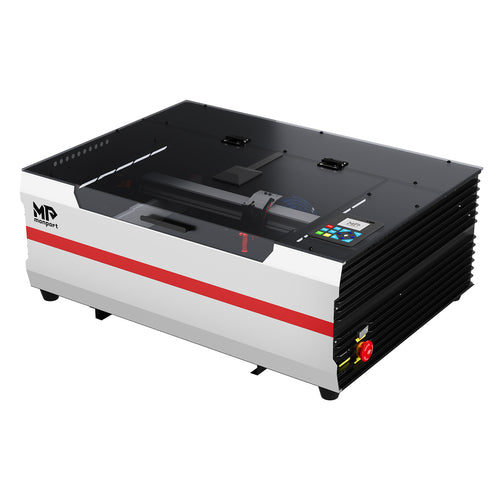
A fiber laser is a type of solid-state laser that uses a rare-earth-doped optical fiber to produce a precise laser beam, mainly used for metal marking, engraving, and industrial applications. Compared with CO₂ lasers, fiber lasers are especially effective for processing materials such as stainless steel, aluminum, brass, titanium, and other metals, making them widely used in manufacturing, jewelry customization, electronics, and personalized products.
In this beginner guide, you will learn how fiber lasers work, what materials they can process, how they compare with other laser technologies, and how to choose the right fiber laser machine for your needs. Whether you are exploring laser engraving as a small business opportunity or looking for a solution for industrial marking, this guide will help you understand the applications, advantages, and limitations of fiber laser technology.

What Is a Fiber Laser?
A fiber laser is a type of solid-state laser that uses a rare-earth-doped optical fiber as the gain medium to generate a highly focused and stable laser beam. Compared with CO₂ lasers and traditional crystal-based lasers, fiber lasers offer excellent precision, efficiency, and reliability, making them especially suitable for permanent metal marking, engraving, and industrial applications where accuracy and durability are required.

How Is a Fiber Laser Different From Traditional Lasers?
Different laser technologies are designed for different materials and applications. While fiber lasers are mainly optimized for metal processing, other laser types may perform better on non-metal materials or specialized applications.
|
Laser Type |
Laser Medium |
Common Applications |
|
Fiber Laser |
Rare-earth-doped optical fiber |
Metal marking, metal engraving, industrial identification, part traceability |
|
CO₂ Laser |
Gas mixture |
Wood cutting, acrylic engraving, glass processing, non-metal applications |
|
Diode Laser |
Semiconductor diode |
Hobby engraving, small craft projects, coated materials |
|
UV Laser |
Solid-state crystal |
Electronics marking, plastics, precision applications |
Compared with CO₂ and diode lasers, fiber lasers typically operate at a wavelength of around 1064 nm, which provides high absorption efficiency on many metals such as stainless steel, aluminum, brass, and titanium. This allows them to create precise markings, fine details, serial numbers, barcodes, and QR codes on metal surfaces. In comparison, CO₂ lasers usually operate at around 10.6 μm and are often better suited for non-metal materials like wood, acrylic, and glass. Understanding these differences in wavelength and material compatibility helps users choose the right laser technology for their specific applications.
What Are the Main Components of a Fiber Laser System?
A fiber laser system consists of several key components that work together to generate, control, and focus the laser beam. Each component plays an important role in achieving accurate and consistent marking results.

|
Component |
Function |
|
Pump Diode |
Provides the energy required to generate laser light |
|
Fiber Gain Medium |
Amplifies the laser beam through rare-earth-doped optical fiber |
|
Galvo Scanner |
Controls the movement and positioning of the laser beam |
|
Focusing Lens |
Concentrates the laser energy onto the material surface |
|
Control Software |
Creates designs and adjusts marking parameters |
Unlike traditional laser systems that may require complex optical paths or frequent maintenance, fiber laser sources are known for their compact design, reliability, and long operational life. The integrated fiber-based structure helps maintain stable beam quality, which is especially important for detailed engraving and industrial marking applications.
Why Are Fiber Lasers Ideal for Metal Processing?
Fiber lasers are widely used for metal processing because their 1064 nm wavelength, excellent beam quality, and high energy density make them highly effective for precision marking and engraving. The wavelength is well absorbed by metals such as stainless steel, aluminum, brass, titanium, and copper, allowing efficient energy transfer and stable processing results.
With a focused laser spot size that can reach tens of microns, fiber lasers can create fine details such as serial numbers, QR codes, barcodes, logos, and decorative patterns with high accuracy. By concentrating laser energy on a small area, they produce permanent marks that are resistant to wear, chemicals, and environmental conditions, making them ideal for applications such as industrial traceability, automotive parts, electronics, and jewelry customization.
How Does a Fiber Laser Work?

A fiber laser works by converting electrical energy into a highly concentrated laser beam through a series of optical processes. Unlike traditional lasers that use gas or crystal materials as the active medium, fiber lasers generate and amplify light inside a rare-earth-doped optical fiber. The process involves four main stages: generating laser energy, amplifying the light inside the fiber, controlling the laser beam, and interacting with the material surface to create permanent marks.
Step 1: Pump Diodes Generate Laser Energy
The process begins with pump diodes, which convert electrical energy into optical energy. These diodes provide the energy needed to excite the rare-earth elements inside the fiber gain medium.
When the pump energy enters the fiber, it activates the atoms inside the gain medium and creates the conditions required for laser light generation. This step provides the initial energy source that allows the fiber laser system to produce a stable laser beam.
Step 2: Rare-Earth-Doped Fiber Amplifies the Laser Light
Inside the optical fiber core, rare-earth elements such as ytterbium absorb energy from the pump diodes and amplify the light through a process called stimulated emission.
Because the laser beam is generated and amplified directly inside the fiber, fiber lasers can achieve excellent beam quality, high stability, and efficient energy transmission. This fiber-based design is one of the main reasons why fiber lasers can deliver precise and consistent results for metal marking and engraving applications.
Compared with traditional laser systems, the compact fiber structure also reduces optical losses and helps improve reliability during long-term operation.
Step 3: Galvo Scanner Controls the Laser Beam
After the laser beam is amplified, it is delivered to the marking head through optical components. A galvo scanning system uses high-speed mirrors to control the direction and movement of the laser beam across the working area.
The focusing lens then concentrates the laser energy into a small spot on the material surface. This precise beam control allows fiber lasers to create detailed designs, small text, serial numbers, QR codes, and complex patterns with high accuracy.
The combination of fast scanning speed and precise positioning makes fiber lasers suitable for both customized products and industrial marking applications.
Step 4: The Laser Beam Creates Marks on the Material
When the focused laser beam reaches the material surface, the concentrated energy changes the surface properties of the material. Depending on the laser settings and material type, fiber lasers can create different marking effects through processes such as oxidation, ablation, and annealing.
|
Process |
How It Works |
Common Results |
|
Oxidation |
Controlled heating changes the surface color without removing material |
Black markings on stainless steel |
|
Ablation |
High laser energy removes a thin layer from the material surface |
Deep engraving and surface removal |
|
Annealing |
Heat changes the material structure without damaging the surface |
High-contrast marks on metals |
These processes allow fiber lasers to create permanent markings that are resistant to wear, chemicals, and environmental conditions.

Fiber Laser Working Process Summary
|
Step |
Main Component |
Function |
|
1 |
Pump Diode |
Converts electrical energy into optical energy |
|
2 |
Gain Fiber |
Amplifies laser light through rare-earth elements |
|
3 |
Galvo Scanner |
Controls laser beam movement and marking position |
|
4 |
Focusing Lens |
Concentrates laser energy onto the material surface |
|
5 |
Material Surface |
Receives laser energy and forms permanent marks |
Understanding how a fiber laser works helps explain why it is widely used for metal engraving, industrial identification, and precision marking. In the next section, we will explore the materials that can be processed with fiber lasers and how different metals respond to laser marking.
Why Are Fiber Lasers Different From Other Laser Types?
Different laser technologies are designed for different materials and processing needs. Fiber lasers are especially effective for metal marking and engraving, while CO₂, diode, and UV lasers each perform better in other applications. The main differences come from their laser medium, wavelength, material absorption, and the type of processing they are designed to perform. Understanding these differences helps users choose a laser based on the material and application rather than simply comparing power or price.

Fiber Laser vs CO₂ Laser
The biggest difference between a fiber laser and a CO₂ laser is the wavelength and the materials they process most effectively. Fiber lasers typically operate at around 1064 nm, while CO₂ lasers operate at around 10.6 μm.
The shorter wavelength of a fiber laser is well absorbed by many metals, making it suitable for marking and engraving stainless steel, aluminum, brass, titanium, and other metal materials. CO₂ lasers, by comparison, are better suited to non-metal materials such as wood, acrylic, leather, and glass.
|
Feature |
Fiber Laser |
CO₂ Laser |
|
Laser Medium |
Rare-earth-doped optical fiber |
Gas mixture |
|
Typical Wavelength |
Around 1064 nm |
Around 10.6 μm |
|
Best Materials |
Metals |
Wood, acrylic, leather, glass |
|
Metal Marking |
Excellent |
Limited |
|
Non-metal Processing |
Limited |
Excellent |
|
Common Applications |
Metal engraving, serial numbers, traceability |
Cutting, engraving, signage |
For users working mainly with metal parts, jewelry, tools, or industrial identification, fiber lasers are generally the more suitable choice. For wooden signs, acrylic products, and other non-metal projects, CO₂ lasers are usually more practical.
Fiber Laser vs Diode Laser
Fiber and diode lasers can both be used for engraving, but they are usually aimed at different users and applications.
Diode lasers are commonly used for hobby projects and light engraving because they are compact, relatively affordable, and suitable for materials such as wood, leather, and coated surfaces. Fiber lasers are designed for more demanding metal marking applications where speed, precision, and permanent results are more important.
|
Feature |
Fiber Laser |
Diode Laser |
|
Typical Use |
Metal marking and engraving |
Hobby engraving |
|
Best Materials |
Metals |
Wood, leather, coated materials |
|
Processing Speed |
Higher for metal marking |
Generally slower |
|
Precision |
High |
Moderate to high |
|
Typical User |
Small businesses, manufacturers |
Beginners, hobby users |
A diode laser can be a practical entry point for users working mainly with craft materials. However, users who need to engrave bare metals, serial numbers, QR codes, or industrial components usually need a fiber laser.
Fiber Laser vs UV Laser
Fiber lasers and UV lasers are both used for precision marking, but their wavelengths and material interaction are very different.
Fiber lasers typically operate at around 1064 nm, while UV lasers commonly use a wavelength of around 355 nm. The shorter UV wavelength allows the beam to be focused into a very small spot and reduces the heat-affected area during marking.
This makes UV lasers particularly suitable for sensitive materials such as plastics, electronic components, and certain coated products where excessive heat could cause deformation or burning.
|
Feature |
Fiber Laser |
UV Laser |
|
Typical Wavelength |
Around 1064 nm |
Around 355 nm |
|
Best Materials |
Metals |
Plastics, electronics, sensitive materials |
|
Heat Effect |
Higher |
Lower |
|
Main Strength |
Metal marking and engraving |
Fine, low-heat marking |
|
Common Applications |
Industrial parts, jewelry, tools |
Electronics, plastics, precision components |
For most metal engraving and industrial traceability applications, fiber lasers are usually the better fit. UV lasers are more suitable when the priority is very fine marking with minimal thermal impact.
How to Choose the Right Laser Technology?
There is no single laser type that is best for every application. The right choice depends mainly on the material, processing goal, required precision, and production environment.
|
If You Want To... |
Recommended Laser |
|
Engrave stainless steel parts |
Fiber Laser |
|
Mark serial numbers or QR codes on metal |
Fiber Laser |
|
Customize metal jewelry |
Fiber Laser |
|
Cut acrylic signs |
CO₂ Laser |
|
Engrave wooden products |
CO₂ Laser |
|
Start simple hobby engraving projects |
Diode Laser |
|
Mark delicate plastics or electronic components |
UV Laser |
For users focused on metal engraving, industrial marking, product identification, or jewelry customization, fiber lasers offer a strong balance of speed, precision, and permanent marking quality. However, when the main materials are wood, acrylic, sensitive plastics, or lightweight craft materials, another laser technology may be more appropriate.
What Materials Can a Fiber Laser Engrave?
Fiber lasers are primarily designed for metal marking and engraving because their typical 1064 nm wavelength is efficiently absorbed by many metal surfaces. This allows fiber lasers to create permanent marks with high precision on materials such as stainless steel, aluminum, brass, copper, titanium, gold, and silver. Depending on the material properties and laser parameters, fiber lasers can produce different effects, including surface marking, color marking, and deep engraving.
Compared with CO₂ lasers, which are commonly used for materials such as wood, acrylic, and glass, fiber lasers are optimized for applications where durability, accuracy, and long-lasting identification are required. Some specially formulated plastics can also be marked with fiber lasers, but the results depend heavily on the plastic composition, additives, and surface treatment.

|
Material |
Typical Results |
Common Applications |
|
Stainless Steel |
Black marking, color marking, surface engraving |
Tumblers, tools, medical instruments, industrial parts |
|
Aluminum |
High-contrast marking, anodized surface engraving |
Electronics housings, nameplates, machine components |
|
Brass |
Fine engraving and permanent identification |
Electrical components, decorative products |
|
Copper |
Precision marking with optimized parameters |
Electrical parts, conductive components |
|
Titanium |
Durable surface marking |
Medical devices, aerospace components |
|
Gold & Silver |
Fine detailed engraving |
Rings, bracelets, jewelry products |
|
Laser-markable Plastics |
Contrast marking |
Electronics housings, plastic components |
Stainless Steel Laser Engraving
Stainless steel is one of the most common materials for fiber laser engraving because it absorbs the 1064 nm wavelength effectively and produces durable marking results. Fiber lasers can create black marking, deep engraving, and color marking on stainless steel surfaces through controlled oxidation and material removal.
Common applications include tumblers, bottles, kitchen tools, medical instruments, industrial components, and identification plates. Because the marks are permanent and resistant to wear, stainless steel laser marking is widely used for product branding and traceability.
Aluminum Laser Engraving
Aluminum is widely used in fiber laser processing because of its lightweight properties and applications in electronics, machinery, and consumer products. Fiber lasers are especially effective on anodized aluminum, nameplates, machine parts, and electronic housings, creating high-contrast marks.
Typical applications include engraving logos, serial numbers, product information, warning labels, and identification codes. For untreated aluminum, laser parameters may need adjustment because different alloys and surface finishes respond differently.
Brass and Copper Laser Marking
Brass and copper are highly reflective metals that require optimized laser parameters for consistent results. By adjusting power, speed, frequency, and passes, fiber lasers can create precise and permanent markings on these materials.
Common applications include electrical components, connectors, decorative metal products, and industrial parts. Proper parameter adjustment helps achieve clear markings while maintaining surface quality.
Titanium Laser Engraving
Titanium is valued for its strength, lightweight properties, and corrosion resistance, making it common in medical, aerospace, and precision industries. Fiber lasers can create permanent markings on titanium without affecting its structural performance.
Typical applications include medical devices, surgical instruments, aerospace components, and high-performance parts, where markings such as serial numbers, traceability codes, and brand logos are required.
Gold and Silver Laser Engraving
Gold and silver are widely used for jewelry customization, where fine and detailed engraving is essential. Fiber lasers provide a non-contact engraving process that reduces the risk of damaging delicate precious metal surfaces.
Common applications include custom rings, bracelets, watches, and jewelry accessories. Fiber lasers can add names, initials, logos, patterns, and personalized messages for luxury products and customized gifts.
Plastics Suitable for Fiber Laser Marking
Although fiber lasers are mainly designed for metal processing, some plastics can also be marked when they contain laser-sensitive additives or pigments. Suitable materials include ABS, engineering plastics, and laser-markable plastics.
Common applications include electronic housings, automotive plastic components, and industrial parts. However, transparent plastics and materials without suitable additives may require other laser technologies such as CO₂ or UV lasers.
What Can You Make With a Fiber Laser?
A fiber laser can do much more than industrial marking. With its ability to create permanent and precise marks on metals, it is widely used for custom engraved products, personalized gifts, branded items, and industrial identification parts.
From engraved jewelry and stainless steel tumblers to marked tools and automotive components, fiber lasers help businesses transform ordinary metal products into customized products with higher value.
|
Category |
Products |
Common Engraving Applications |
|
Jewelry |
Rings, bracelets, watches, pendants |
Names, dates, logos, patterns |
|
Metal Gifts |
Tumblers, keychains, metal cards |
Personalization, branding |
|
Tools & Parts |
Knives, tools, components |
Logos, serial numbers, QR codes |
|
Automotive |
Metal parts, brackets, plates |
Traceability marking |
|
Electronics |
Housings, panels |
Product information |
|
Awards |
Trophies, plaques, medals |
Names, branding |
Custom Engraved Jewelry and Accessories
Jewelry engraving is one of the most popular applications for fiber lasers because they can create highly detailed markings on metal surfaces through a non-contact process. Fiber lasers allow jewelers and customization businesses to engrave products such as custom rings, personalized bracelets, engraved watch backs, custom pendants, and metal dog tags with precise and permanent designs.
Common engraving options include names, initials, wedding dates, personal messages, logos, and decorative patterns. Because fiber lasers provide high accuracy without applying mechanical pressure to the surface, they are suitable for delicate products such as gold, silver, stainless steel, and titanium jewelry. This makes them ideal for jewelry stores, wedding customization services, and personalized gift businesses.
| Product | Engraving Ideas |
|---|---|
| Custom rings | Names, dates, wedding messages |
| Bracelets | Initials, symbols |
| Watch backs | Logos, serial numbers |
| Pendants | Patterns, initials |
Personalized Metal Gifts and Drinkware
Custom metal products are one of the most accessible business opportunities for fiber laser engraving. Products such as engraved stainless steel tumblers, personalized bottles, custom keychains, metal business cards, wallet cards, and bottle openers can be transformed into premium personalized products through laser engraving.
Fiber lasers can add customer names, company logos, artwork, quotes, and event information to create products for weddings, corporate gifts, promotional campaigns, and online customization businesses. For example, a stainless steel tumbler can become a personalized wedding gift, branded company giveaway, or custom retail product with higher perceived value.
| Product | Typical Engraving |
|---|---|
| Tumblers | Names, logos, patterns |
| Metal cards | Branding, contact details |
| Keychains | Initials, icons |
| Wallet cards | Messages, photos |
Custom Engraved Tools and Industrial Parts
Fiber lasers are widely used for custom engraved tools and industrial part marking because they create permanent and durable identification marks that remain readable during long-term use. Common products include hand tools, knives, machine parts, metal plates, and equipment tags.
Typical markings include brand logos, model numbers, serial numbers, QR codes, and tracking information. These applications are especially valuable for manufacturers, OEM suppliers, workshops, and industrial service providers that need reliable product identification and traceability. Compared with labels or ink printing, laser markings are more resistant to wear, chemicals, and environmental conditions.
Automotive Part Engraving and Identification
The automotive industry uses fiber lasers mainly for permanent marking and product traceability. Fiber lasers can engrave and mark products such as engine components, metal brackets, motorcycle parts, fasteners, and identification plates with important manufacturing information.

Common markings include serial numbers, production codes, part numbers, and traceability codes. For automotive suppliers and manufacturers, fiber laser marking helps improve production tracking, quality management, and component identification throughout the product lifecycle.
Custom Engraved Electronics and Metal Accessories
Fiber lasers are suitable for marking metal components used in electronics and technology products because they can create precise markings on small surfaces. Common applications include aluminum housings, metal panels, device covers, control panels, and small precision components.
Manufacturers use fiber lasers to add product logos, model numbers, QR codes, serial numbers, and compliance information. The high precision and small spot size of fiber lasers make them especially useful for electronic products where marking space is limited and accuracy is important.
Custom Engraved Awards and Promotional Products
Fiber lasers are also widely used to create personalized awards and branded promotional products. Common products include metal trophies, medals, plaques, corporate gifts, and name plates, where customers expect customized designs and permanent engraving.
Fiber lasers can add names, event information, company logos, and recognition messages to create personalized products for schools, companies, events, and organizations. This makes them suitable for businesses offering custom awards, corporate gifts, and promotional product services.
What Are the Limitations of Fiber Lasers?
Fiber lasers are highly effective for metal marking and engraving because of their excellent beam quality, precision, and reliability. However, they are not designed for every material or application. Their advantages are mainly focused on metal processing, while limitations appear in areas such as non-metal materials, large-format processing, cutting applications, and parameter optimization. Understanding these limitations helps users choose the right laser technology based on their actual needs instead of selecting a machine only by power or price.
Limited Non-Metal Material Processing
The biggest limitation of fiber lasers is that they are mainly optimized for metal processing. Most fiber lasers operate at a wavelength of around 1064 nm, which works effectively with materials such as stainless steel, aluminum, brass, copper, and titanium. However, many non-metal materials have lower absorption at this wavelength, making fiber lasers less suitable for applications such as wood cutting, acrylic engraving, glass processing, and fabric cutting.
| Material | Why Fiber Laser Is Limited | Better Choice |
|---|---|---|
| Wood | Lower absorption at 1064 nm wavelength | CO₂ Laser |
| Acrylic | Limited interaction with fiber laser wavelength | CO₂ Laser |
| Glass | Requires different wavelength characteristics | CO₂ or UV Laser |
| Fabric | Requires different processing methods | CO₂ Laser |
For example, a fiber laser can create precise and durable markings on a stainless steel tumbler, but it is not the ideal solution for producing large wooden signs or acrylic displays. These applications usually require CO₂ lasers, which are better suited for non-metal materials and larger cutting areas.
Higher Initial Investment Compared With Diode Lasers
Compared with entry-level diode lasers, fiber lasers usually require a higher initial investment because they use more advanced components, including fiber laser sources, galvo scanning systems, precision optical components, and industrial control systems. Different laser technologies are designed for different users: diode lasers are often suitable for beginners and hobby projects, while fiber lasers are mainly used for businesses, professional engraving, and industrial marking.
Although the upfront cost is higher, fiber lasers are designed for users who need faster production, repeated engraving operations, permanent metal marking, and consistent professional results. For occasional hobby engraving, a diode laser may be more practical, but for commercial applications, fiber lasers usually provide better long-term value.
| Laser Type | Typical User |
|---|---|
| Diode Laser | Beginners, hobby users, personal projects |
| Fiber Laser | Businesses, professional engraving, industrial marking |
| CO₂ Laser | Cutting and engraving businesses |
Limited Cutting Capability
Many beginners assume that all laser machines can perform similar cutting and engraving tasks, but fiber lasers are primarily designed for marking and engraving rather than large-scale cutting. They perform exceptionally well for surface engraving, deep engraving, metal marking, and part identification, but they are not the preferred choice for cutting large wood sheets, acrylic panels, or producing large-format signage.
| Application | Fiber Laser Suitability |
|---|---|
| Metal marking | Excellent |
| Metal engraving | Excellent |
| Deep engraving | Good |
| Large sheet cutting | Limited |
For example, a fiber laser can permanently engrave a company logo, QR code, or serial number onto a metal component, but creating a large wooden decoration or acrylic display would typically require a CO₂ laser system.
Learning Curve and Parameter Adjustment
Although modern fiber lasers are designed to be user-friendly, achieving the best engraving quality still requires parameter optimization. Different materials and surface conditions may require adjustments to settings such as power, speed, frequency, hatch spacing, and number of passes.
Even the same material can produce different results depending on factors such as alloy composition, surface coating, material thickness, and surface finish. For example, two stainless steel products from different suppliers may require different settings to achieve the same black marking effect. Professional users usually perform test markings first to optimize contrast, engraving depth, processing speed, and surface quality.
Limited Large-Area Processing Compared With CO₂ Flatbed Lasers
Another limitation of fiber lasers is their working area. Most fiber laser marking machines use a galvo scanning system, which provides high-speed and precise beam movement but usually covers a smaller marking area. Common fiber laser marking areas include 110 × 110 mm, 175 × 175 mm, and 300 × 300 mm, while CO₂ flatbed lasers are often available in much larger working areas such as 600 × 900 mm or 1300 × 2500 mm.
Fiber lasers are ideal for small metal products, industrial parts, jewelry, tools, and identification marking, while CO₂ flatbed lasers are often more suitable for large wooden signs, acrylic displays, and decorative panels.
| Project | Recommended Laser |
|---|---|
| Small metal engraving | Fiber Laser |
| Metal identification marking | Fiber Laser |
| Large wood signs | CO₂ Laser |
| Acrylic products | CO₂ Laser |
When Should You Choose Another Laser?
Choosing the right laser depends on your material, production goals, and application requirements. A fiber laser is an excellent choice for permanent metal engraving and industrial marking, but other laser technologies may provide better results for specific projects. A CO₂ laser is usually more suitable for wood cutting, acrylic engraving, glass processing, and large-format projects, while a diode laser is better for low-cost hobby applications and simple engraving. For electronics, plastics, and heat-sensitive materials, a UV laser may be a better option.
The goal is not to find the “best” laser for every situation, but to select the technology that matches your actual requirements. By understanding both the strengths and limitations of fiber lasers, users can make a more informed investment decision and choose a machine that fits their materials, workflow, and business goals.
FAQ
What wavelength does a fiber laser use, and why is 1064 nm important?
Most industrial fiber lasers operate at a wavelength of approximately 1064 nm (1.06 μm), generated by rare-earth-doped fibers such as ytterbium fiber. This wavelength provides efficient energy absorption on many metal materials, allowing fiber lasers to create precise and permanent marks on stainless steel, aluminum, brass, copper, and titanium. Compared with CO₂ lasers, which typically operate at around 10.6 μm, fiber lasers are better suited for metal processing because many metals interact more effectively with shorter infrared wavelengths.
What is the difference between a standard fiber laser and a MOPA fiber laser?
The main difference between standard fiber lasers and MOPA (Master Oscillator Power Amplifier) fiber lasers is pulse control capability. Standard fiber lasers usually operate within a fixed pulse range, while MOPA systems allow more flexible adjustment of pulse duration. This additional control makes MOPA fiber lasers more suitable for applications requiring precise surface effects, such as black marking on aluminum, color marking on stainless steel, and processing heat-sensitive materials. Standard fiber lasers are often sufficient for general metal engraving and marking, while MOPA systems provide more control for specialized applications.
What fiber laser power do I need for engraving?
The required fiber laser power depends on the material, engraving depth, production speed, and application requirements. A 20W–30W fiber laser is commonly used for jewelry, personalized products, and light metal marking, while 50W fiber lasers provide faster processing and deeper engraving capability for small businesses and professional users. Higher-power systems such as 60W–100W are typically used for industrial applications requiring higher production efficiency. However, power alone does not determine engraving quality; beam quality, pulse control, and parameter optimization are also important factors.
What is pulse width in a fiber laser, and why does it matter?
Pulse width refers to the duration of each laser pulse, usually measured in nanoseconds (ns), and it directly affects heat input, marking contrast, and engraving quality. Shorter pulse widths reduce heat accumulation and provide better control for fine details and sensitive materials, while longer pulse widths deliver more energy per pulse for stronger material removal and deeper engraving. Choosing the right pulse width helps balance precision, surface quality, and processing efficiency.
What marking speed can a fiber laser achieve?
The marking speed of a fiber laser depends on factors such as laser power, material type, marking area, design complexity, and parameter settings. Many galvo fiber laser systems can achieve speeds of approximately 3,000–10,000 mm/s, making them suitable for high-efficiency applications such as serial number marking, barcode engraving, and industrial identification. However, maximum speed does not always produce the best results, as detailed designs and deep engraving often require slower speeds for better contrast and accuracy.
What is the typical engraving depth of a fiber laser?
The engraving depth of a fiber laser depends on the material, laser power, marking speed, and number of passes. Surface marking usually creates micron-level changes, while light engraving can typically achieve around 0.01–0.1 mm depth depending on the application. Deeper engraving is possible through multiple passes and optimized parameters, but most fiber laser applications focus on precision marking, identification, and surface engraving rather than heavy material removal.
What is the difference between laser marking and laser engraving?
Laser marking and laser engraving are related but different processes. Laser marking changes the surface appearance of a material without significantly removing material, making it ideal for QR codes, serial numbers, and black markings on stainless steel. Laser engraving removes material from the surface to create physical depth, which is commonly used for deep logos, decorative designs, and tactile markings. Laser etching is another process that creates shallow surface changes through controlled laser interaction.
How long does a fiber laser source usually last?
Industrial fiber laser sources are known for their long operating lifespan, typically reaching around 50,000–100,000 working hours depending on operating conditions, cooling performance, power usage, and maintenance. Compared with traditional laser systems, fiber lasers generally require less maintenance because they use a solid-state design without consumable gases or complex optical paths with mirrors. This reliability makes them suitable for long-term industrial and commercial use.
Why does beam quality matter in fiber laser engraving?
Beam quality determines how effectively laser energy can be focused onto a small area of the material surface. A high-quality laser beam creates a smaller focused spot size, higher energy density, and more consistent engraving results. This is especially important for applications requiring fine details, such as small text, jewelry engraving, QR codes, and precision industrial components. Two fiber lasers with the same power rating may produce different results if their beam quality and optical performance differ.
What factors affect fiber laser engraving quality?
The final engraving quality depends on a combination of laser parameters and material characteristics, including power, marking speed, frequency, pulse width, hatch spacing, focus distance, material composition, and surface condition. Even materials with the same name may produce different results because of differences in alloy composition, coatings, or surface finishing. Professional users usually perform test markings first to optimize settings and achieve the desired contrast, depth, and processing speed.