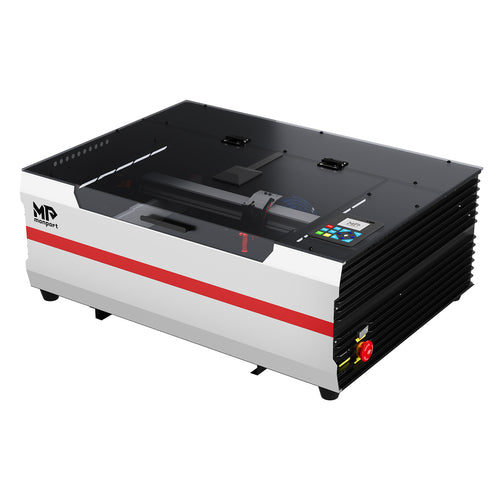
Cutting thick materials with a CO2 laser requires more than just power—it’s about preparation, settings, and a stable workflow. The Monport Mega S 70W CO2 laser is well-suited for heavier cutting tasks when used correctly, especially for wood and acrylic projects that demand clean edges and consistent depth.
This guide walks you through the practical steps to get reliable results when cutting thicker materials.


Step-by-Step Preparation Before Cutting
Before starting any thick material job, preparation is what determines your final result.
Begin by making sure your material is flat, clean, and properly secured on the bed. Any warping or movement during cutting can affect depth and edge quality.
Next, confirm your focal height. For thick materials, accurate focus is critical because even small deviations can reduce cutting efficiency. Set your focus carefully before running the job.
Finally, ensure your ventilation and air assist are working properly. Thick materials produce more residue and heat buildup, so airflow plays a major role in keeping edges clean.
1. Choosing the Right Design for Thick Cuts
Not all designs are suitable for thick material cutting.

When preparing your file, keep these points in mind:
- Use vector files for clean cutting paths
- Avoid overly intricate internal details that may overburn
- Simplify tight corners where possible
- Separate engraving layers from cutting layers
Well-prepared designs reduce the need for multiple passes and help maintain cleaner edges.
2. Setting Up Your Machine for the First Pass
Start with conservative settings rather than maximum power. Thick materials often require multiple controlled passes instead of one aggressive cut.

When setting up:
- Begin with moderate power and slower speed
- Run a small test cut on a scrap piece of the same material
- Adjust based on depth and edge quality
- Keep airflow strong to reduce burning
The goal is consistency, not rushing through the cut.
Using Multiple Passes for Cleaner Results
For thicker wood or acrylic, multiple passes are often more effective than a single high-power cut.
After your first pass, check the cut depth. If the material is not fully cut through, repeat the process with slight adjustments in power or speed rather than drastically increasing settings.
This controlled approach helps prevent charring, edge melting, or uneven burn marks.
Managing Heat and Airflow
Heat buildup is one of the biggest challenges when cutting thick materials.

To manage it effectively:
- Keep air assist running continuously during the cut
- Ensure exhaust is properly venting smoke and debris
- Allow brief cooling pauses between long passes if needed
- Avoid stacking multiple dense jobs back-to-back without cooling time
Proper airflow not only improves cut quality but also protects your machine and materials.
Testing Before Full Production Runs
Never jump directly into a full production batch without testing.
Start with a small sample cut:
- Test different power and speed combinations
- Check edge smoothness and burn levels
- Confirm full penetration through the material
- Adjust focus if needed based on thickness
Once the test results are consistent, proceed with the full job.
Common Mistakes to Avoid
Thick material cutting is sensitive to setup errors. Avoid these common issues:
- Skipping test cuts before production
- Incorrect or inconsistent focus settings
- Weak airflow or blocked exhaust
- Using overly complex designs for thick materials
- Rushing by increasing power too aggressively
Taking a controlled approach will always produce better long-term results.
Final Thoughts
Cutting thick materials with a CO2 laser is about balance—power, speed, airflow, and patience all work together. The Monport Mega S 70W provides the capability needed for these tasks, but the quality of your results depends heavily on setup and workflow discipline.
By following a structured process, testing carefully, and adjusting gradually, you can achieve clean, professional cuts even on challenging materials.
FAQs
What is the best way to cut thick wood with a CO2 laser?
Use multiple passes with moderate power and slower speed, and ensure strong air assist and proper focus.
Can the Monport Mega S cut thick acrylic?
Yes, but it works best with controlled settings and multiple passes rather than a single high-power cut.
Why is my cut not going through thick material?
Common reasons include incorrect focus, weak airflow, or speed settings that are too fast.
Do I need air assist for thick cutting?
Yes. Air assist is essential for removing debris and reducing burning during thick material cutting.