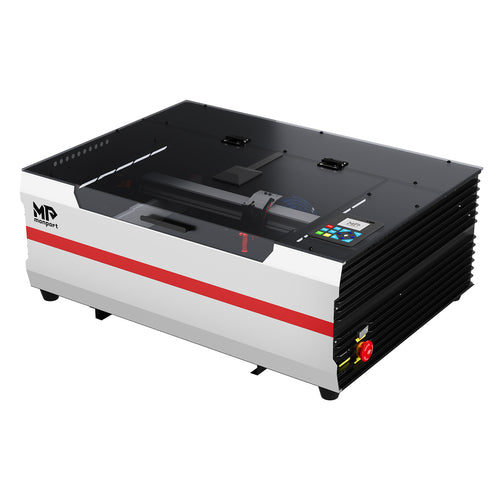
If you've spent any time comparing machines, you already know that CO2 laser engraver power is the single biggest factor that decides what you can actually make — and how fast you can make it. Go too low and you'll fight the machine every time you try to cut anything thicker than a coaster. Go too high and you may be paying for speed and cutting depth you'll never use. This guide breaks down the four most common power classes — 40W, 70W, 100W, and 150W — so you can figure out which one is the best CO2 laser engraver for your specific projects, budget, and workspace.


Why Laser Power Is the First Decision You Should Make
Before you look at screen size, camera resolution, or auto-focus, sort machines by wattage. CO2 laser engraver power determines three things directly:
- Cutting depth: how thick a piece of wood or acrylic you can cut in a single pass
- Speed: how many passes (and how much time) a job takes
- Material range: some jobs, like cutting 20mm acrylic or engraving stone, simply aren't realistic below a certain wattage
Everything else, including work area, software, and autofocus, is a feature layer on top of this core decision. Choosing the right power class first will save you from returning a machine that "engraves fine but can't cut what I need."
Quick Comparison Table
| Power | Best For | Typical Cutting Capacity | Typical Speed | Ideal User |
| 40W | Light engraving, thin materials | Max marking depth 0.4" (10mm) | Up to 350mm/s engraving | Beginners, hobbyists, gifts |
| 70W | Engraving + moderate cutting | Acrylic up to 20mm, basswood up to 18mm | Up to 600mm/s | Small business, Etsy sellers |
| 100W | Heavier cutting, larger batches | Cuts wood, acrylic, leather, and other non-metal materials | Up to 1400mm/s engraving | Growing shops, production work |
| 150W | Industrial cutting/high volume | Thick wood, dense acrylic sheets | Up to 1400mm/s engraving | Industrial, high-volume production |
40W CO2 Laser Engraver: The Entry Point
A 40W machine, like the Monport 40W Desktop CO2 Laser Engraver, is where most people start. It's built for engraving detail work and cutting thinner materials rather than production-level cutting.
What it's good at:
- Engraving wood, leather, acrylic, and glass with fine detail
- Personalized gifts, small signage, and craft projects
- A compact desktop footprint that fits on a hobby bench
- Built-in air assist and red dot guidance for easier alignment
Where it struggles:
-
Cutting thicker wood or acrylic requires multiple passes and patience
-
Not ideal if you plan to run high-volume batch orders
If your goal is learning the craft, making gifts, or testing whether laser engraving is a business you want to grow, a 40W machine keeps the upfront cost low without limiting your creativity on detail work.

70W CO2 Laser Engraver: The Small Business Sweet Spot
This is the power class where a lot of buyers land, because it's the first tier that comfortably handles both engraving and real cutting work. The Monport MEGAS 70W CO2 Laser Engraver is a good example. It's built specifically for small businesses moving past the hobby stage.
What it's good at:
- Cutting acrylic up to roughly 20mm and basswood up to roughly 18mm
- Autofocus and camera-assisted alignment, which speeds up repeat jobs
- Batch engraving and conveyor compatibility for handling multiple orders
-
A quieter, more enclosed design suited to home studios
Where it struggles:
- Still a desktop-class machine, so extremely thick industrial materials are outside its range
For Etsy sellers, custom sign makers, and anyone fulfilling repeat orders, a 70W desktop unit is usually the most efficient balance of cost, speed, and cutting range. It's worth reading our best desktop CO2 laser cutter guide if you want a deeper comparison of desktop-class machines.

100W CO2 Laser Engraver: Built for Heavier Cutting
Once projects call for cutting thicker wood or acrylic on a regular basis, a 100W machine like the Monport Effi10S 100W CO2 Laser Engraver & Cutter starts to make more sense. It runs on a 40"x24" industrial work area with a built-in CW-5200 water chiller for stable output during longer jobs.
What it's good at:
- Engraving and cutting a wide range of non-metal materials, including wood, acrylic, leather, paper, textiles, and glass (engraving also works on coated or painted metal)
- Engraving speeds up to 1400mm/s, roughly 75% faster than the previous-generation model
- Autofocus with 0.01mm precision for faster, more consistent setup between jobs
- Front and back pass-through plus dual side access for handling oversized material
-
A 550W exhaust system (660 CFM) for clearing smoke and debris during long runs
Where it struggles:
- Larger footprint means it needs more dedicated workshop space
- The built-in water chiller adds setup and maintenance steps compared to smaller air-cooled desktop units
This tier suits shops that are past the "side hustle" stage and are cutting materials daily rather than occasionally. If you're deciding between a 60W and 100W setup, our 60W vs 100W CO2 laser cutters comparison walks through the trade-offs in more detail.

130W-150W CO2 Laser Engraver: Industrial-Grade Output
At the top of the range sit Monport's high-speed industrial machines, including the Effi13S (130W) and Effi16S (150W). These are built for production environments, not hobby desks.
What it's good at:
- Cutting thick wood and dense acrylic sheets with fewer passes
- High-speed motion systems designed for continuous, high-volume runs
- Large work areas and pass-through capability for oversized sheet goods
- Reliable cooling systems built to handle extended run times
Where it struggles:
- Higher upfront cost and larger physical footprint, since these are shop-floor machines, not desktop units
- More power draw and ventilation requirements to plan for
If you're running a production floor, a sign shop, or a woodworking business processing sheet materials daily, this power class removes the bottlenecks that smaller machines create. Explore the full Industrial CO2 Laser Engraver lineup to compare the 90W, 100W, 130W, and 150W options side by side.

How to Match Power to Your Actual Projects
If you're just starting out
Start with 40W. It's the lowest financial risk while you learn design software, settings, and material behavior.
If you're selling on Etsy or filling custom orders
A 70W desktop machine like the MEGAS gives you engraving precision plus enough cutting depth for most acrylic and wood products people actually buy.
If cutting speed and thickness are slowing you down
Move to 100W. The extra power cuts thicker stock in fewer passes, which directly reduces production time per order.
If you're running a shop floor or high-volume operation
130W to 150W industrial machines exist specifically to remove the speed and thickness ceiling that smaller machines have.
Other Factors Beyond Wattage
Power isn't the only spec worth checking before you buy the best CO2 laser engraver for your workflow:
- Work area size: measure your largest typical material before choosing a bed size
- Cooling system: water cooling is standard at these power levels, and higher-wattage machines often add a built-in chiller
- Software compatibility: confirm LightBurn or RDWorks support if you already design in one of them
- Autofocus and camera alignment: these save time on repeat jobs more than they add cutting power
- Air assist: reduces charring and improves edge quality, especially on wood
FAQ
Is a higher-watt CO2 laser engraver always better?
Not necessarily. Higher wattage adds cutting depth and speed, but if you mainly engrave flat items and rarely cut thick material, a 40W or 70W machine may suit you better and cost less to run.
What's the difference between engraving speed and cutting speed?
Engraving speed refers to how fast the laser passes across the surface to mark it. Cutting speed is slower because the laser needs more time, and often multiple passes, to go completely through a material.
Can a 70W CO2 laser engraver handle small business production?
Yes. Machines like the Monport MEGAS 70W are specifically designed with batch engraving and camera alignment features aimed at small business and repeat-order workflows.
Do I need a chiller for a 100W or 150W laser?
Higher-power CO2 lasers generate more heat, so a stable cooling system, often a built-in chiller on 100W+ industrial models, helps protect the laser tube and maintain consistent output over long runs.
What materials can these machines cut and engrave?
Wood, acrylic, leather, glass, rubber, and fabric are common across all power levels. Actual cutting thickness depends on wattage, material density, and settings, so always test on scrap material first.
Key Takeaways
- CO2 laser engraver power determines cutting depth, speed, and material range more than any other spec
- 40W suits beginners and detail-focused engraving projects
- 70W is the most common choice for small businesses balancing engraving and cutting
- 100W handles thicker materials and faster batch production
- 130W to 150W is built for industrial, high-volume cutting operations
- Work area, cooling, software, and autofocus matter once you've picked the right power class
Conclusion
There's no single best CO2 laser engraver for every buyer. The right choice depends on what you're cutting, how often, and how fast you need to work. Matching power to your real projects, rather than buying the highest wattage available, is the best way to get a machine that fits your workflow and your budget. Browse the full Monport CO2 laser engraver lineup to compare specs side by side and find your fit.
Ready to upgrade your setup? Use code BESTMP10 for 8% OFF your next Monport CO2 laser engraver.