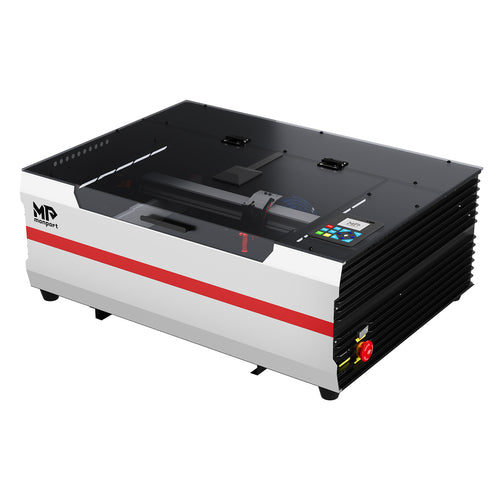
Looking for a project that blends creativity and precision? Engraved glasses are a perfect pick—ideal for personalized gifts, wedding sets, décor pieces, or branded drinkware for events. This updated guide keeps the original “Mega desktop CO2 laser + engraved glasses” intent, but reframes it around Monport’s current promoted model: Mega S, a 70W desktop CO2 laser designed for workflow-focused production.
Start with the official Mega S product page for current bundles, options, and compatibility details: Monport Mega S 70W Desktop CO2 Laser Engraver & Cutter.

Why engraved glasses are such a high-impact project
- Premium feel: frosted engraving looks upscale and gift-ready.
- Easy personalization: names, dates, monograms, and logos are fast to produce.
- Great for batches: wedding sets, corporate events, restaurants, and merch runs.
Before you start: glass safety + consistency basics
Glass is “delicate but doable.” The goal is clean frosting (surface marking) without heat stress. Use a test-first mindset and keep your workflow consistent.
- Always test first on the same glass type (coatings and thickness vary).
- Use stable positioning so the glass can’t shift during engraving.
- Use airflow/exhaust consistently to reduce residue redeposit.
Step-by-step: how to engrave glasses (clean, frosted results)
Step 1: Choose a glass style that engraves well
Smooth, consistent glass surfaces engrave more evenly than heavily textured or uneven coatings. If you’re doing gift sets, buy one extra glass for testing.
Step 2: Prep the surface
- Clean with a lint-free cloth to remove oils and dust.
- Optional: apply masking tape on the engraving area for cleaner frosting (test first).
- Mark a simple “front reference” point so every glass aligns the same way.
Step 3: Create your design (make it readable on curved glass)
- Use bold fonts and clean vector shapes for best readability.
- Avoid ultra-thin lines until your settings are dialed in.
- Keep designs within a comfortable height band on the glass (curvature increases at top/bottom).
Step 4: Position the glass for repeatable placement
Engraved glasses are easiest when your placement is repeatable. Many makers use a rotary-style approach for cylinders, but always confirm your exact setup and accessory compatibility on the Mega S product page before purchasing or running production.
Step 5: Run a small test grid (the fastest route to “best settings”)
Use a small grid to vary power and speed and pick the cleanest frost. Your goal: strong contrast with minimal chipping or rough edges.
Step 6: Engrave and finish
- Engrave your final design after locking in your best test square.
- Wipe residue gently; avoid abrasive scrubbing on the engraved area.
- Optional: a final clean can make the frosting look brighter and more uniform.
Starter settings for engraved glasses (use as a baseline only)
Because glass varies widely, treat these as conservative starting points and fine-tune with a test grid:
- Power: 35%–55%
- Speed: 250–450 mm/s
- DPI: 300–600 DPI (increase only after you confirm edges stay clean)
- Passes: 1 pass first (avoid piling heat)
- Air assist: ON
Ideas that customers love (easy to sell as sets)
- Wedding wine glasses: names + date + small icon
- Beer mugs: logos, quotes, and bold line art
- Whiskey tumblers: monograms and minimalist crests
- Corporate gifts: brand mark + recipient name
Batch workflow tip: make your setup repeatable
The secret to fast production is repeat placement: build a simple jig or consistent alignment reference, save presets by glass type, and keep cleaning/masking consistent. Mega S is positioned for workflow-forward production—so once you dial in one glass, the next set becomes much faster.

Ready to start your engraved glass workflow with Mega S? Buy Mega S for engraved glasses.
Watch Video
FAQs
Do I need special prep for engraving glasses?
Clean the surface thoroughly and test first. Many makers use masking tape to help manage residue and improve frosting consistency (test to confirm on your glass type).
How do I make engraved glasses more consistent in batches?
Use repeatable placement (jig/reference marks), save presets by glass type, and keep airflow/exhaust consistent so every piece matches the last.