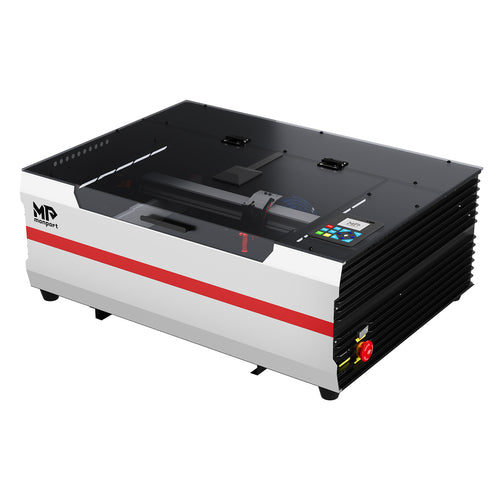
Engraving machines have become essential tools in various industries, from jewelry making to industrial manufacturing. The precision and versatility of these machines enable users to create intricate designs on various materials. If you're in the market for engraving machines for sale or wondering how much a fiber laser costs. If you're in the market for engraving machines for sale or wondering how much a fiber laser cutter costs, this comprehensive guide will help you make an informed decision. We'll also introduce you to Monport laser engravers and explain why they are a top choice for your engraving needs.
What Can a 100W Fiber Laser Engraver Actually Do?
A 100W fiber laser engraver is designed primarily for permanent marking and engraving on metal. Compared with lower-power systems, it can provide more material removal and better throughput for applications that require multiple passes. That does not mean every job should be run at maximum power. The right result still depends on the material, lens, focus, scan settings, number of passes, and the finish you want.
In practical terms, a 100W fiber laser can cover four common types of work: traceability marking, deeper metal engraving, relief or texture work, and selected black or color marking applications. It is also important to separate metal engraving from metal cutting. A galvo fiber marker is not automatically a replacement for an industrial sheet-metal cutting machine.
Permanent Metal Marking
Permanent marking is one of the most common reasons to choose a 100W fiber laser engraver. The laser can create high-contrast marks that remain readable after normal handling, cleaning, or use, provided that the material and process are suitable.
Typical applications include:
- Serial numbers and part identification
- Barcodes and QR codes
- Company logos and brand marks
- Nameplates and equipment labels
- Product traceability marks
- Dates, model numbers, and inspection codes
For production marking, consistency is usually more important than maximum depth. A clean fixture, stable focus, repeatable positioning, and a saved parameter record can matter as much as laser power.
Deep Metal Engraving
The main advantage of 100W is not only speed. The additional power can also increase the amount of material removed during each pass, which makes the system more suitable for deeper logos, recessed lettering, molds, tools, and textured metal surfaces.
Deep engraving normally requires a controlled sequence rather than one aggressive pass. The operator may need to remove residue between passes, check the edges, and adjust the settings when the surface geometry changes. A deeper result can also require more finishing work if the application demands smooth walls, sharp corners, or a consistent bottom surface.
Actual depth varies with the metal, hardness, lens, focal position, power, speed, frequency, hatch strategy, number of passes, and acceptable surface quality. For that reason, a responsible specification should describe the process as suitable for deeper engraving, not promise one universal depth for every material.
3D Relief and Texture Engraving
A 100W fiber laser can be used for certain 3D relief and texture applications when the machine software and control system support layered or grayscale processing. The design is usually converted into different exposure levels so that selected areas receive more or less material removal.
This is not normally a one-click image import. A practical workflow may include:
- Preparing a clean grayscale or layered design
- Setting the desired scale and focal position
- Testing the tonal range on the target metal
- Running multiple passes or depth layers
- Removing residue and inspecting the relief edges
- Cleaning, deburring, or applying a final surface finish when required
Fine details can disappear if the focal spot is too large, the hatch is too wide, or the surface becomes rough during repeated passes. Test the smallest important feature in the design before committing to a full-size workpiece.
Black Marking and Color Marking
“Black marking” and “color marking” do not describe the same process as deep engraving. Black marking may involve a controlled surface reaction or annealing process that changes the appearance of the metal without removing as much material. Deep engraving, in contrast, intentionally removes material and creates a recess.
MOPA color marking uses more adjustable pulse control than many standard pulsed fiber systems. On suitable metals, carefully controlled pulse conditions can produce different visible colors or shades. The result depends on the alloy, surface preparation, pulse settings, focus, scan strategy, and the stability of the material batch.
Color marking is application-specific. It should not be presented as a feature that works identically on every metal. If color is a purchase requirement, test the exact alloy and finish that will be used in production, and confirm whether the proposed machine is a standard fiber system or a MOPA fiber system.
Can a 100W Fiber Laser Cut Metal?
A 100W fiber marking machine may process some thin metal foils or small features under suitable conditions, but it should not be described as a general-purpose industrial metal sheet cutter. Cutting performance depends on the material, thickness, focal optics, focus position, scan speed, assist gas, motion system, and the machine's overall configuration.
A galvo marking system is normally optimized for fast, precise marking over a defined field. A dedicated metal cutting machine is designed around different requirements, including a cutting bed, motion control, beam delivery, assist gas, fume management, and material handling. If your main goal is to cut metal sheet, compare the machine with a purpose-built metal cutting system rather than choosing by wattage alone.
Which Materials Can a 100W Fiber Laser Engrave?
A 100W fiber laser engraver is most commonly evaluated for metals such as stainless steel, aluminum, brass, copper, titanium, and coated metal products. “Can it mark this material?” is only the first question. The more useful questions are whether it can create the required contrast, depth, edge quality, repeatability, and production speed on the exact material you plan to sell or manufacture.
Stainless Steel, Aluminum, Brass, and Copper
Different metals absorb and conduct laser energy differently. Stainless steel is often used for text, logos, codes, and functional identification marks, but the desired finish may range from bright contrast to dark marking or a recessed engraving.
Aluminum can produce different results depending on whether it is bare, anodized, brushed, polished, or coated. Brass and copper may require more careful testing because their surface and thermal behavior can affect consistency, contrast, and edge quality. A parameter set that works on stainless steel should not be copied directly to copper or brass.
Before production, compare each candidate metal for:
- Marking contrast and readability
- Engraving depth and material removal rate
- Heat discoloration around the mark
- Edge sharpness and small-text quality
- Surface roughness after multiple passes
- Repeatability from one material batch to another
Anodized, Coated, and Painted Metals
When a metal part has an anodized, painted, powder-coated, or other surface layer, the laser may be removing or changing the coating rather than deeply engraving the base metal. The visible result depends on the coating thickness, pigment, color, adhesion, and the reflectivity of the exposed base material.
Coated products can be attractive for nameplates, signs, control panels, and personalized goods, but the coating should be tested at production scale. Two visually similar parts can respond differently if they come from different suppliers or production batches. Check the contrast, edge cleanliness, coating adhesion near the mark, and long-term readability before approving a setting.
Reflective and Heat-Sensitive Metals
Highly reflective metals and heat-sensitive finishes deserve additional attention. Reflections, surface polish, and heat distribution can influence the mark and may affect surrounding areas. Use the machine manufacturer's recommended configuration, follow the operating manual, and do not assume that a parameter developed for ordinary stainless steel is safe or effective on a polished copper part.
Heat control is especially important when the part has a thin wall, a decorative finish, a tight tolerance, or a color-sensitive surface. Slower processing is not always better. Depending on the material, excessive heat input can increase discoloration, roughness, distortion, or unwanted marks outside the artwork.
Material Testing Before Production
A small material test is the fastest way to reduce production risk. Use a test coupon from the same material and finish as the final product whenever possible. Test the smallest text, thinnest line, and most important logo detail before running a complete design.
| Material | Test goal | What to check |
|---|---|---|
| Stainless steel | Contrast and depth | Edge sharpness, surface discoloration, and code readability |
| Aluminum | Dark marking or surface removal | Uniformity, contrast, and the effect of the surface finish |
| Brass | Logo and text engraving | Heat effects, edge quality, and final surface appearance |
| Copper | Mark visibility and process stability | Reflectivity, heat response, contrast, and repeatability |
| Coated metal | Controlled coating removal | Base-material exposure, coating edge quality, and adhesion |
How Deep Can a 100W Fiber Laser Engrave?
There is no single depth number that applies to every 100W fiber laser engraver. A 100W source can offer more material-removal capacity than many lower-power systems, but the finished depth is the result of the complete process rather than wattage alone.
What Determines Engraving Depth?
The main variables include:
- Material type: Alloy, hardness, reflectivity, and thermal conductivity affect how the surface responds.
- Lens and focal spot: The optical setup affects the marking field, detail, energy density, and working distance.
- Power and speed: More energy delivered to one area generally increases material removal, but excessive heat can reduce quality.
- Frequency or pulse settings: Pulse behavior influences the balance between surface appearance, heat, and removal.
- Number of passes: Deeper work commonly uses several passes instead of one aggressive pass.
- Hatch strategy: Line spacing, scan direction, and overlap influence the bottom and walls of the engraving.
- Surface-quality requirement: A rough functional recess and a clean decorative cavity may require different settings.
Deep Engraving vs. Fast Marking
Choose the process around the job requirement. A traceability code may only need a shallow, high-contrast mark. A mold, tool, or decorative logo may need controlled material removal and several finishing passes.
| Application goal | Main priority | Typical process focus |
|---|---|---|
| Fast serial-number marking | Speed and contrast | Stable focus, readable lines, and repeatable positioning |
| Deep logo engraving | Material removal | Multiple passes, residue removal, and edge inspection |
| 3D relief | Layer control and cleanup | Grayscale or layered data, controlled depth, and finishing |
| Fine jewelry engraving | Detail and heat control | Appropriate lens, precise focus, small features, and careful testing |
Why There Is No Universal Depth Number
A claimed maximum depth can be misleading if it does not identify the metal, lens, field size, number of passes, surface-quality standard, and processing time. A 100W fiber laser may support deeper engraving than a lower-power system, but the actual depth must be verified on the target material and machine configuration.
For a purchase decision, ask the supplier for a sample made from your material or run a controlled test yourself. Record the settings and inspect both the visible face and the edges of the engraving before using the result as a production standard.
100W vs. 30W, 50W, 60W, and 200W Fiber Lasers
More power is useful only when it matches the job. The right fiber laser depends on the required depth, order volume, material mix, cycle time, available space, and budget. A 100W system can be a strong middle ground for users who need more throughput or deeper engraving, but it is not automatically the best choice for every workshop.
30W or 50W Fiber Laser
Lower-power systems may be appropriate for basic metal marking, serial numbers, logos, barcodes, small-batch personalization, and products that do not require significant material removal. They can be easier to justify when the workload is occasional or when the application is primarily shallow marking.
100W Fiber Laser
A 100W fiber laser is more attractive when the business needs higher production volume, faster marking, deeper engraving, larger orders, or repeated multi-pass work. It may reduce the time needed for jobs that would otherwise require many passes on a lower-power machine. That benefit should still be checked against the machine's lens options, work area, cooling, software, and operating environment.
200W Fiber Laser
A 200W system is generally considered when production capacity, deeper or larger-area industrial work, and process time justify the higher investment. It may be excessive for simple personalization or occasional marking. The higher-power option also requires a careful review of the machine configuration, safety controls, ventilation, material handling, and operator training.
| Power range | Often considered for | Key question before buying |
|---|---|---|
| 30W–50W | Basic marking, codes, logos, and light personalization | Will the machine meet the required depth and order speed? |
| 60W–100W | Higher throughput, deeper engraving, and multi-pass production | Do the workload and material-removal needs justify the added cost? |
| 200W and above | More demanding industrial work and higher production capacity | Are the workspace, process controls, and safety setup ready for it? |
How to Choose the Right Lens, Work Area, and Rotary Attachment
Laser power is only one part of a fiber laser engraving system. The optical configuration and workholding accessories can determine whether a machine is practical for your actual products.
Lens and Marking Area
The lens affects the available marking area, working distance, focal spot, and small-detail performance. A larger field can be useful for bigger parts, but a smaller field may offer a tighter spot and better control for fine text or small logos. The best choice depends on the dimensions and detail level of the workpieces you will process.
Do not choose a lens only because it offers the largest advertised work area. Check whether the lens can cover the full design, whether the smallest feature remains readable, and whether the working distance fits your fixtures and rotary equipment.
Rotary Attachment for Cylindrical Objects
A rotary attachment is useful for tumblers, bottles, rings, cylindrical parts, pipes, and tools. It rotates the workpiece while the laser marks around the curved surface, allowing a design to follow the circumference instead of being projected onto only one flat area.
Before ordering a rotary attachment, confirm the compatible machine interface, workpiece diameter range, maximum weight, chuck or roller style, and clearance under the laser head. A rotary tool also needs correct software calibration. If the diameter or circumference is entered incorrectly, text and logos can stretch, compress, or fail to meet at the seam.
Autofocus and Positioning
Autofocus or assisted positioning can reduce manual setup time, but it does not replace material testing. The operator still needs to confirm the actual surface, focal position, fixture height, and design alignment. Curved parts require additional attention because the focal condition changes as the surface moves away from the centerline.
Galvo Head and Work Area
A galvo head moves the beam rapidly across a defined field, which is useful for fast marking and engraving. A larger field improves part coverage, while a smaller field can be advantageous when the job requires finer detail. If a design is larger than the available field, stitching or repositioning may be possible, but it adds alignment and repeatability risks.
Types of Engraving Machines
When searching for engraving machines for sale, it's essential to understand the different types available. Each type has unique features and is suited for specific applications.
1. CO2 Laser Engraving Machines

Monport CO2 Laser Engraving Machines

CO2 lasers are among the most popular engraving machines due to their versatility and affordability. They can engrave a wide range of materials, including wood, acrylic, glass, leather, and some metals. CO2 lasers are ideal for hobbyists, small businesses, and industrial applications.
2. Fiber Laser Engraving Machines

Monport Fiber Laser Engraving Machines
A fiber laser cutter is known for its high precision and ability to engrave hard materials like metals and plastics. These machines use a fiber optic laser source, which provides a more focused beam and higher energy efficiency. Fiber laser cutters are ideal for marking metals, including stainless steel, aluminum, brass, and gold.
3. Diode Laser Engraving Machines
Diode lasers are compact and cost-effective, making them suitable for small-scale projects and personal use. They are typically less powerful than CO2 and fiber lasers but can still engrave materials like wood, leather, and plastic.
Key Factors to Consider When Buying Engraving Machines

Before purchasing an engraving machine, consider the following factors to ensure you select the right one for your needs.
1. Material Compatibility
Ensure the engraving machine you choose can handle the materials you plan to work with. For example, if you primarily engrave metals, a fiber laser cutter would be the best choice.
2. Power and Speed
The power of the laser determines how quickly and effectively it can engrave materials. Higher power lasers can engrave faster and handle thicker materials. Consider the power and speed requirements based on your specific applications.
3. Software Compatibility
The engraving machine should come with user-friendly software compatible with various design file formats. Look for machines that offer robust software with advanced features for design customization.
4. Budget
Engraving machines come in a wide range of prices, so it's essential to set a budget and find a machine that offers the best value for your money. We'll discuss the cost of fiber laser cutters in the next section.
How Much is a Fiber Laser?

Fiber laser cutters are known for their precision and durability, making them a popular choice for industrial and professional applications. However, their advanced technology comes with a higher price tag. Here's a breakdown of the factors that influence the cost of a fiber laser cutter.
1. Power Output
Fiber lasers come in various power outputs, typically ranging from 20W to 100W or more. Higher power lasers can engrave faster and handle thicker materials, but they also cost more. Entry-level fiber lasers with lower power outputs can start at around $2,000, while high-power industrial models can exceed $20,000.
2. Brand and Quality
Reputable brands known for their quality and reliability often come with a higher price tag. Investing in a well-known brand ensures better performance, customer support, and longevity.
3. Additional Features
Some fiber laser engravers come with additional features such as autofocus, rotary attachments for cylindrical objects, and advanced software capabilities. These features can add to the overall cost but provide greater versatility and ease of use.
4. Warranty and Support
The length and terms of the warranty, as well as the availability of customer support, can also impact the cost. Machines with comprehensive warranties and reliable support are often priced higher but offer peace of mind and protection for your investment.
Why Choose Monport Laser Engravers?
Monport is a leading provider of high-quality laser engraving machines, offering a range of CO2 and fiber laser engravers to suit various needs and budgets. Here are a few reasons why Monport laser engravers are the best choice for your engraving needs:
1. Versatility
Monport offers a wide range of engraving machines, from entry-level models for hobbyists to high-power industrial machines for professional use. Their machines can handle a variety of materials, ensuring you have the right tool for any project.
2. Quality and Reliability
Monport laser engravers are built to last, using high-quality components and advanced technology. Their machines deliver precise and consistent results, making them a reliable choice for any application.
3. User-Friendly Software
Monport's engraving machines come with intuitive and powerful software that supports various design file formats. The software is easy to use, allowing you to create and customize designs with ease.
4. Exceptional Customer Support
Monport provides excellent customer support, ensuring you have access to the assistance you need, from setup and troubleshooting to maintenance and repairs. Their comprehensive warranties give you peace of mind, knowing your investment is protected.
Key Takeaways
- Types of Engraving Machines: CO2, fiber, and diode lasers each offer unique benefits for different applications.
- Factors to Consider: Material compatibility, power and speed, software compatibility, and budget are crucial when selecting an engraving machine.
- Fiber Laser Cost: The cost of fiber lasers varies based on power output, brand, features, and warranty. Prices can range from $2,000 to over $20,000.
- Monport Laser Engravers: Monport offers versatile, high-quality, and user-friendly engraving machines with excellent customer support and warranties.
Conclusion
Investing in an engraving machine is a significant decision that can impact the quality and efficiency of your work. Monport laser engravers offer a range of options to suit various needs and budgets, ensuring you find the perfect machine for your projects. Whether you're a hobbyist, a small business, or an industrial manufacturer, Monport has the right fiber laser cutter to help you achieve exceptional results.
Visit Monport Laser today to explore their range of engraving machines and discover how they can elevate your engraving projects to the next level.