Introduction: Choosing the Right Laser for Copper Engraving
Copper Engraving is a useful way to create detailed designs, labels, logos, serial numbers, and decorative patterns on copper surfaces. It is widely used in product customization, electrical component identification, industrial marking, and decorative metalwork. However, copper can be challenging to process because it reflects laser light and conducts heat quickly. Choosing the right laser technology and processing parameters is essential for achieving clear, consistent results.
For businesses and workshops exploring laser engraving copper, a MOPA fiber laser is worth considering because it offers adjustable pulse parameters and precise control over how energy interacts with metal. The Monport GT 200W Split MOPA Fiber Laser Engraver & Color Marking Machine With AutoFocus is designed for demanding metalworking applications that require high power and flexible marking capabilities.
This guide explains common copper engraving applications, recommended starting settings, processing methods, and important considerations to help you select the right equipment for your workshop.

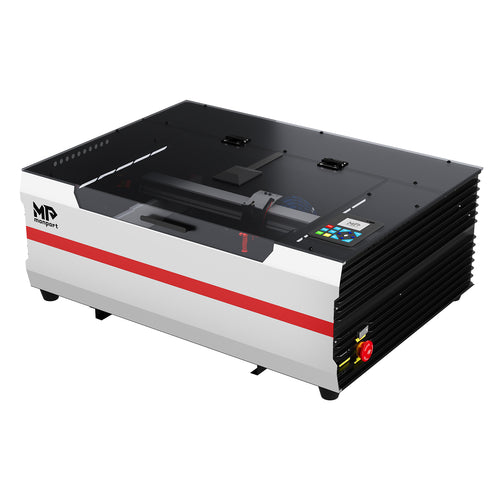
Monport GT 200W Split MOPA Fiber Laser Engraver & Color Marking Machine With AutoFocus

Why Is Copper Difficult to Engrave?
Copper has two main properties that affect laser processing: high reflectivity and excellent thermal conductivity. It can reflect a significant portion of incoming laser energy, while heat spreads quickly through the material instead of remaining concentrated in one small area.
These properties can make it difficult to produce consistent marks, particularly when using unsuitable equipment or incorrect settings.
Common challenges include:
-
Surface reflectivity: Bare copper can be difficult for some laser wavelengths to process efficiently.
-
Heat distribution: Heat can spread beyond the intended marking area, affecting detail and edge quality.
-
Marking contrast: Bright copper surfaces may require carefully controlled processing to produce visible designs.
-
Material thickness: Deep engraving and cutting generally require more energy and process control than surface marking.
Testing on scrap material and selecting a laser designed for metal processing can help reduce these challenges.

Which Laser Is Best for Copper Engraving?
Different laser technologies are suited to different materials and applications.
|
Laser type |
Suitability for copper |
Typical applications |
|---|---|---|
|
Diode laser |
Generally limited on bare copper |
Coated surfaces and selected compatible materials |
|
CO₂ laser |
Usually unsuitable for direct processing of bare copper without specialized arrangements |
Non-metal materials and specially prepared surfaces |
|
Standard fiber laser |
Suitable for many metal-marking tasks |
Serial numbers, text, logos, and industrial identification |
|
MOPA fiber laser |
Offers additional pulse-duration control |
Detailed marking, controlled surface effects, and selected color-marking applications |
For businesses working with bare copper, a fiber laser designed for metal processing is generally a more practical starting point than a typical diode or CO₂ laser.
MOPA technology provides additional control over pulse duration and, depending on the machine, frequency and other parameters. This flexibility helps operators develop processes for different surface finishes and marking requirements.
However, results depend on copper purity, alloy composition, surface condition, thickness, laser wavelength, and the machine's available settings.
Common Applications of Copper Laser Engraving
Understanding the intended application is important because a setting that works for a shallow logo may not be suitable for deep engraving or cutting.

1. Industrial identification plates
Copper plates can carry product names, serial numbers, technical information, and company logos. Use controlled marking parameters to keep text readable and maintain consistent results across production batches.

2. Personalized gifts and accessories
Jewelry components, pendants, keychains, and customized metal gifts can feature names, dates, symbols, and fine decorative details. Lower heat input and smaller scan intervals may be worth testing for intricate designs.

3. Electrical and electronic components
Copper parts, terminals, and busbars may require identification marks for assembly or traceability. Confirm that the marking process does not compromise critical dimensions, surface requirements, or electrical contact areas.

4. Decorative metalwork
Copper sheets and panels can feature patterns, lettering, and custom artwork. Test on the actual copper finish because polished, brushed, oxidized, and coated surfaces may respond differently.
Meet the Monport GT 200W Split MOPA Fiber Laser
The Monport GT 200W Split MOPA Fiber Laser Engraver is designed for workshops that need high-power metal processing, detailed engraving, and production efficiency.
Its key features include:
-
200W laser power: Supports demanding metalworking applications, subject to material and process requirements.
-
MOPA technology: Provides adjustable pulse control for developing different metal-marking effects.
-
Autofocus: Helps establish the correct focal position more consistently.
-
High-speed scanning: Advertised engraving speeds reach up to 20,000 mm/s, with higher speeds listed for certain specifications.
-
Two work areas: Available 150 × 150 mm and 200 × 200 mm configurations accommodate different design sizes.
-
Deep engraving and 3D relief: Supports detailed surface processing and textured designs.
-
LightBurn compatibility: Supports compatible software workflows for preparing and managing designs.
The split-type construction is intended to support airflow and cooling during operation.
Although this machine offers broad metalworking capabilities, buyers should confirm the recommended copper thickness, cutting capacity, and suitable parameter ranges with Monport before purchasing for a specific production task.

Copper Engraving Settings: Where Should You Start?
There is no single setting that works for every copper project. The right combination depends on the material, desired depth, marking contrast, and laser configuration.
|
Setting |
What it controls |
Practical guidance |
|---|---|---|
|
Power |
Energy delivered by the laser |
Start with a validated manufacturer-recommended setting |
|
Speed |
Movement of the laser across the surface |
Test different speeds on scrap copper |
|
Frequency |
Number of laser pulses per second |
Adjust according to the desired finish and material response |
|
Pulse duration |
Length of each laser pulse |
Use MOPA controls to test suitable marking effects |
|
Hatch spacing |
Distance between adjacent scan lines |
Test for even coverage without excessive heat buildup |
|
Focus |
Position of the focal point |
Use autofocus, then verify the working position |
Important: Do not assume that maximum power produces the best finish. Excessive energy can cause unwanted melting, rough edges, discoloration, or inconsistent marks.
For repeatable production, record the settings used for each copper grade and surface finish. Change one variable at a time so you can identify which adjustments improve the result.

Common Methods for Laser Engraving Copper
The best processing method depends on the final product.
Surface marking
Surface marking creates text, logos, serial numbers, or decorative patterns. It is useful for identification plates, branded components, and custom gifts.
Deep engraving
Deep engraving removes more material to produce recessed details. It may require multiple passes, careful heat management, and settings suited to the copper's thickness and composition.
Color marking
MOPA lasers can create color effects on certain metals through controlled surface changes. However, copper does not necessarily produce the same color range as stainless steel. Test the specific copper alloy and finish before promising a particular color.
Cutting thin copper
A 200W fiber laser offers more processing power than lower-wattage models, but successful cutting depends on material thickness, reflectivity, assist gas, and machine configuration. Confirm the manufacturer's copper-cutting recommendations before selecting this machine for a cutting-focused workflow.

Important Safety and Maintenance Details
Before starting production, follow these precautions:
-
Use an appropriately enclosed laser system and wavelength-rated protective equipment.
-
Never look directly at the laser beam or its reflections.
-
Follow the manufacturer's requirements for extraction, ventilation, and fire prevention.
-
Keep reflective metal positioned securely and use suitable fixtures.
-
Inspect optics and cooling systems according to the maintenance schedule.
-
Test new settings on scrap material before processing valuable copper parts.
High-power fiber lasers can cause severe eye and skin injuries. Appropriate safeguards are essential, even when the marking process appears brief.

Is the Monport GT 200W Right for Your Workshop?
The GT 200W may suit businesses that need high-throughput metal engraving, detailed relief work, and flexible marking capabilities.
Consider your requirements before buying:
-
For small personalized products: Compare the required work area and production volume against the machine's capabilities.
-
For industrial identification: Evaluate marking consistency, repeatability, and software workflow.
-
For deep engraving: Confirm achievable depth, processing time, and copper-specific settings.
-
For metal cutting: Request verified copper-cutting specifications and sample results.
Its advertised sale price is $8,100, compared with a listed MSRP of $12,199.99 in the supplied product information. Prices and promotions can change, so verify the current offer before ordering.

Frequently Asked Questions
1. Can a fiber laser engrave bare copper?
Yes. Fiber lasers are commonly used for metal marking, including copper, although results depend on the laser specifications, copper surface, and selected settings.
2. Is MOPA better than a standard fiber laser for copper?
MOPA offers additional pulse-control flexibility, which can be helpful when developing different marking finishes. However, the best choice depends on the intended application and the results required.
3. Can the Monport GT 200W cut copper?
Its high power supports demanding metal-processing applications, but copper-cutting performance depends on thickness and process conditions. Confirm the supported copper thickness with the manufacturer.
4. Can I use LightBurn with the GT 200W?
The supplied product information lists LightBurn compatibility. Confirm the required license, controller support, and configuration before purchasing the software separately.
5. What is the best setting for copper?
There is no universal setting. Start with manufacturer-recommended parameters for your copper type, then test power, speed, frequency, pulse duration, and hatch spacing systematically.
Key Takeaways
-
Choose a fiber laser designed for metal processing when working with bare copper.
-
MOPA technology provides useful pulse-control flexibility.
-
Test settings on scrap material before starting production.
-
Confirm copper-specific cutting capabilities rather than relying on wattage alone.
-
Prioritize safety, repeatability, and the machine's suitability for your actual workload.
Conclusion: Make Copper Engraving More Consistent
Successful Copper Engraving depends on matching the laser, material, and processing settings to your intended results. A suitable fiber laser can help businesses produce detailed markings, branded components, and more advanced metal designs.
The Monport GT 200W Split MOPA Fiber Laser Engraver combines high power, autofocus, flexible marking capabilities, and a large selection of compatible workflows. If your workshop handles demanding metal projects, it is worth evaluating against your production requirements.
Ready to upgrade your metalworking setup? Explore the Monport GT 200W Split MOPA Fiber Laser Engraver and review its specifications, available configurations, and current pricing. Before placing your order, confirm copper compatibility and request application-specific guidance to ensure the machine meets your needs.