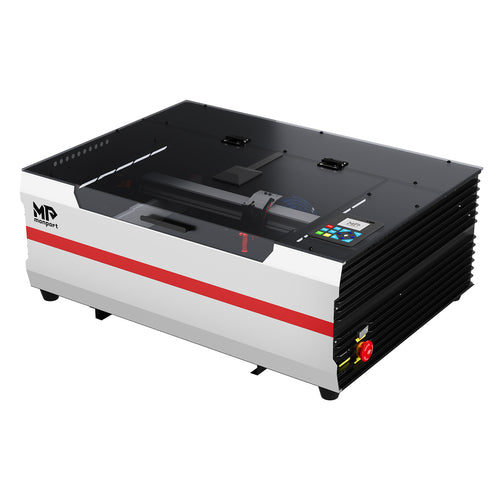
If you already own a laser cutter, you may not need to buy a machine designed exclusively for acrylic. A standard CO2 laser cutter can process many common acrylic sheets, while diode and fiber lasers have more specific capabilities and limitations.
The right choice depends on the laser wavelength, acrylic color, material thickness, production volume and desired finish—not wattage alone. This guide explains which systems work and where the Monport AutoForge XPro fits in a mixed-material business.

Can You Cut Acrylic With a Standard Laser Cutter?
Yes, a standard CO2 laser cutter can cut clear, colored and opaque acrylic effectively. You generally do not need a machine built exclusively for acrylic. However, the term “standard laser cutter” can describe several very different technologies.
A CO2 laser is usually compatible with PMMA, the material commonly called acrylic. A blue diode laser may cut selected dark, opaque acrylic sheets, but it normally cannot process clear acrylic directly. A conventional fiber laser is intended primarily for metals and is generally unsuitable for cutting standard acrylic sheets.
Before testing a material, identify the laser source, confirm the plastic and make sure the machine has suitable ventilation and safety features.
Which Type of Laser Cutter Is Best for Acrylic?
For a business focused on clear acrylic signs, displays or awards, a CO2 laser is normally the best general-purpose choice. A diode, fiber or dual-laser machine may make more sense when the product catalog uses different materials and acrylic is only one part of the workflow.

| Laser Type | Clear Acrylic | Colored or Opaque Acrylic | Best Use |
|---|---|---|---|
| CO2 laser | Yes | Yes | General acrylic cutting and engraving |
| Blue diode laser | Generally no | Sometimes | Selected craft and nonmetal applications |
| Conventional fiber laser | Generally unsuitable | Generally unsuitable | Metal marking and engraving |
| AutoForge dual-laser system | Not a replacement for CO2 | Selected dark, opaque acrylic with the diode laser | Mixed workflows involving metal and compatible nonmetals |
CO2 Laser Cutters: The Best General-Purpose Acrylic Choice
CO2 laser energy is readily absorbed by PMMA, allowing a compatible machine to cut or engrave clear, colored and opaque acrylic. It is suitable for signs, LED displays, wedding decorations, awards and retail fixtures. If clear acrylic is a main material, CO2 is usually the most dependable option.
Diode Laser Cutters: Useful, but Limited by Acrylic Color
Blue diode lasers have difficulty processing clear acrylic because much of their light passes through the sheet. Certain dark or opaque acrylics may work, depending on pigments, additives and thickness. Higher wattage does not remove this wavelength limitation, so test the exact sheet before production.
Fiber Laser Cutters: Designed Primarily for Metal
Fiber lasers are excellent for marking compatible metals but are not the general-purpose choice for PMMA sheets. A company working with metals and nonmetals may need two laser sources or a combined system.
Where AutoForge XPro Fits in an Acrylic and Mixed-Material Business
The AutoForge XPro combines a 20W diode laser and a 30W fiber laser in one platform. Its diode head supports wood and selected dark opaque acrylics, while the fiber head adds direct marking and engraving for compatible metals such as stainless steel, aluminum and brass.

A shop could use the diode laser for dark acrylic or wooden packaging, then mark a metal nameplate with the fiber laser. AutoForge does not replace a CO2 laser for clear acrylic; its advantage is bringing complementary metal and nonmetal capabilities into one workflow. If your catalog combines metal personalization, wood and selected opaque acrylic, the AutoForge XPro dual-laser engraver offers room to expand beyond one niche.
Why Does a CO2 Laser Work Better for Clear Acrylic?
A typical CO2 laser operates at approximately 10.6 micrometers, a wavelength PMMA absorbs effectively. Many blue diode lasers operate near 450 nanometers, which clear acrylic does not absorb efficiently. CO2 energy heats and removes material along the cutting path, while suitable focus and speed help form a consistent edge. Results still vary by material, optics, airflow and settings.
What Types of Acrylic Can a Laser Cutter Process?

Clear, Colored and Opaque Acrylic
Clear, colored and opaque acrylic can be processed by a compatible CO2 laser, although pigments and coatings may affect the result. Diode compatibility is more color-dependent: a dark sheet may absorb blue light while a clear sheet may not. Test new material before accepting a production order.
Cast Acrylic vs. Extruded Acrylic
Cast acrylic often creates a stronger white or frosted engraving effect, while extruded acrylic generally offers more consistent thickness and is common in repetitive cutting. Both can be cut with a suitable CO2 laser.
| Acrylic Type | Recommended Laser | Main Consideration |
|---|---|---|
| Clear cast acrylic | CO2 | Strong engraving contrast |
| Clear extruded acrylic | CO2 | Consistent cutting applications |
| Colored acrylic | CO2 | Color, thickness and additives |
| Dark opaque acrylic | CO2 or selected diode systems | Confirm wavelength compatibility with a test |
Do Not Assume Every Clear Plastic Is Acrylic
A transparent sheet is not necessarily PMMA. It may be polycarbonate, PVC or another plastic with different behavior and safety requirements. PVC must not be laser cut because heating it can release hazardous and corrosive gases. Always confirm the material with the supplier and review its safety data before processing an unfamiliar plastic.
What Equipment Do You Need to Cut Acrylic Safely?
- Compatible laser source: Choose CO2 for clear acrylic and confirm any diode-compatible opaque sheet through documentation and testing.
- Exhaust: Remove smoke and vapors using the manufacturer-required ventilation arrangement.
- Enclosure and cooling: Use suitable beam protection and the specified cooling setup for the laser source.
- Air Assist and cutting bed: Manage smoke and small flames while supporting airflow beneath the sheet.
- Fire monitoring: Never leave an operating laser unattended, and keep the recommended fire-control equipment accessible.
How Much Laser Power Do You Need for Acrylic?
Required power depends on material thickness, speed, optical condition and production goals. More power can increase throughput, but it does not automatically create a cleaner edge.
| CO2 Laser Power | Typical Application |
|---|---|
| 40–60W | Crafts, prototypes, small signs and light-duty work |
| 60–100W | Small businesses and regular acrylic production |
| 100W+ | Higher-throughput and thicker-material applications |
These are general categories, not guaranteed thickness limits. Focus, optics, airflow and heat input still affect the result.

How to Check Whether Your Existing Laser Cutter Can Cut Acrylic
- Identify the laser source. Confirm whether the machine uses CO2, blue diode, fiber or a dual-laser configuration.
- Verify the material. Make sure the sheet is PMMA and check its color, thickness, manufacturing type and coatings.
- Review the documentation. Check approved materials, processing limitations, exhaust requirements, cooling instructions and compatible accessories.
- Inspect the safety setup. Confirm that the enclosure, ventilation, Air Assist, cutting bed and fire precautions are ready.
- Perform a small test. If the machine and material are compatible, test a small sample using manufacturer guidance. Check cut-through, edge quality, staining, warping and dimensional accuracy.
Common Acrylic Laser Cutting Problems and Solutions
| Problem | Possible Cause | What to Check |
|---|---|---|
| Acrylic does not cut through | Incompatible laser or insufficient energy | Laser type, focus, speed and verified settings |
| Cloudy or rough edges | Incorrect settings or excessive airflow | Focus, speed, Air Assist and acrylic type |
| Melted or warped edges | Excessive heat input | Power, speed, passes and cooling time |
| Smoke stains | Weak extraction or unsuitable masking | Exhaust, airflow and masking material |
| Flame during cutting | Poor airflow or excessive heat | Air Assist, focus and fire precautions |
| Inconsistent cuts | Unstable material or dirty optics | Bed support, optics and focus |
A poor result does not always mean the machine lacks power. Avoid copying settings from an unrelated laser without testing.
What Products Can You Make With Acrylic and AutoForge?
A CO2 acrylic laser can produce signs, LED displays, awards and retail stands. AutoForge supports a different opportunity: mixed-material products such as wooden gift boxes with metal nameplates, dark acrylic displays with engraved metal plaques, customized tools with branded packaging and jewelry paired with diode-engraved presentation boxes. Use CO2 for clear acrylic, the AutoForge diode laser for confirmed compatible nonmetals and its fiber laser for supported metals.
When Does AutoForge Make More Business Sense?
AutoForge makes sense when a clear-acrylic-only workflow would limit your catalog. Its 30W fiber and 20W diode configuration gives a small business two processing tools in one system, with an advertised maximum engraving speed of up to 30,000 mm/s for applicable work. Actual results depend on the laser, material, design and settings.
The decision is therefore straightforward: choose CO2 when clear acrylic cutting is the priority. Choose AutoForge XPro when business growth depends on combining metal personalization with compatible diode-laser materials in a more unified workflow.
Frequently Asked Questions About Acrylic Laser Cutting
Can a diode laser cut clear acrylic?
A conventional blue diode laser generally cannot cut clear PMMA effectively because the material does not absorb enough of the blue wavelength. A CO2 laser is normally the more appropriate choice.
Can AutoForge cut acrylic?
The AutoForge diode laser may process selected dark, opaque acrylics that absorb its wavelength. It should not be treated as a substitute for a CO2 laser when cutting clear acrylic. Test the exact material and follow the manufacturer’s compatibility guidance.
What is the advantage of AutoForge for a small business?
AutoForge combines a 30W fiber laser for compatible metals with a 20W diode laser for selected nonmetals. This helps a business develop mixed-material products without managing two separate laser platforms for those applications.
Can a fiber laser cutter cut acrylic?
A conventional fiber laser is designed primarily for metals and is generally not recommended for cutting standard acrylic sheets.
Is Plexiglas the same as acrylic?
Plexiglas is a well-known brand name associated with acrylic products. Regardless of the name used by a seller, confirm that the material is PMMA before laser processing it.
Can every transparent plastic be laser cut?
No. Clear plastics can have very different chemical compositions. Some materials, particularly PVC, can release hazardous and corrosive gases when heated. Always verify the material and review its safety information first.
Can a CO2 laser engrave acrylic as well as cut it?
Yes. A compatible CO2 laser can cut acrylic and engrave text, logos and decorative patterns. Cast acrylic generally creates a stronger frosted engraving effect than extruded acrylic.
Do You Really Need a Specialized Acrylic Laser Cutter?
You do not necessarily need a machine built exclusively for acrylic. A standard CO2 laser cutter can handle many clear, colored and opaque PMMA projects when it has suitable optics, ventilation, cooling and safety features.
If you only plan to cut clear acrylic, CO2 remains the stronger choice. If your goal is to create a more diverse product catalog involving metal, wood and compatible dark opaque acrylic, AutoForge offers a more flexible route. Its two laser sources allow a growing workshop to move from single-material projects toward mixed-material products without pretending that one wavelength can process everything.
Explore the Monport AutoForge XPro to compare its dual-laser workflow with the materials and products your business plans to offer.