Introduction
If you're looking for high-power laser engraving solutions, a 100W fiber laser engraver is a game-changer. Whether you're working with metal, plastic, or even unique materials, investing in a 100W fiber laser engraver ensures precision, speed, and durability. The Monport GPro 100W Split MOPA Fiber Laser Engraver & Marking Machine is a top-tier choice for professionals and businesses aiming to scale up their engraving operations. In this guide, we'll discuss the best materials for high-power laser engraving, explore key benefits, and help you understand why the 100W fiber laser engraver is a must-have.

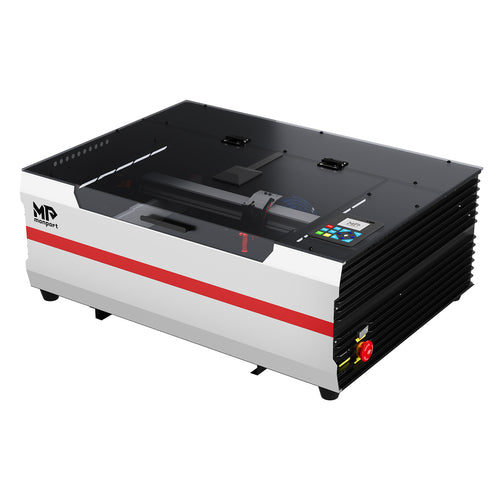
Monport GPro 100W Split MOPA Fiber Laser Engraver & Marking Machine With Manual Focus

What Can a 100W Fiber Laser Engraver Actually Do?
A 100W fiber laser engraver is primarily designed for fast metal marking, deep engraving, controlled surface modification, and production-oriented metal processing. Its higher output can remove material more efficiently than many lower-powered fiber systems, but power alone does not determine the result.
The material, alloy, surface finish, laser source, lens, focal position, pulse settings, line interval, number of passes, and cleaning process all affect what the machine can accomplish.
Permanent Metal Marking
A 100W fiber laser can create permanent identification marks on many compatible metals. Common applications include:
- Serial numbers;
- Barcodes and Data Matrix codes;
- Product logos;
- Asset identification;
- Nameplates;
- Part numbers;
- Manufacturing dates;
- Batch codes;
- Product-traceability information.
These applications do not always require deep engraving. A shallow, high-contrast mark may be more appropriate when the priority is machine readability, fine detail, or short cycle time.
For industrial traceability, the mark should be evaluated according to its intended environment. A mark that looks clear immediately after processing may still be unsuitable if it cannot withstand abrasion, cleaning, chemicals, outdoor exposure, or later manufacturing steps.
Deep Metal Engraving
One of the main reasons to choose a 100W fiber laser is its greater potential for material removal.
Deep engraving is useful for:
- Dies and molds;
- Firearm parts where legally permitted;
- Tools;
- Industrial nameplates;
- Coins and medallions;
- Stamps;
- Jewelry textures;
- Mechanical components;
- Decorative metal reliefs.
However, there is no universal engraving depth for a 100W machine. The achievable depth depends on the material, lens, pulse characteristics, speed, frequency, focus strategy, number of passes, debris removal, and total processing time.
Trying to reach the final depth in one aggressive pass may produce rough edges, excessive heat, redeposited material, or an uneven bottom. A controlled multi-pass process usually gives the operator more control over depth and surface quality.
A practical deep-engraving workflow may include:
- Roughing passes to remove material;
- Periodic cleaning to remove debris;
- Focus adjustments as the cavity becomes deeper;
- Cross-hatching to reduce directional texture;
- Finishing passes to improve the floor and edge quality.
The correct process depends on whether the priority is maximum material removal, fine detail, smoothness, or production speed.
3D Relief and Texture Engraving
A 100W MOPA fiber laser can be used for 3D reliefs, recessed textures, and sculpted metal surfaces, but the process requires more than importing a photograph and pressing Start.
A proper 3D engraving workflow generally involves:
- A suitable grayscale or height-map file;
- Clean separation between height levels;
- Multiple engraving passes;
- Controlled material removal;
- Hatch-direction management;
- Debris removal;
- Refocusing when necessary;
- One or more finishing passes.
In a grayscale height map, lighter and darker values represent different target depths. The engraving software and process strategy translate those values into layered material removal.
The quality of the source file is critical. A low-resolution image or an image with unclear tonal separation can produce muddy details, abrupt steps, or an uneven relief.
Operators should also allow time for finishing. The fastest roughing parameters may not produce an acceptable final surface, especially on detailed coins, medallions, or mold textures.
Black and Color Marking
Black marking, annealing, deep engraving, and MOPA color marking are different processes.
A dark mark may be produced through controlled oxidation, surface modification, ablation, or a combination of effects. A black mark is not necessarily deep, and a deep engraving is not necessarily black.
MOPA fiber lasers offer adjustable pulse width and a broad frequency range. This gives the operator greater control over heat input and surface response.
On selected stainless steels and certain compatible metals, carefully controlled MOPA parameters may produce visible colors through oxide-layer formation. The final appearance depends on:
- Metal grade;
- Surface finish;
- Cleaning;
- Focus;
- Pulse width;
- Frequency;
- Power;
- Speed;
- Line interval;
- Hatch pattern;
- Viewing angle.
A MOPA laser should not be described as producing every color on every metal. Even two stainless-steel blanks that look identical may respond differently if their alloy composition or surface treatment is different.
Color results should therefore be tested and documented using the exact material batch intended for production.
Can a 100W Fiber Laser Cut Metal?
A 100W pulsed fiber laser may cut certain thin metal materials or foils through repeated passes. However, this does not make it a substitute for an industrial sheet-metal cutting system.
Cutting capability depends on:
- Metal type;
- Material thickness;
- Laser source;
- Pulse characteristics;
- Lens;
- Focal position;
- Assist systems;
- Required edge quality;
- Number of passes;
- Machine configuration.
Industrial sheet-metal cutters normally use much higher-power continuous-wave laser sources, dedicated cutting heads, assist gas, motion systems, and material-support beds.
Do not estimate cutting thickness from “100W” alone. Use only cutting capabilities documented for the exact machine, lens, material, and process.
| Process | Is a 100W Fiber Laser Suitable? | Main Requirements | Important Limitation |
|---|---|---|---|
| Surface marking | Yes | Compatible material, correct focus, and suitable parameters | A surface mark is not the same as deep engraving |
| Deep engraving | Yes | Multiple passes, suitable lens, cleaning, and process control | Depth, speed, and surface quality must be balanced |
| 3D relief engraving | Yes | Height-map file, layered processing, cleaning, and finishing | It is not normally completed in one pass |
| Black marking | Yes, on compatible materials | Correct material and controlled heat input | A black mark is not necessarily recessed |
| Color marking | Under controlled conditions | MOPA source, compatible metal, and extensive parameter testing | Colors cannot be guaranteed on every metal |
| Thin-metal cutting | Under limited conditions | Compatible thin material, correct lens, and repeated passes | It is not an industrial sheet-metal cutter |
Why Choose a 100W Fiber Laser Engraver?
A 100W fiber laser engraver offers multiple advantages over traditional engraving machines. Here's why it's a valuable addition to your workshop:
-
Speed and Precision – Achieve ultra-detailed engravings at high speed.
-
Durability – Fiber lasers have a long lifespan with minimal maintenance.
-
Versatility – Engrave on metals, plastics, and even some organic materials.
-
Energy Efficiency – Uses less power while delivering superior results.

Best Materials for High-Power Laser Engraving
The Monport GPro 100W Split MOPA Fiber Laser Engraver works best with a variety of materials. Below is a breakdown of what you can engrave with this high-power laser engraving machine:
| Material | Engraving Quality | Application |
|---|---|---|
| Stainless Steel | Excellent | Jewelry, industrial parts |
| Aluminum | High | Labels, nameplates |
| Brass | Good | Decorative engravings |
| Titanium | Excellent | Aerospace, medical equipment |
| Plastic | Varies | Barcodes, serial numbers |
| Carbon Fiber | Moderate | Automotive parts |

Key Features of the Monport GPro 100W Fiber Laser Engraver
This 100W fiber laser engraver is designed for high performance and efficiency. Key features include:
-
MOPA Technology – Offers adjustable pulse width for enhanced material compatibility.
-
Split Design – Ensures flexibility in positioning for large or heavy items.
-
Manual Focus Adjustment – Allows fine-tuning for different material thicknesses.
-
Fast Marking Speed – Increases productivity with high-speed engraving.
-
Long Lifespan – Lasts over 100,000 hours with minimal maintenance.

Frequently Asked Questions (FAQs)
1. Can the 100W fiber laser engraver cut through metal? No, while it can engrave deep into metal surfaces, cutting metal requires a more powerful laser cutter.
2. Is the Monport GPro 100W suitable for small businesses? Absolutely! It is ideal for both small businesses and industrial applications due to its efficiency and versatility.
3. What safety precautions should I take when using this machine? Always wear protective goggles, operate in a well-ventilated area, and follow the manufacturer’s guidelines.

Important Details to Consider Before Buying
Before purchasing a 100W fiber laser engraver, consider these factors:
-
Material Compatibility – Ensure it meets your engraving needs.
-
Workspace Requirements – Check the machine size and workspace availability.
-
Budget – While it’s an investment, the ROI is high due to increased efficiency.
-
Software Support – Ensure compatibility with your preferred design software.

Takeaways
-
A 100W fiber laser engraver is perfect for high-precision engraving on metals and plastics.
-
The Monport GPro 100W Split MOPA Fiber Laser Engraver offers top-notch performance and versatility.
-
High-power laser engraving provides superior speed, accuracy, and efficiency.
-
Choosing the right machine ensures long-term benefits for businesses and professionals.

Effortless Laser Marking with Monport Black Laser Marking Spray
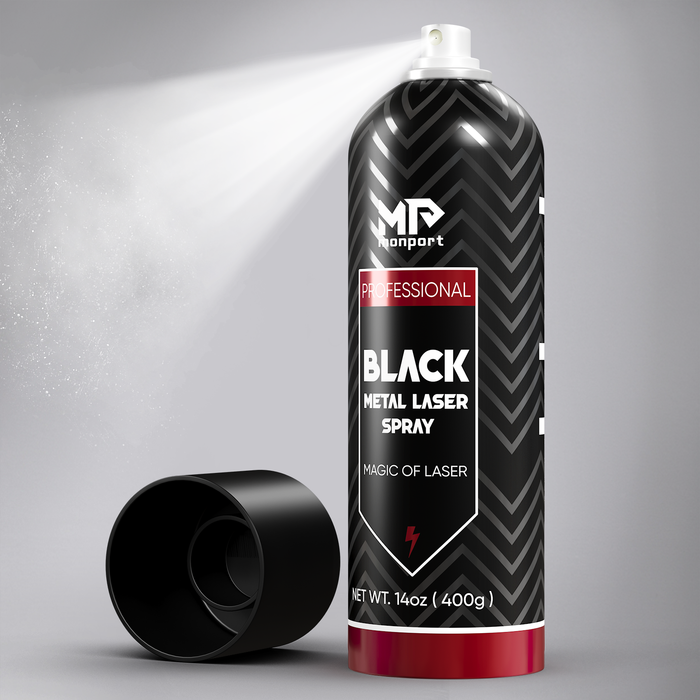
Looking to elevate your laser engraving projects? Monport Black Laser Marking Spray is the solution you’ve been waiting for. This high-performance aerosol spray is designed for use with CO2 laser engraving machines, ensuring easy and precise results with every application. Whether you're personalizing jewelry, customizing glassware, or serializing tools, this spray provides you with high-contrast, permanent marks that stand out.
The Benefits of Using Black Laser Marking Spray
-
Compatible with CO2 Laser Engraving Machines Designed for use with CO2 laser engraving machines of 25 watts and above, Monport Black Laser Marking Spray is the ideal companion for your engraving needs. It transforms your metal surfaces into highly legible, permanent black marks after laser engraving, making it perfect for a wide range of applications from metalwork to custom art pieces.
-
Permanent, High-Contrast Marks When you apply Monport Black Laser Marking Spray, the result is a high-contrast, dark black mark on your metal surface that is permanent and durable. This spray works on various metals, including aluminum, stainless steel, and brass. The fine-grained formula ensures deep penetration into the metal, producing heat-resistant markings that will last for years, even under challenging conditions.
-
Even and Powerful Application With the advanced spray technology in Monport Black Laser Marking Spray, you can achieve a smooth, even application every time. The 14 oz can features an anti-clog nozzle that guarantees no blockages, making the spray process both easy and efficient. The nanoparticle formula delivers more coverage with a thinner coating, which results in a professional-quality finish for all your metal marking projects.
-
Easy to Use and Quick Drying Using Monport Black Laser Marking Spray couldn’t be simpler. Just shake the can for 2 minutes, spray from a distance of 6 to 8 inches, and let the surface dry for 5 minutes. Once it’s dry, you’re ready to engrave, saving you valuable time. After engraving, rinse and wipe away the residue to reveal your crisp, dark black markings without any fuss.
-
Effortless Cleanup and Maintenance After marking your metal pieces, simply rinse and wipe the surface to reveal your high-contrast engraving. The black laser marking spray ensures there is no residue left behind, so your workpieces remain clean and ready for immediate use. The easy cleanup means that you can maintain a smooth and efficient workflow, whether you’re working on a small DIY project or a larger-scale production.
Why Choose Monport Black Laser Marking Spray?
Monport’s Black Laser Marking Spray is a game-changer for anyone looking to create durable, precise, and high-quality laser marks on metal surfaces. Its compatibility with CO2 lasers, combined with its easy application and cleanup, makes it an indispensable tool for professionals and hobbyists alike. With Monport Black Laser Marking Spray, you can be confident that your metal engraving projects will have permanent, high-contrast results every time.
Add this versatile spray to your toolkit today and experience effortless laser marking like never before!
Which Monport 100W Fiber Laser Fits Your Workflow?
Monport offers several 100W MOPA fiber configurations. The best choice depends on whether the priority is visual positioning, compact integration, tall workpieces, or a conventional split-machine workflow.
Product configurations and specifications may change, so verify the current product page before purchasing.
GPro Vision 100W MOPA
The GPro Vision is designed around camera-assisted production.
The current 100W configuration combines:
- A split MOPA fiber architecture;
- Autofocus;
- A camera-based positioning system;
- A 6.9 × 6.9-inch working area for the 100W MOPA version;
- Support for visual placement and batch layouts;
- A workflow intended for irregular objects and repeated production.
It is the strongest fit when the operator frequently changes part shapes, positions multiple objects visually, or wants camera assistance for batch setup.
A camera does not eliminate the need for calibration, fixtures, or first-piece inspection.
GA 100W MOPA
The GA 100W uses an integrated structure with autofocus and a 6.9 × 6.9-inch working area.
It is a practical fit when the user wants:
- A compact integrated system;
- A cleaner workstation layout;
- MOPA pulse control;
- Autofocus;
- Deep engraving and surface-marking capability;
- A machine that will usually remain in one location.
Its integrated format may be less adaptable than a split layout when the shop regularly handles unusually tall, heavy, or oversized parts.
GT 100W MOPA
The GT 100W uses a split structure with autofocus and electric lifting. Its current product specifications list a 6.9 × 6.9-inch engraving area for the 100W MOPA version and support for rotary accessories.
It is suitable for users who prioritize:
- A flexible split-machine layout;
- Taller or heavier workpieces;
- Deep metal engraving;
- Rotary applications;
- An adjustable production workstation;
- Industrial-style part handling.
Unlike GPro Vision, the GT workflow does not center on integrated camera positioning. Repeat production may therefore depend more heavily on framing, fixtures, and templates.
| Comparison Factor | GPro Vision 100W | GA 100W | GT 100W |
|---|---|---|---|
| Structure | Split | Integrated | Split |
| Laser type | MOPA fiber | MOPA fiber | MOPA fiber |
| Focusing | Autofocus | Autofocus | Autofocus with electric lifting |
| Camera positioning | Yes | Not the primary positioning system | Not the primary positioning system |
| Listed 100W working area | 6.9 × 6.9 in. | 6.9 × 6.9 in. | 6.9 × 6.9 in. |
| Best fit | Visual placement and batch engraving | Compact integrated workstation | Tall parts, rotary work, and flexible production setup |
| Main consideration | Camera calibration and more complex workflow | Less flexible around oversized parts | Greater dependence on fixtures and conventional positioning |
Choose GPro Vision when visual positioning is central to the workflow. Choose GA when compact integration matters most. Choose GT when the workstation must accommodate taller parts, rotary jobs, or a more flexible split-machine arrangement.
Is 100W too powerful for fine jewelry engraving?
Not necessarily, but 100W is more capability than many jewelry-personalization businesses require.
A 100W MOPA laser can produce fine details when paired with the correct lens, focus, artwork, and conservative settings. However, a 30W, 50W, or 60W system may be more economical if the work consists mainly of names, monograms, logos, and shallow marks.
Choose 100W when the business also needs deep engraving, faster material removal, or higher production capability.
What is the difference between a 100W fiber laser and a 100W MOPA fiber laser?
A standard 100W fiber laser generally offers a more limited pulse-duration range. A 100W MOPA fiber laser provides broader pulse-width and frequency control.
MOPA control can help optimize heat input, surface finish, black marking, coating removal, thin-material processing, and selected color effects.
Both can mark and engrave metal. MOPA provides more process flexibility.
Is a 100W fiber laser faster than a 50W laser for every job?
No.
A 100W system may remove material faster or require fewer passes in certain deep-engraving applications. It may provide little practical time advantage for a small surface mark if loading, positioning, data entry, cleaning, and inspection dominate the production cycle.
Speed must be measured using the complete workflow and acceptable finished quality.
Can a 100W fiber laser engrave plastic safely?
Only identified, laser-compatible plastics should be processed.
Some polymers respond well to a 1064 nm fiber laser, while others melt, burn, show no useful contrast, or release dangerous emissions.
Verify the polymer, manufacturer guidance, and Safety Data Sheet. Do not process PVC, vinyl, unknown plastics, or unidentified composite materials in a normal engraving setup.
Can a 100W fiber laser cut stainless steel or aluminum?
It may cut certain thin materials under controlled conditions, but cutting capability must be verified for the exact machine, lens, metal, thickness, and process.
A 100W pulsed marking laser is not equivalent to an industrial continuous-wave sheet-metal cutter. Do not assume it can cut standard sheet metal because both machines are called fiber lasers.
What lens should I use for detailed engraving?
The correct lens depends on the required marking area, detail, focal distance, and engraving depth.
A smaller field may support finer detail and higher energy density, while a larger field provides more workspace and batch capacity.
Consult the machine’s approved lens options and test the planned feature size across the usable field.
Does a larger working area reduce detail?
It can affect spot characteristics and energy density, depending on the lens and system.
A larger working area should be selected because the product requires it—not simply because it sounds more versatile. Confirm that the required detail remains acceptable across the complete field.
Do I need an enclosure for a 100W fiber laser?
The need for an enclosure and other controls depends on the complete machine classification, possible beam access, operating environment, and local requirements.
Open high-power laser systems can present serious direct and reflected-beam hazards. An appropriate wavelength-compatible enclosure with an interlock is generally a stronger safety control than relying only on eyewear.
Follow the machine manual and applicable safety requirements.
Is LightBurn compatible with every GPro configuration?
Do not assume that every machine, controller, operating system, or package includes the same LightBurn compatibility or license.
Check:
- Exact model;
- Controller;
- Firmware;
- Operating system;
- LightBurn version;
- Required Galvo support;
- Whether a license is included.
Verify these points on the current product page before purchasing.
Should I choose GPro Vision, GA, or GT?
Choose GPro Vision when camera-assisted positioning and batch layout are priorities.
Choose GA when you prefer a compact integrated design with autofocus.
Choose GT when you need a flexible split configuration for taller workpieces, rotary jobs, or a customized production workstation.
The final decision should also consider lenses, working area, software, accessories, extraction, and support.
Can a 100W MOPA laser create color on every metal?
No.
MOPA color effects depend on material composition, surface finish, oxide formation, focus, pulse width, frequency, power, speed, line interval, and cleaning.
Selected stainless steels and certain compatible metals may produce controlled colors, but results cannot be guaranteed across every metal or material batch.
Conclusion
If you're serious about high-power laser engraving, investing in a 100W fiber laser engraver like the Monport GPro 100W Split MOPA Fiber Laser Engraver is a smart decision. With its powerful features, efficiency, and versatility, it’s an excellent choice for professionals and business owners alike. Elevate your engraving projects today with this high-performance machine!