Introduction
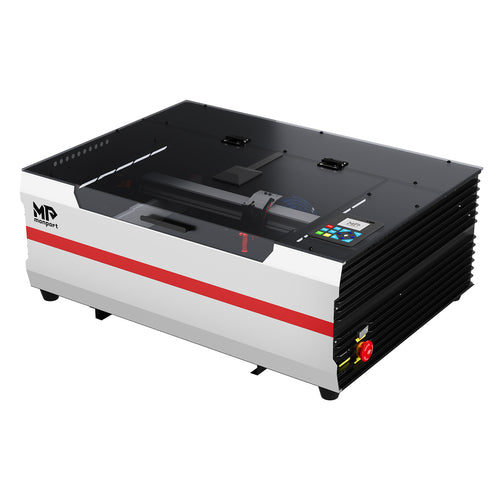
Looking for the perfect glass laser engraving machine to boost your creative projects or business? Cyber Monday Week is the ideal time to invest in cutting-edge technology like the Monport 150W CO2 Laser Engraver & Cutter (64" x 40"), which offers incredible value and efficiency. In this article, we’ll explore why this laser machine is perfect for engraving and cutting glass, its key features, and how to make the most of Cyber Monday deals.


What is a Glass Laser Engraving Machine?
A glass laser engraving machine is designed to etch intricate designs, logos, or text onto glass surfaces. These machines use a laser beam to create precise, durable, and stunning engravings that are perfect for:
- Personal gifts
- Awards and trophies
- Customized glassware
- Decorative art
With its high-powered laser, the Monport 150W CO2 Laser Engraver & Cutter stands out as one of the best options for engraving glass and many other materials.

What is the best laser for engraving glass?
For common glass engraving applications such as glassware, bottles, awards, and flat decorative glass, a CO2 laser is often the most practical machine type to investigate first. It should still be tested on the specific glass you plan to sell. A diode laser may require a coating or other treatment for some transparent glass. Fiber lasers are generally selected for metal rather than ordinary glass, while UV lasers may be considered for specialized fine-marking applications.
| Laser type | Glass suitability | Best use to investigate | Main limitation |
|---|---|---|---|
| CO2 laser | Suitable for many surface glass engraving workflows | Glassware, bottles, awards, mirrors, décor, and mixed nonmetal production | Results vary by glass type, surface shape, focus, and tested settings |
| Diode laser | May require a coating or treatment for some transparent glass | Small-scale experiments and selected coated or painted surfaces | Transparent glass is not equally responsive across all diode systems |
| Fiber laser | Not the default choice for ordinary glass | Metal marking, engraving, and related metal applications | A metal-focused machine may not match a glass and nonmetal workflow |
| UV laser | May suit specialized fine-marking applications | Small, detailed work where the application and material justify the system | Higher equipment cost and a narrower decision path for many makers |
The short answer is therefore not “buy the most powerful laser.” It is “choose the laser that matches your glass, product size, production volume, and finishing requirements.”
Glass engraving vs. glass cutting: what can a laser actually do?
The words “engraving” and “cutting” should not be used interchangeably. A laser engraving machine can produce a mark on the surface of glass, but that does not mean it functions as a conventional glass sheet-cutting machine.
What laser engraving does to glass
Glass engraving generally creates a controlled surface mark. Depending on the material and settings, the mark may look frosted, white, matte, or lightly textured. Common uses include letters, line art, logos, photographs, and decorative patterns.
The quality of the mark depends on the glass and the tested process. Focus, speed, power, image resolution, surface cleanliness, and the shape of the workpiece all matter. A higher power setting is not automatically better if it creates excessive heat or causes cracking.
Can a laser engraver cut glass?
Do not assume that a glass laser engraving machine can cut ordinary glass sheets simply because the product description includes the word “cutter.” In a mixed-material machine, “cutter” may refer to compatible materials such as wood, acrylic, paper, or other nonmetals. Glass engraving and industrial glass cutting are different processes with different equipment requirements.
If your project requires glass to be cut into a specific shape, confirm the machine’s documented capabilities with the manufacturer before purchasing. For glass engraving, focus your evaluation on surface quality, repeatability, workpiece handling, rotary compatibility, and safe operation.
Engraving, frosting, and deeper surface effects
Product listings may use several terms for a visible glass mark, including etching, frosting, engraving, or marking. Ask what the term means in the specific application. Does the process create a surface appearance only, remove material, change the finish, or prepare the glass for another finishing step? Clear terminology helps prevent a mismatch between the machine and the customer’s expected result.
What types of glass can be laser engraved?
Glass is not a single uniform material. Before choosing settings or listing a product, identify the type, thickness, surface finish, and shape of the glass. Monport’s materials collection can help you organize a material-based testing plan, but the live machine and material documentation should remain the final reference. Always test a representative sample when the material is new to your workflow.
Clear glass and common glassware
Flat clear glass, bottles, wine glasses, beer glasses, whiskey glasses, and other glassware are common candidates for engraving projects. Curved products require extra attention to focus and positioning. A rotary attachment may be needed for a cylindrical bottle or tumbler so the design remains aligned as the workpiece turns.
Mirrors, coated glass, and specialty glass
Mirrors and coated glass can behave differently from plain clear glass because of their surface layers. Coatings may change absorption, contrast, residue, or the direction from which the design should be engraved. Specialty glass, thick glass, and glass with embedded layers should be treated as separate test categories rather than assumed to share one parameter set.
Tempered, laminated, and heat-sensitive glass
Tempered or laminated glass may carry internal stresses or layered construction that affect the result. A test mark can reveal cracking, edge damage, uneven contrast, or other problems before you process a customer’s product. If the glass is safety-critical, structural, or part of an installed product, confirm suitability with the material supplier and equipment documentation before production.
What to record during material testing
- Glass type, brand, thickness, and surface coating
- Flat or curved workpiece shape
- Focus method and workpiece position
- Power, speed, resolution, and pass count
- Visual contrast, frosting, cracking, and edge quality
- Cleaning method and final appearance
Do not publish a universal setting chart unless it has been tested on the exact machine, lens, software, and material combination. A useful material record explains what was tested and under what conditions.
Why consider the Monport 150W CO2 laser for glass engraving?
The original page presents the Monport 150W CO2 Laser Engraver & Cutter as a large-format machine for glass engraving and other applications. The product page lists a 64 × 40 inch working area and an autofocus feature; confirm the current configuration, included components, and applicable specifications before purchase.
A machine in this category may be relevant when you need to process larger workpieces, repeat a design across a batch, or combine glass engraving with compatible nonmetal cutting and engraving. It may be less appropriate if you only need occasional small gifts and do not have the space, installation capacity, or production volume to justify a large-format system.
| Feature to verify | Why it matters for glass work | Question to ask before ordering |
|---|---|---|
| Working area | Determines the size and number of pieces that can be positioned in one setup | Will the machine fit my largest flat panel or batch layout? |
| Focus system | Helps position the beam relative to the surface being engraved | How is focus set for flat, curved, and different-thickness glass? |
| Rotary support | Allows cylindrical workpieces to be positioned and rotated consistently | Which rotary accessories are compatible with this configuration? |
| Cooling and exhaust | Influences installation, operation, and repeatability | What equipment, ventilation, and workspace requirements apply? |
| Software and support | Determines how easily designs can be prepared, positioned, and troubleshot | Where can I find manuals, downloads, parts, and technical assistance? |
Review the Monport 150W CO2 laser product page for the current configuration, included accessories, delivery details, and manufacturer specifications. Do not rely on a seasonal article alone for final product information.
Benefits of Using the Monport 150W CO2 Laser Engraver
1. Precision and Efficiency
The high-powered laser provides detailed engravings with sharp edges, ideal for creating professional-grade glass products. Whether you’re making personalized gifts or mass-producing items, this machine delivers consistent results.
2. Versatility
This machine is not just for glass. It’s perfect for cutting or engraving materials like wood, acrylic, leather, and metal. Its versatility makes it a valuable asset for hobbyists and businesses alike.
3. Cost-Effective During Cyber Monday Week
With Cyber Monday Week deals, the Monport 150W CO2 Laser Engraver & Cutter becomes even more affordable, offering the best bang for your buck.

How to Use a Glass Laser Engraving Machine
Using a laser engraver for glass might seem complex, but it’s straightforward with the Monport machine. Follow these steps:
- Prepare Your Design: Create or upload your design using compatible software.
- Set the Glass Surface: Place the glass securely on the machine's work area.
- Adjust Settings: Choose the appropriate power and speed settings for glass.
- Start Engraving: Let the laser engraver etch your design onto the glass.
- Clean the Surface: Wipe off any residue for a polished final product.

Glass engraving best practices and troubleshooting
Use a test grid instead of guessing
A small test grid can compare several controlled combinations of power, speed, resolution, or pass count. Label the test so that the result can be repeated. The correct setting is the one that produces the required appearance and consistency on the material—not necessarily the setting that creates the darkest mark.
Consider masking and surface protection
A suitable masking method may help manage residue or surface marks in some workflows. Test the masking material first, because adhesives and coatings can react differently to heat. Remove the mask carefully and inspect the surface after cleaning.
Consider reverse engraving for selected clear glass products
For some transparent products, engraving from the reverse side can protect the visible front surface and change the viewing effect. Whether this is appropriate depends on the product shape, design, access to the surface, and the finish you want. Test the orientation before producing a batch.
Common glass engraving problems
| Problem | Possible cause | Suggested check |
|---|---|---|
| Engraving appears too faint | Focus, image preparation, or power and speed combination may not suit the glass | Repeat a controlled test and confirm focus, contrast, and material type |
| Cracks or chips appear | Excessive heat, unsuitable glass, unstable positioning, or an aggressive setting | Stop production, inspect the material, and test a safer combination on a new sample |
| Design looks uneven | Curvature, movement, focus variation, or inconsistent surface coating | Check the workpiece fixture, rotary alignment, focus, and material batch |
| Residue remains on the surface | Insufficient cleaning or an incompatible masking method | Review the preparation and cleaning process on a test piece |
| Text or artwork is distorted | Incorrect scaling, rotary calibration, or artwork orientation | Verify dimensions, rotation settings, and the design preview before production |
Do not treat one successful sample as proof that every glass product will work. Keep a separate test record for new shapes, coatings, thicknesses, and suppliers.

Why Buy During Cyber Monday Week?
Cyber Monday Week is the perfect time to invest in a premium glass laser engraving machine like the Monport 150W CO2. Here’s why:
- Discounts and Deals: Take advantage of significant price drops.
- Extended Warranties: Many retailers offer added benefits during this season.
- Limited-Time Offers: Secure the best machine before the deals run out.

FAQs
Can the Monport 150W CO2 Laser Engraver cut other materials besides glass?
Yes! It can cut wood, acrylic, leather, and even engrave on certain metals, making it highly versatile.
How do I maintain the machine?
Regularly clean the lens, mirrors, and work area, and check for software updates to keep it running smoothly.
What software does it support?
The Monport 150W CO2 Laser Engraver is compatible with most popular design software, making it user-friendly.
Why does glass turn white or frosted after engraving?
A frosted or matte appearance is a common visual result of a surface glass engraving process. The exact contrast depends on the glass, design, focus, power, speed, resolution, and cleaning process. Use a controlled test rather than judging the final result from a generic setting.
What causes cracks during glass engraving?
Cracking can be associated with heat concentration, unsuitable material, unstable positioning, surface defects, or an unsuitable parameter combination. Stop production, inspect the sample and machine setup, and test a new piece before processing customer products.
What software works with a CO2 glass engraving machine?
The answer depends on the machine controller and manufacturer. Check the current product documentation, software guide, file-format support, and driver requirements before purchasing. Do not assume that every laser software package works with every controller.
Is a 150W CO2 laser too powerful for small glass products?
Power alone does not answer the question. A large-format 150W system may make sense for a business that needs a larger bed or mixed-material production, but it may be more equipment than an occasional maker needs. Compare the product size, volume, installation requirements, and total cost with your actual workflow.
Is glass engraving profitable for a small business?
It can be profitable when the product has identifiable demand and the selling price covers materials, labor, equipment, waste, fees, packaging, and support. Track real costs and paid orders before making a larger investment. A promotion does not prove that a product will sell.

Important Details
- Powerful Laser: The 150W CO2 laser ensures deep and precise engravings.
- Spacious Workspace: A 64" x 40" work area lets you handle large projects effortlessly.

Takeaways
- A glass laser engraving machine like the Monport 150W CO2 offers unparalleled precision and versatility.
- Cyber Monday Week is the ideal time to buy, with discounts and special offers making it more accessible.
- The machine’s ease of use, combined with its professional-grade features, ensures that it meets both personal and business needs.

Conclusion
Whether you’re starting a business or expanding your creative projects, the Monport 150W CO2 Laser Engraver & Cutter is a fantastic choice. With Cyber Monday Week deals, there’s no better time to invest in this versatile machine. Take the leap and turn your ideas into stunning works of art with the perfect glass laser engraving machine!