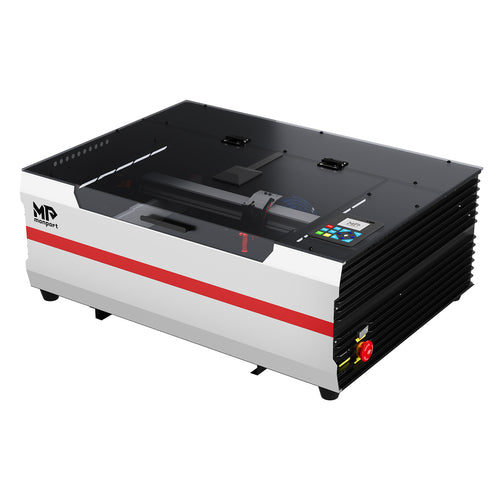
Custom engraved leather belts are the kind of product that feels premium, sells well, and keeps customers coming back—especially when your engraving is crisp, repeatable, and consistent from belt #1 to belt #50. This guide keeps the original “Mega 70W + leather belts” intent, but updates it to Monport’s current promoted model: Mega S.
If you want the latest specs, options, and current pricing, use the official Mega S product page: Monport Mega S 70W Desktop CO2 Laser Engraver & Cutter .

Why Mega S is a strong fit for engraved leather belts
Belt production is all about workflow: repeat placement, saved presets, clean airflow, and a work area that supports jigs. Mega S is positioned as a 70W desktop CO2 laser with a 700 × 350 mm working space and a headline max working speed of 600 mm/s—useful when you’re laying out belt straps flat and running batch jobs. (Note: the Mega S listing also notes that rotary accessories on the website are not compatible with this product, so this guide focuses on flat belt strap workflows.)
See the verified Mega S specs here: Mega S specs for leather engraving .

Step 1: Choose the right belt leather (this decides 80% of your results)
- Genuine leather: engraves well and gives a natural, premium finish (can produce more smoke/odor—ventilation matters).
- Faux leather (PU/PVC blends): can engrave cleanly, but composition varies—always test and avoid PVC materials due to harmful fumes risk.
- Bonded/leather fiber: may vary by binder—treat it as “test first, then produce.”
Step 2: Prep for clean, repeatable belt engraving
- Clean the strap (dust/oils can create blotchy marks).
- Flatten and secure the belt strap on the bed (movement is the #1 cause of ruined belts).
- Use a simple belt jig: a straight fence + a corner stop so every strap sits in the exact same position.
- Run a small test grid on a scrap piece from the same leather batch before production.
Best starter settings for engraved leather belts (real vs faux)
Leather varies by finish, thickness, and coatings—so treat these as starting ranges, then dial in with a test grid. The key goal for belts is usually: high contrast with minimal scorching.
Real leather (starter range)
- Power: 20%–30%
- Speed: 400–600 mm/s
- Passes: 1
- Air assist: ON
- Tip: If edges look burned, raise speed first before raising power.
Faux leather (PU/PVC blends) (starter range)
- Power: 10%–15% (start low)
- Speed: 600–800 mm/s
- Passes: 1
- Air assist: ON
- Safety: Ensure strong ventilation; avoid materials containing PVC.
Design ideas that sell (belt engraving that looks expensive)
- Minimal monograms: initials near the buckle end (clean and premium).
- Western patterns: repeating border motifs along the strap.
- Logo belts: subtle brand marks for uniforms, merch, and corporate gifts.
- Personal messages: inside-belt engraving for birthdays, anniversaries, or milestones.
Production workflow for engraved leather belts (the “repeatable” method)
- Create 1 belt template and set the origin point in your software.
- Build a belt jig so straps drop into the same position every time.
- Run a quick 4×4 test grid and save your best preset as “Belt_RealLeather_<thickness>” or “Belt_PU_<thickness>”.
- Batch engrave: keep cleaning, placement, and airflow consistent.
- Finish: brush residue lightly; apply conditioner if appropriate for the belt material.
Ready to make engraved leather belts with Mega S?
If you want a desktop CO2 laser built for speed, workspace efficiency, and repeatable production, Mega S is the updated answer to the classic “Mega 70W” belt workflow. Start here: Buy Mega S for engraved leather belts .