

Walk into almost any jewelry workshop today and you'll likely find a laser engraving machine running in the background — something that wasn't nearly as common a decade ago. A name etched inside a wedding band, a child's fingerprint pressed into a pendant, a date hidden along the inner edge of a ring: these small, personal touches have quietly become what sells. Plain, catalog-style designs aren't pulling in customers the way they used to, and jewelry brands have noticed. Many are now leaning on fiber laser engraver for metal systems to keep up, since these machines can hold tight precision across gold, silver, titanium, and stainless steel run after run without the results drifting.
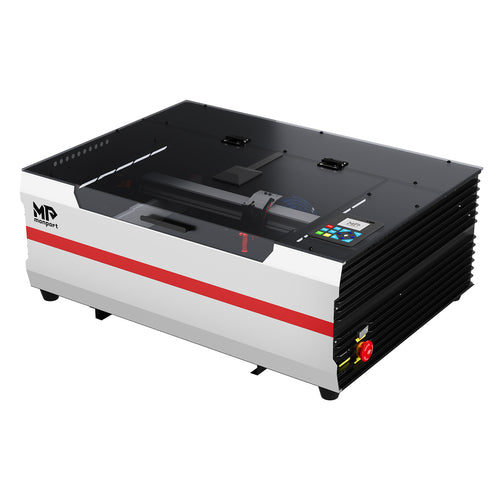
The Monport GM 50W Pro fits squarely into this shift — it was built for jewelry manufacturers who need laser engraving for jewelry that holds fine detail at production volume, not just on a handful of one-off pieces. That kind of dependable output is exactly what's driving personalized jewelry engraving from a niche add-on into something closer to a baseline expectation across the industry.

Why Jewelry Brands Are Turning to Laser Engraving
Over the past few years, as what customers want and expect has kept changing, jewelry brands have steadily reworked how they manufacture, with laser engraving technology finding its way into more and more production lines.
Buyers today aren't content with cookie-cutter designs anymore. They want pieces that reflect who they are and carry some kind of emotional weight — a ring etched with someone's name, or a pendant carrying a meaningful symbol. The story behind a piece matters more than it used to.
At the same time, laser engraving for jewelry has shifted from being a premium, one-off customization service to something brands now offer as standard across much of their catalog.
What made this large-scale personalization possible is the laser technology itself. Older engraving methods that depended on manual labor couldn't guarantee uniform results and tended to slow production down. A fiber laser engraver for metal changes that equation — output stays consistent without dragging down throughput. That gives jewelry brands room to broaden their personalized offerings across the whole product line without giving up speed or quality, which in turn strengthens their position in the market and improves how customers experience the brand.

Why Fiber Lasers Are the Ideal Technology for Metal Jewelry
Not every laser is built the same way, and that matters a lot once you're working with metal jewelry.
CO2 lasers generally need a coating applied to the metal surface before they can mark it clearly, which adds an extra production step. Diode lasers can handle basic markings, but they fall short when depth and precision become important.
A fiber laser engraver for metal works differently — it interacts directly with metal surfaces, absorbing energy efficiently and engraving with precision, which fits well with the volume demands of jewelry manufacturing.
In real-world use, the advantages show up in three main ways: the engraved marks hold up better over time and resist fading; fine details come through clearly even in tight spaces, like the inner band of a ring; and the whole process runs faster, which matters for brands producing personalized pieces at scale.


Monport GM 50W Pro: Engineered for Jewelry-Grade Precision
Monport built the GM 50W Pro specifically with jewelry engraving in mind. It's meant to deliver dependable precision and stability while still keeping things practical for brands that need to balance professional performance against cost — a fit for jewelry brands looking to grow their personalized engraving capabilities.
 Cutting Down Setup Time Across Mixed Jewelry Runs
Jewelry manufacturers rarely process just one type of item — rings, pendants, and metal nameplates often need to be switched between throughout the day, and that constant switching can eat into equipment efficiency.
The GM 50W Pro tackles this with a one-touch autofocus feature that adjusts focal length automatically based on the shape of whatever piece is being worked on. Instead of manually recalibrating between jobs, operators can move from one item to the next with far less downtime, which helps keep overall output steady across personalized jewelry engraving runs.
0.01mm Accuracy Across the Entire Working Field
Precision that holds steady matters a lot in jewelry production, especially once you're running at scale.
The GM 50W Pro relies on a calibrated galvo system paired with an F-theta lens to keep engraving accuracy uniform across the whole working area. Output quality doesn't drop off near the edges the way it might on lower-end machines — visual consistency stays the same whether a piece is engraved in the center or near the boundary of the field. That kind of stability counts for a lot in personalized jewelry engraving, where even minor inconsistencies can be noticeable to a buyer who ordered something one-of-a-kind.
GM 50W Pro Deep Engraving Capabilities
Running at 50W, the GM 50W Pro can cut deeper than lower-power machines typically manage. A single pass already produces solid depth, and running multiple passes opens the door to more elaborate textures and relief-style effects.
For manufacturers, that translates into less time spent reprocessing pieces and more room to experiment with design options for premium, high-end custom jewelry.
Rotary Axis for Ring Interiors and Curved Surfaces
 Adding the rotary axis accessory extends what the machine can handle, bringing cylindrical items like rings, bracelets, and curved bangles into the mix. It maps flat artwork onto curved surfaces automatically, so patterns line up correctly without warping or distortion.
This addition makes engraving the inside of a ring band more dependable and efficient, and it fits naturally into a standardized production process built around laser engraving for jewelry.
 Which Jewelry Products Work Best with Laser Engraving
A fiber laser engraver for metal generally handles a wide span of materials well — gold, silver, platinum, titanium, brass, copper, stainless steel, and tungsten among them.
Looking at what actually sells, a few categories tend to dominate demand:
• Rings and bracelets, particularly wedding bands and commemorative pieces, where customers often want a name, a message, or a meaningful date engraved — this segment makes up a large share of laser engraving for jewelry orders industry-wide.
• Pendants and name jewelry, including bar necklaces and nameplate designs, a category that's been picking up steam fast within personalized jewelry engraving.
• High-end custom pieces, like fingerprint engravings or signature-style logos, used to reinforce brand identity and give a product a distinct, recognizable feel.
Getting the Most Out of Personalized Jewelry Engraving
Good equipment alone won't guarantee good results in personalized jewelry engraving — it has to be paired with the right craftsmanship and the right operational habits.
Material testing matters first. Metal stock from different suppliers can vary in composition and surface condition, even when labeled the same, and that variation can throw off engraving results even when the machine settings stay identical. Running tests before committing to full production helps avoid surprises.
Presentation matters just as much as the engraving itself. Since fine engraved details are easy to miss in poor lighting, getting the lighting and macro photography right makes a real difference for how a piece looks on an e-commerce listing.
There's also value in the engraving process itself as content. Short videos showing the actual engraving — the precision, the craftsmanship — tend to perform well on social platforms, since that kind of behind-the-scenes detail tends to catch people's attention.
Conclusion
In today's jewelry market, personalized jewelry engraving has become one of the more reliable ways to lift profit margins and build brand differentiation, and the Monport GM 50W Pro is built to support that — whether the job calls for fine text at 0.01mm precision, engraving inside a rotating ring band, or running full production volume. This fiber laser engraver for metal is designed to scale alongside a growing brand rather than cap what it can do.
Every GM 50W Pro comes with a 2-year warranty, and Monport offers free technical support within the United States.