The fashion industry thrives on precision, consistency, and creative flexibility, especially when producing high-quality leather goods. From handbags and wallets to belts, footwear components, labels, and decorative accessories, accurate cutting can have a major impact on the finished product.
Traditional hand-cutting methods can work well for small projects, but they can become time-consuming when designs require repeated shapes, intricate patterns, or consistent dimensions. Machine cutting leather with a CO2 laser offers an efficient alternative by using a focused laser beam to follow digital designs with repeatable accuracy.
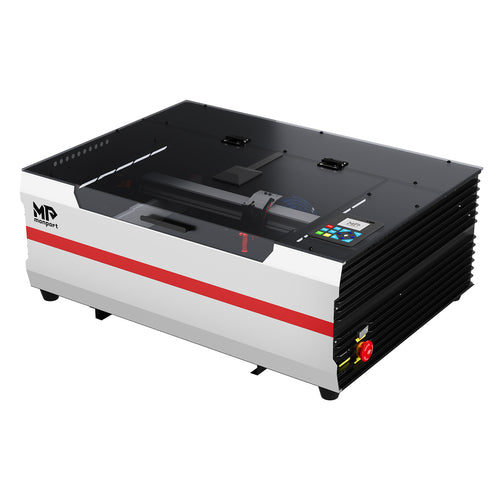
For designers, leatherworkers, makers, and small businesses, the Monport Reno65 65W Desktop CO2 Laser Engraver & Cutter provides a 600 × 400 mm working area, adjustable air assist, magnetic assisted focus, built-in water-cooling support, and multiple connectivity and software options. These features make it a versatile platform for both cutting and engraving applications.
Introduction to Leather Cutting in Fashion
Leather is durable, flexible, and available in a wide range of thicknesses and finishes. However, its strength can also make precise cutting challenging when using conventional tools.
Machine cutting leather makes it possible to create repeatable patterns and detailed shapes directly from digital designs. Instead of manually tracing and cutting every component, a designer can prepare a pattern in compatible design software and send it to the laser cutter.
This can be particularly useful for:
-
Handbag panels and components
-
Wallet and cardholder pieces
-
Belt components
-
Leather tags and labels
-
Decorative leather inserts
-
Small accessories
-
Custom logos and patterns
-
Prototypes and short production runs
A CO2 laser can also combine cutting and engraving in the same workflow. This allows designers to cut a component and then add decorative elements, branding, names, numbers, or other details without switching to a completely different production method.
The Importance of Precision in Leather Cutting

Precision matters in leather production for several reasons.
1. Better Material Utilization
Leather can be an expensive material, so minimizing unnecessary waste is important. Digital cutting allows designers to arrange multiple shapes on the material before processing, helping make more efficient use of available space.
2. Consistent Components
When several pieces need to have the same dimensions, manual cutting can introduce small variations. A laser cutter follows the same digital path for each piece, helping maintain consistency throughout a production batch.
3. Intricate Designs
Some patterns contain curves, holes, decorative shapes, or other details that are difficult to reproduce consistently by hand. Computer-controlled laser cutting can follow these digital paths with fine control.
4. Faster Prototyping
Fashion designers often need to test different shapes before committing to a final design. A machine to cut leather can make it easier to produce prototypes and modify digital patterns without manually recreating every component.
5. Combined Cutting and Engraving
A CO2 laser isn't limited to cutting. Depending on the material and settings, it can also engrave decorative designs, text, logos, and other markings, giving designers more creative options.
Why Choose the Monport Reno65 65W for Leather Cutting?


The Monport Reno65 65W Desktop CO2 Laser Engraver & Cutter is designed to provide a larger working area and higher laser power while maintaining a desktop-oriented form factor.
Its 65W rated laser power provides the processing capability needed for a wide range of cutting and engraving applications. For leatherworking, the machine's combination of working space, focusing system, air assist, and adjustable processing settings can be useful when working with different leather projects.
600 × 400 mm Engraving Area
The Reno65 provides a 24 × 16-inch (600 × 400 mm) engraving area, giving designers plenty of room for individual leather components or multiple smaller pieces in a single layout.
This larger workspace can be especially useful for fashion production because leather patterns frequently contain several components that need to be positioned efficiently.
65W Laser Power
With a 65W rated power, the Reno65 provides substantial laser processing capability for a desktop CO2 machine.
However, the appropriate cutting settings depend on the specific leather being processed. Leather varies considerably in thickness, tanning method, finish, moisture content, and composition, so users should always test settings on scrap material before beginning production.
Magnetic Assisted Focus
The Reno65 uses Magnetic Assisted Focus to make focusing more convenient.
Proper focus is essential when using a laser cutter because the position of the focal point affects how efficiently the laser interacts with the material. A straightforward focusing process can help users prepare materials more efficiently before starting a job.
Adjustable Air Assist
The Reno65 features adjustable air assist with an airflow rate of up to 18 L/min.
Air assist can help manage the cutting area by directing airflow toward the processing point. Being able to adjust the airflow provides additional control when users are switching between different engraving and cutting applications.
Dual Workbed Options
The machine includes both a 640 × 440 mm honeycomb workbed and a 13-piece blade workbed.
Different work surfaces can be useful for different projects. A honeycomb surface can provide support while allowing airflow beneath the material, while a blade-style platform can be useful for certain cutting applications.
100 mm Z-Axis Movement
The Reno65 provides up to 100 mm of Z-axis movement.
This additional vertical adjustment gives users more flexibility when positioning different materials and workpieces within the machine's processing area.
Water-Cooling System
The Reno65 uses an external water pump with a Q-MAX rating of 3000 L/H as part of its cooling system.
Maintaining appropriate cooling is important for CO2 laser operation, particularly during longer processing sessions.
Fast Engraving Speed
The Reno65 has a maximum engraving speed of 500 mm/s (19.7 ips).
Maximum speed does not mean every leather-cutting job should be performed at that speed. Cutting and engraving require different combinations of power, speed, and other settings. The correct parameters should always be established through material testing.
Reno65 Specifications at a Glance
| Specification | Monport Reno65 |
|---|---|
| Rated Power | 65W |
| Maximum Engraving Speed | 500 mm/s (19.7 ips) |
| Engraving Area | 24 × 16 in. (600 × 400 mm) |
| Z-Axis Movement | 4 in. (100 mm) |
| Focus Mode | Magnetic Assisted Focus |
| Maximum Resolution | 1000 dpi |
| Cooling System | External Water Pump, Q-MAX 3000 L/H |
| Air Assist | Up to 18 L/min, adjustable |
| Working Table | Honeycomb 640 × 440 mm + 13-piece blade workbed |
| Wavelength | 10600 nm |
| Front Pass-Through | 640 × 7 mm |
| Air Outlet | 100 mm |
| Connectivity | USB Cable, WiFi, U-DISK |
| Software Compatibility | LightBurn, LaserGRBL |
| Operating Systems | Windows, macOS, Linux |
| Product Dimensions | 1000 × 690 × 285 mm |
| Net Weight | 88 lb. (40 kg) |
| Estimated Laser Service Life | 4500 hours |
How to Use the Monport Reno65 for Machine Cutting Leather

Using a machine for cutting leather involves more than simply placing leather inside the machine and pressing start. Material preparation, focusing, digital design, and parameter testing all contribute to the final result.
Step 1: Choose and Prepare the Leather
Start by identifying the type, thickness, and finish of the leather you plan to process.
The material should be flat and positioned securely on the workbed. Remove unnecessary objects from the cutting area and ensure that the material is suitable for laser processing.
Important: Not every material marketed as "leather" is suitable for laser cutting. Synthetic leather and leatherette products can contain PVC, vinyl, chlorine, or other compounds that may produce hazardous or corrosive fumes when heated. Always verify the material composition and manufacturer's safety information before laser processing.
Step 2: Create Your Digital Design
Create the cutting pattern in compatible design software.
The Reno65 supports software including LightBurn and LaserGRBL, allowing users to prepare digital cutting and engraving jobs.
A leather handbag pattern, for example, might contain:
-
Main body panels
-
Side panels
-
Handles or straps
-
Stitching holes
-
Decorative cutouts
-
Logo areas
-
Alignment marks
Keeping these elements organized digitally makes it easier to modify designs and reproduce them later.
Step 3: Position the Material
Place the leather securely on the appropriate workbed.
Make sure the material is flat and positioned so that the entire design fits within the available working area. With a 600 × 400 mm processing area, the Reno65 provides considerable workspace for fashion-related leather components.
Step 4: Set the Focus
Use the Reno65's Magnetic Assisted Focus system to establish the appropriate focal position.
Correct focusing helps the laser produce cleaner and more predictable results.
Step 5: Test Your Settings
Before cutting the final material, perform a test on a scrap piece of the same leather.
Leather can respond differently depending on thickness, tanning, surface coating, moisture, and composition. Rather than relying on a universal setting, test different combinations of speed and power until you find an appropriate result.
Step 6: Adjust Air Assist
The Reno65's adjustable air assist allows users to control airflow for the application.
The ideal setting depends on the material and desired result. Excessive or insufficient airflow can affect the processing outcome, so testing is recommended.
Step 7: Start the Cutting Job
Once the design, focus, material position, and settings have been checked, begin the cutting process.
Never leave a laser cutter unattended during operation. Proper ventilation, exhaust, fire-safety procedures, and manufacturer-recommended operating practices should always be followed.
Step 8: Inspect and Finish the Pieces
After cutting, inspect each component for complete cuts, edge quality, and dimensional accuracy.
Depending on the leather and desired appearance, the pieces may require additional cleaning, edge finishing, or assembly before becoming part of the final fashion product.
Benefits of Using a Machine to Cut Leather
Using a machine to cut leather can provide several advantages for fashion designers and leather businesses.
Consistent Results
Once an appropriate digital pattern and processing setup have been established, the same design can be reproduced repeatedly. This is particularly valuable when manufacturing matching components.
Efficient Production
Digital cutting eliminates much of the repetitive manual tracing and cutting associated with traditional workflows. This can make prototyping and small-batch production more efficient.
Greater Design Freedom
Laser cutting makes it possible to create detailed curves, perforations, decorative cutouts, and other shapes that can be difficult to reproduce manually.
Easy Design Revisions
Because the cutting pattern is digital, designers can modify dimensions, shapes, or decorative elements without creating an entirely new physical template.
Cutting and Engraving in One Machine
The Reno65 can be used for both cutting and engraving applications. This provides fashion businesses with greater flexibility when producing personalized or branded leather goods.
Large Desktop Working Area
The 600 × 400 mm working area gives designers room to arrange multiple smaller components or larger individual pieces without immediately moving to a much larger industrial-format machine.
Applications of Machine Cutting Leather in Fashion
The possibilities for machine cutting leather extend across numerous fashion applications.
Leather Handbags

Laser cutting can be used to create accurately shaped handbag panels, decorative elements, strap components, and repeated design patterns.
Wallets and Cardholders

Small leather goods often require precise dimensions and repeated shapes. Digital laser cutting can help create consistent panels and openings.
Belts

Designers can use laser cutting to create belt components and decorative patterns. Laser engraving can also add branding or personalization.
Fashion Accessories

Leather earrings, tags, bracelets, key holders, and other accessories can benefit from computer-controlled cutting.
Personalized Products

For businesses offering customization, a laser cutter can be used to create personalized names, logos, decorative graphics, or other designs where the material is suitable for laser engraving.
Prototypes

Designers can quickly produce test pieces before committing to a larger production run. This can make it easier to evaluate dimensions, assembly, and overall appearance.
Cutting vs. Engraving Leather
One of the biggest advantages of a CO2 laser system is its ability to perform different types of processing.
Cutting focuses the laser's energy to separate the material along a defined path.
Engraving, on the other hand, removes or changes the surface to create text, patterns, graphics, or other visual effects.
For a fashion business, these functions can complement one another. For example, a designer could digitally cut the outline of a leather tag and then engrave a brand logo onto its surface.
The appropriate settings will vary depending on the leather, so cutting and engraving should be tested separately.
Safety Considerations When Laser Cutting Leather
Laser processing should always be approached with appropriate safety precautions.
Before processing any leather product, determine exactly what the material contains. Natural leather and synthetic leather products can have very different compositions.
Avoid laser processing materials containing PVC, vinyl, chlorine, or other unsuitable compounds, as heating these materials can release hazardous fumes and potentially damage laser equipment.
Other important practices include:
-
Use appropriate exhaust and ventilation.
-
Never leave the laser operating unattended.
-
Keep combustible materials away from the machine.
-
Inspect the material during test runs for unexpected ignition or excessive charring.
-
Follow the machine manufacturer's operating and maintenance instructions.
-
Use appropriate laser safety practices and protective equipment where required.
-
Test unfamiliar materials before beginning a production run.
Safety should always take priority over production speed.
Q&A About the Monport Reno65
Q: Can the Monport Reno65 cut leather?
A: The Reno65 is a 65W CO2 laser engraver and cutter that can be used for suitable leather-cutting applications. However, leather varies significantly in composition and thickness, so users should test the specific material and establish appropriate power, speed, focus, and air-assist settings before production.
Q: Is the Reno65 suitable for small fashion businesses?
A: Its 600 × 400 mm working area, 65W rated power, desktop-oriented dimensions, and support for cutting and engraving make the Reno65 a versatile option for designers, makers, and small businesses working on prototypes, custom products, and smaller production runs.
Q: What software can be used with the Reno65?
A: The Reno65 is compatible with LightBurn and LaserGRBL. It also supports Windows, macOS, and Linux operating systems.
Q: How large is the Reno65's working area?
A: The Reno65 has an engraving area of 24 × 16 inches (600 × 400 mm).
Q: Does the Reno65 have adjustable air assist?
A: Yes. The Reno65 features an adjustable air-assist system with an airflow rate of up to 18 L/min, giving users additional control over airflow during different processing applications.
Q: What type of focusing system does the Reno65 use?
A: The Reno65 uses Magnetic Assisted Focus, which is designed to simplify the focusing process.
Q: Does the Reno65 support engraving as well as cutting?
A: Yes. The Reno65 is a CO2 laser engraver and cutter, so it can be used for both cutting and engraving applications on compatible materials.
Key Takeaways
-
Machine cutting leather can improve consistency, precision, and efficiency compared with repetitive manual cutting.
-
The Monport Reno65 65W Desktop CO2 Laser Engraver & Cutter provides a 600 × 400 mm working area for leather components and other compatible materials.
-
Its 65W rated power provides substantial processing capability for cutting and engraving applications.
-
Magnetic Assisted Focus simplifies the focusing process.
-
Adjustable air assist up to 18 L/min provides additional control during processing.
-
The machine includes both honeycomb and blade workbeds for different applications.
-
Its 100 mm Z-axis movement provides additional flexibility for positioning workpieces.
-
The Reno65 supports LightBurn and LaserGRBL and works with Windows, macOS, and Linux.
-
Leather should always be tested before production because different types and finishes can behave differently under a laser.
-
Materials containing PVC, vinyl, chlorine, or other unsuitable compounds should not be laser processed because of hazardous fumes and potential equipment damage.
Conclusion
In fashion and leatherworking, precision can have a direct impact on product quality, production efficiency, and design possibilities. Moving from manual cutting to machine cutting leather can help designers produce repeatable shapes, experiment with intricate patterns, and streamline prototyping and small-batch manufacturing.
The Monport Reno65 65W Desktop CO2 Laser Engraver & Cutter combines a 600 × 400 mm working area, 65W rated power, magnetic assisted focus, adjustable air assist, dual workbed options, water-cooling support, and compatibility with popular laser software. Together, these features provide a flexible platform for cutting and engraving suitable materials.
For fashion designers and leather businesses, the value of a machine for cutting leather goes beyond simply replacing a knife or manual cutting tool. A digital laser workflow can connect design, prototyping, customization, cutting, and engraving in one process.
With the right material, carefully tested settings, proper ventilation, and responsible operating practices, the Reno65 can become a versatile addition to a leatherworking or fashion-production workflow—helping turn digital designs into precise physical components with greater consistency and efficiency.