


Choosing between copper and brass for laser engraving depends on the look you want, the detail required, and the laser machine you use. Laser Engraving Copper can be challenging because copper reflects much of the laser energy, while Laser Engraving Brass offers different marking results depending on its alloy, surface finish, and laser settings.
Both metals are useful for personalized gifts, jewelry, nameplates, and industrial components. Understanding their differences helps you select suitable materials, reduce wasted blanks, and achieve more consistent results.
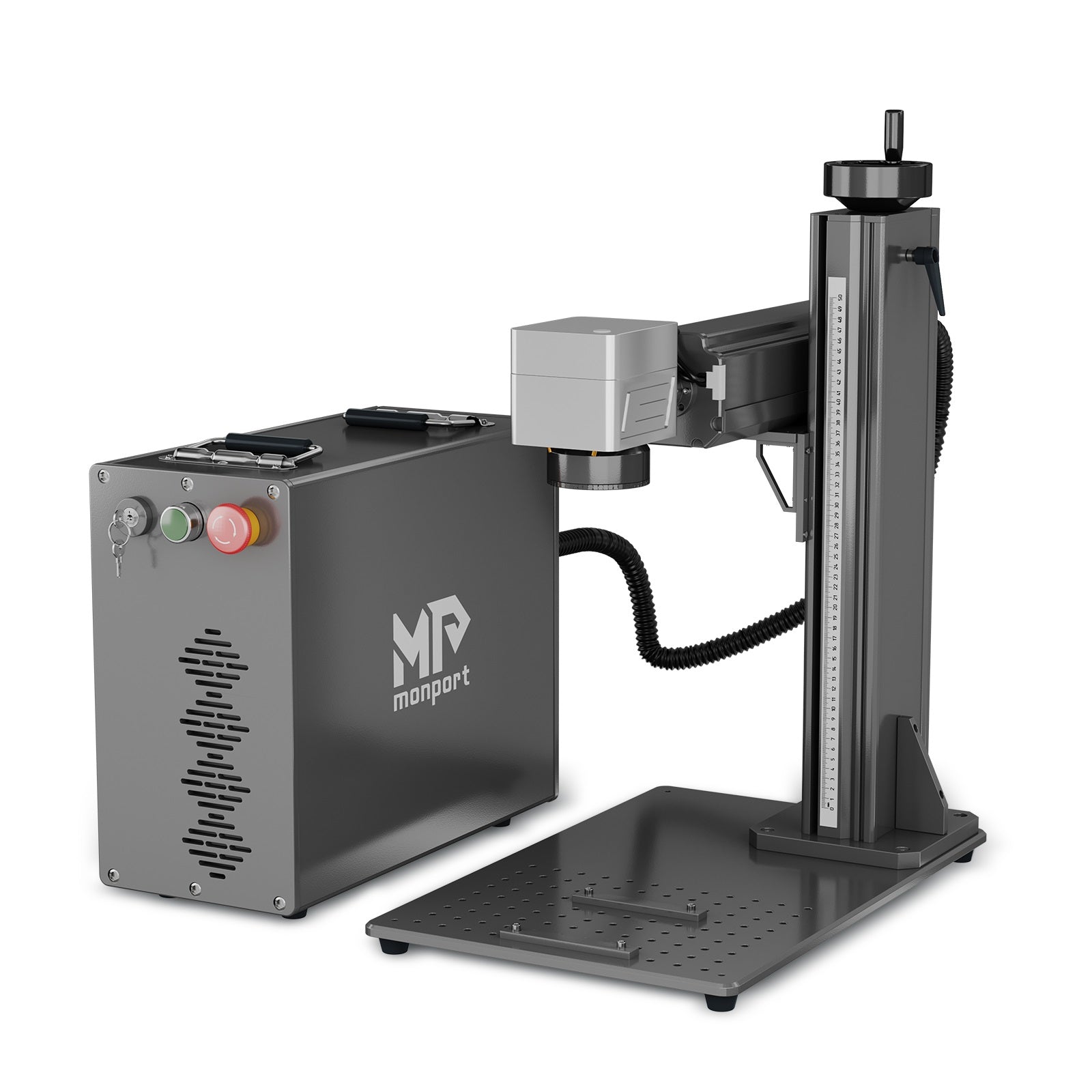
Monport GPro 100W Split MOPA Fiber Laser Engraver & Marking Machine With Manual Focus

What Is the Difference Between Copper and Brass?
Copper is a reddish metal known for its excellent electrical and thermal conductivity. Brass is an alloy made mainly from copper and zinc, giving it a more yellow or golden appearance.
These differences affect how the metals respond to heat and laser energy. Copper's high reflectivity makes processing more demanding, while brass composition can influence marking contrast and consistency. Neither metal guarantees a particular finish without testing.

How Does Laser Engraving Copper Work?
Laser Engraving Copper requires careful control because copper reflects near-infrared laser energy and conducts heat quickly. These properties can make it harder to create a clear, consistent mark than on some other metals. The right laser wavelength and settings are therefore important.
Best Projects for Copper

Copper works well for decorative and functional projects where its natural reddish color is part of the design.
Examples include:
-
Personalized copper bracelets and pendants
-
Decorative plaques and custom labels
-
Electrical component identification
-
Small keepsakes with names, dates, or simple artwork
For Laser Engraving Copper, begin with a clean, flat sample and test your design before processing the finished piece. Fine lines and small lettering may require different settings from larger filled designs.
A fiber laser can mark copper under suitable conditions, but not every machine or setup will produce the same result. A compatible laser wavelength, careful parameter selection, and appropriate safety measures are essential.
How Does Laser Engraving Brass Work?
Laser Engraving Brass uses controlled laser energy to create marks on the metal's surface. Depending on the machine and settings, the result may be a dark mark, a contrasting finish, or a shallow engraved design.
Brass is popular because its golden appearance suits decorative products and professional identification plates. However, different brass alloys and surface coatings can produce different results.
Best Projects for Brass

Brass is a practical choice for projects that benefit from a polished, gold-like appearance.
Common examples include:
-
Personalized brass keychains and nameplates
-
Custom jewelry and small gift items
-
Engraved business plaques
-
Equipment labels and industrial identification tags
Successful Laser Engraving Brass depends on balancing power, speed, pulse settings, and focus. Several controlled passes may be preferable to one aggressive pass when the goal is a clean, detailed result.
For a small business, brass tags with customer names or product numbers can also be a useful way to test repeatability before moving to larger production batches.
Laser Engraving Copper vs. Laser Engraving Brass: Key Differences
| Feature | Copper | Brass |
|---|---|---|
| Appearance | Reddish-orange | Yellow or gold-like |
| Composition | Copper metal | Mainly copper and zinc |
| Processing challenge | High reflectivity and heat transfer | Results vary by alloy and finish |
| Typical applications | Decorative pieces, electrical components, labels | Nameplates, jewelry, tags, plaques |
| Main consideration | Laser compatibility and energy absorption | Alloy composition and desired contrast |
The main takeaway is that Laser Engraving Copper often requires extra attention to reflectivity, while Laser Engraving Brass requires attention to alloy composition and the finish you want.
Neither material is automatically better. Copper may suit a warm, reddish design, while brass may be more appropriate for gold-toned branding or identification plates.
Which Laser Machine Should You Use?

For metal projects, a fiber laser is often worth considering. Its suitability depends on the metal, required marking depth, desired contrast, and machine specifications.
A MOPA fiber laser adds adjustable pulse-width control, giving operators more flexibility when developing marking parameters. However, results still depend on the specific material and setup.
Considering the Monport GPro 100W Split MOPA Fiber Laser?
The Monport GPro 100W Split MOPA Fiber Laser Engraver & Marking Machine With Manual Focus is designed for detailed metal marking and professional applications.
Its supplied specifications include:
-
Laser power: 100W
-
Wavelength: 1060–1080 nm
-
Working area: 6.9 × 6.9 inches
-
Marking speed: Up to 10,000 mm/s
-
Frequency range: 1–3000 kHz
-
Pulse width: 2–500 ns
-
Machine dimensions: 35 × 55 × 69.5 cm
-
Package dimensions: 48 × 76 × 80 cm
-
Expected service life (MTTF): 100,000 hours
Its adjustable pulse width can help operators explore different marking effects, while the three-point red-light alignment and red-light preview support positioning before engraving.
For Laser Engraving Copper, test the material carefully because reflectivity can affect processing. For Laser Engraving Brass, test the specific alloy and finish to determine the most suitable settings. The machine's capabilities do not guarantee identical results across all metals.
Before purchasing, confirm the exact model's material compatibility, software requirements, and operating instructions. The product's manual-focus design also means the operator must follow the manufacturer's focusing procedure.
Ready to develop more consistent metal engraving projects? Compare your material, desired finish, production volume, and machine requirements before choosing your setup. Monport's laser range is worth exploring if you're looking for equipment for detailed metal marking and customization.
Practical Tips for Better Results

Whether you're working with copper or brass, preparation makes a difference.
-
Clean the surface. Remove oils and residue using a method suitable for the metal and its coating.
-
Test a sample first. Use scrap from the same material batch whenever possible.
-
Adjust one setting at a time. Change power, speed, frequency, or pulse width systematically rather than guessing.
-
Inspect the finish. Check line sharpness, contrast, heat effects, and readability before repeating the job.
-
Follow laser safety procedures. Use the appropriate enclosure, protective equipment, and extraction arrangements specified by the manufacturer.
These steps help make Laser Engraving Copper and Laser Engraving Brass more predictable, especially when producing multiple personalized items.
Key Takeaways
-
Copper is reddish and highly conductive, while brass is a copper-zinc alloy with a golden appearance.
-
Laser Engraving Copper requires particular attention to reflectivity and laser compatibility.
-
Laser Engraving Brass can produce attractive decorative marks, but results vary with alloy and surface finish.
-
Fiber and MOPA lasers offer useful options for metal marking when properly matched to the application.
-
Always test settings on sample material before engraving valuable or finished products.
Frequently Asked Questions
1. Is copper or brass better for laser engraving?
Neither is universally better. Copper suits reddish decorative designs and electrical applications, while brass is popular for golden-looking nameplates, jewelry, and identification tags.
2. Can a fiber laser engrave copper?
Yes, a compatible fiber laser can mark copper under suitable conditions. Because copper is highly reflective, the laser setup and processing parameters must be selected carefully.
3. Can you use a MOPA fiber laser for brass?
Yes. A MOPA fiber laser can mark brass, and adjustable pulse settings provide flexibility when developing suitable marking parameters. Test the specific alloy before production.
4. What settings should I use for copper and brass?
There is no single setting that works for every machine and material. Start with manufacturer-recommended parameters and test power, speed, frequency, pulse width, and focus on sample pieces.
5. What is the best laser for engraving copper and brass?
The best choice depends on your desired marking depth, finish, material, and production needs. Fiber lasers are useful for many metal-marking applications, while other laser types may suit particular copper-processing requirements.
Conclusion
Choosing between Laser Engraving Copper and Laser Engraving Brass comes down to your project goals, preferred finish, and laser equipment. Copper offers a warm, reddish appearance but requires careful handling because of its high reflectivity, while brass provides a golden look that works well for personalized gifts, nameplates, jewelry, and product tags.
For consistent results, test your material, adjust your laser settings carefully, and follow the manufacturer's safety guidelines. A suitable fiber laser, such as the Monport GPro 100W Split MOPA Fiber Laser Engraver, offers adjustable marking parameters for exploring different metal-marking effects. However, the final result depends on the material and setup.
Whether you're exploring Laser Engraving Copper for decorative projects or Laser Engraving Brass for professional customization, understanding these differences will help you make better decisions, reduce material waste, and achieve results that meet your standards.


