Thanksgiving table decorations do not need to be large to feel personal. A set of readable name cards, matching napkin tags, and a few autumn leaves can give a dinner table a consistent look without taking space away from plates or serving dishes. If you are exploring Thanksgiving table decorations with a CO2 laser engraver, the most useful starting point is the design: what each piece should say, where it will sit, and how it will work alongside the rest of the table setting.
This guide focuses on small-format Thanksgiving decor concepts associated with the Monport 40W Pro CO2 Laser Engraver & Cutter. It explains how to plan a pumpkin place card, match it with a leaf-shaped napkin accent, and use similar motifs in a compact centerpiece. The project descriptions are design examples, not claims that the pictured decorations were produced or independently tested using this machine. Laser fabrication and equipment operation should be handled by an appropriately trained adult following current manufacturer instructions.
Why start with small Thanksgiving table decorations?
A Thanksgiving table has a practical job: people need space to sit, eat, talk, and pass food. Smaller accents can personalize each setting without creating a tall display that blocks the view across the table. They also offer a clearer design brief than a general collection of autumn crafts.
For desktop-sized concepts, consider three related objects: a guest-name card, a leaf or acorn napkin tag, and a low centerpiece accent. Choose one motif and repeat it with different levels of detail. That connection is more important than decorating every surface.
| Decoration | Design purpose | Suggested appearance | Where it belongs |
|---|---|---|---|
| Pumpkin-shaped place card | Make each guest's name easy to find | A simple outline with a large, readable name | Beside a plate or above the napkin |
| Leaf napkin tag | Repeat the seasonal motif | A flat leaf silhouette or name initial | Attached to a conventional napkin holder |
| Low leaf centerpiece | Connect individual settings visually | A few matching maple or oak leaves | Along a runner, clear of hot dishes |
Unlike a whole-table plan built around a fixed guest count, these designs can be adapted for two guests or a larger gathering simply by updating the names and quantities. For a complete eight-person tablescape and arrangement planner, see Monport's coordinated Thanksgiving table decor guide.
Design one matching set: pumpkin place card and leaf napkin tag
The following workflow concerns layout, wording, and visual approval. It does not provide machine settings or instructions for operating a laser cutter.
1. Decide what the guest will read first
Put the guest's name at the center of the place card. Treat the pumpkin outline as a frame, not the main attraction. A single word or name usually reads better at dinner-table distance than a name surrounded by a long seasonal message. Consider a simple serif or sans-serif font instead of an elaborate script with very thin strokes.
Make room for the longest name on the guest list before approving the rest of the design. For example, a layout that comfortably holds “Emma” may need adjustment for “Christopher.” It is better to revise the shared template than to make one finished card look noticeably different from the others.
2. Use the same visual rules on a second piece
Give the napkin accent a small version of the same leaf motif that appears on the name card. The two decorations can differ in shape while keeping a common line weight, color, and lettering style. For instance, a warm-wood pumpkin card with a dark engraved name pairs naturally with a simple leaf tag using the same brown-and-cream palette.
A flat decorative tag attached to an ordinary napkin holder is an easier design concept to evaluate than a rigid, intricate ring. The finished piece should not snag fabric, obstruct the place setting, or come loose during the meal.
3. Review outlines and text at actual viewing size
Before commissioning finished items, review a paper or on-screen proof at approximately the size guests will see. Confirm that letters are readable, small details have not become visually crowded, and the overall outline looks balanced. The same proof should be checked with short and long names.
Keep copies of the approved artwork and the final guest-name list. A reusable master design makes it easier to correct a spelling error or add another guest without redesigning the entire Thanksgiving theme.
Practical design example: “Emma” versus “Christopher.” Suppose both guests need pumpkin-shaped place cards in the same style. The shorter name may leave too much empty space, while the longer name may feel cramped beside the pumpkin's curved sides. The objective is to preserve a recognizable family of designs without sacrificing readability.
| Guest name | Possible layout issue | Design adjustment to review | Final visual check |
|---|---|---|---|
| Emma | Short lettering can seem lost in a broad pumpkin outline. | Keep the name visually prominent with balanced empty space; do not add extra motifs merely to fill the card. | The name remains the first thing the guest notices. |
| Christopher | Longer lettering may crowd the sides or make a decorative font hard to read. | Try a simpler typeface or a roomier text area within the same overall design; keep the pumpkin outline and leaf accent consistent. | The entire name is readable without crowding the border. |
Review both layouts side by side at approximately their intended display size. They should look like members of the same set: identical silhouette treatment, matching color and secondary leaf detail, and readable lettering. These examples illustrate a design decision, not measured or fabricated samples.
4. Check the finished arrangement on the table
Set out temporary paper representations beside a real dinner plate, glass, and folded napkin. This shows whether the objects compete for the same space. A practical arrangement gives the guest's name priority and lets the napkin tag function as a secondary visual detail.
For an example of a similar design direction, place a pumpkin card at the top of the dinner plate and position the matching leaf tag on the folded napkin to one side. The result should be identifiable at a glance rather than overloaded with seasonal icons.
Three more compact Thanksgiving decoration ideas
Mini welcome signs
A small “Give Thanks” or “Welcome” sign can sit near a vase rather than occupying the entire center of the table. A short phrase allows generous blank space around the lettering. Choose a stable, finished display stand and position it away from the path used for serving dishes.
Low autumn-leaf centerpieces
Instead of an oversized arrangement, group a few decorative leaves in two shapes, such as maple and oak. Natural wood tones, cream, and muted orange help the grouping coordinate with name cards. Keep leaves away from open flames, hot serving vessels, and beverages; do not assume all decorative materials or finishes tolerate heat or spills.
Personalized table keepsakes
A guest initial, a short seasonal phrase, or a memorable year can make a flat decorative accent suitable for reuse or display after the dinner. Avoid promising that every material will endure years of use: actual durability depends on the substrate, finish, handling, and storage.
For a broader list of possible projects beyond these small-format layouts, Monport also has a simple Thanksgiving table decorations overview. This guide concentrates on making a small group of pieces feel intentionally matched.
Choose materials for their decorative role
Material appearance is only one part of the decision. A name card that sits beside a plate has different requirements from an item intended to touch food. This article focuses on non-food-contact decorations; a material being compatible with a specific laser engraver does not automatically make it suitable as serving ware.
| Material | Visual character | Potential decorative role | What to verify |
|---|---|---|---|
| Decorative plywood | Warm, layered wood appearance | Place cards, signs and leaf accents | Surface quality, finish, smooth edges and the specific material's suitability |
| Solid wood | Distinct natural grain | Small standalone signs | Stability, finish and moisture sensitivity |
| Identified decorative acrylic | Consistent color and clean appearance | Name markers and small signs | Exact material identity and compatibility information |
| Cardstock | Lightweight, easy to coordinate by color | Paper proofs and temporary place markers | Handling, heat exposure and moisture |
Keep unverified finishes and laser-decorated surfaces away from direct food contact. The FDA's information about food-contact substances explains why the intended food-contact use is a separate consideration. For any finish or coating, check the manufacturer's documentation instead of assuming that a decorative coating is food-safe.
How the Monport 40W Pro CO2 Laser relates to these ideas
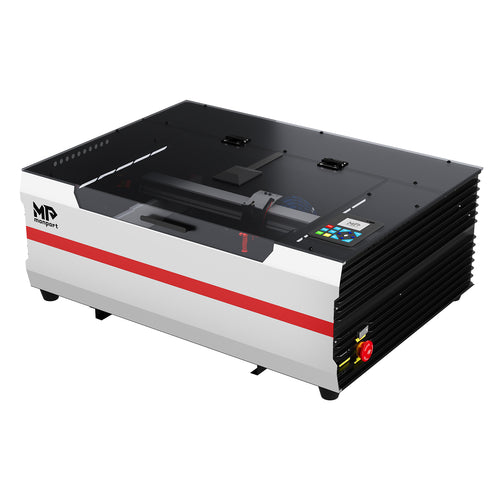
The original article featured the Monport 40W Pro CO2 Laser Engraver & Cutter. Monport lists a nominal 12 × 8 in. working area, manual focus, and LightBurn compatibility for this model. These specifications help explain why this guide is centered on small decorative components rather than large one-piece centerpieces.

The availability of software support or a listed working area does not confirm that every proposed design or decorative substrate has been manufactured successfully. Before any fabrication, an appropriately trained adult should confirm the exact machine configuration, material documentation, ventilation and other safety requirements in the current manual. This article does not provide equipment operating parameters.
A quick design-review checklist
- Readable names: every guest's name works with the same template, including the longest name.
- Clear hierarchy: the name is more prominent than the leaf, pumpkin or border decoration.
- Consistent appearance: the same motif and color language appear across at least two items.
- Useful placement: pieces leave adequate room for dinnerware and shared dishes.
- Finished-item quality: there are no loose decorative components or rough areas in contact with napkins or hands.
- Safe intended use: decorative materials stay separate from food-contact surfaces and heat sources.
- Reusable documentation: the approved name list and design files are saved together for next year's celebration.
Frequently asked questions
What are the simplest Thanksgiving table decorations to personalize?
Guest-name cards and small napkin tags offer a clear place for an initial or name without dominating the table. A repeated leaf or pumpkin shape can connect the two designs.
Can a CO2 laser engraver be used for wood and acrylic decorations?
Manufacturers identify compatible material categories for specific machines, including some wood and acrylic products. Suitability depends on the exact substrate and equipment configuration, so an appropriately trained adult must verify the manufacturer's current documentation; not all plastics or coated materials are appropriate.
How can I make longer names fit on Thanksgiving place cards?
Compare a short name such as “Emma” with a longer one such as “Christopher” on the same pumpkin-shaped template. Keep the silhouette and leaf motif consistent, but review a simpler font or a roomier text area for longer names. Check both proofs at approximately their intended display size rather than relying on a highly zoomed preview.
Are decorative wooden napkin rings and name cards food-safe?
They should not automatically be treated as food-contact products. Keep decorative pieces separate from food and verify materials and finishes whenever the intended use involves contact with food.
Can the same artwork be used next Thanksgiving?
Yes. Save the approved design template and motif files, then update guest names as needed. Reuse of physical pieces depends on their condition, finish and storage history.
Conclusion: keep the Thanksgiving design small and consistent
The most effective Thanksgiving table decorations with a CO2 laser engraver in mind start with a useful design, not a long list of objects. A readable pumpkin place card, a matching leaf napkin tag, and a low centerpiece can establish a coordinated style while leaving the table comfortable for dinner. The Monport 40W Pro provides the equipment context for small-format projects, while actual fabrication suitability and safe operation require qualified adult assessment and current manufacturer guidance.